

Coronavirus has turned retail therapy into retail anxiety – keeping customers calm will be key to carrying on
- Written by: Jessica Vredenburg, Senior Lecturer (Assistant Professor) in Marketing, Auckland University of Technology
So you finally hit the shops and cafes after weeks of lockdown.
After disinfecting your hands, following the arrows around the shop or to your table, taking care to avoid others where possible and, in some cases, providing your contact tracing details – how enjoyable was the experience, really?
The return to shopping and eating out has certainly come as welcome relief in those countries lucky enough to be opening up. The malls are open! You can book your favourite restaurant! Goodbye home cooking, hello table service!
And for the retail and hospitality industries, among the hardest hit during the COVID-19 pandemic, the return to trading couldn’t come fast enough.
The return to normal trading, however, could still be a way off.
The new economic reality will have a profound impact on retail. Some of the routines developed during lockdown, such as cooking and baking at home or foregoing daily takeaway coffees, may continue post-pandemic if money is tight.
Shopping as a sensory experience will change
As well as the public spacing, tracing and hygiene rules, customers may also notice an absence of certain favourite experiential elements. Is a trip to Mecca Cosmetics as enjoyable when you can’t sample the products? Will Peter Alexander still smell like a cosy bedroom or the disinfectant used to clean the store?
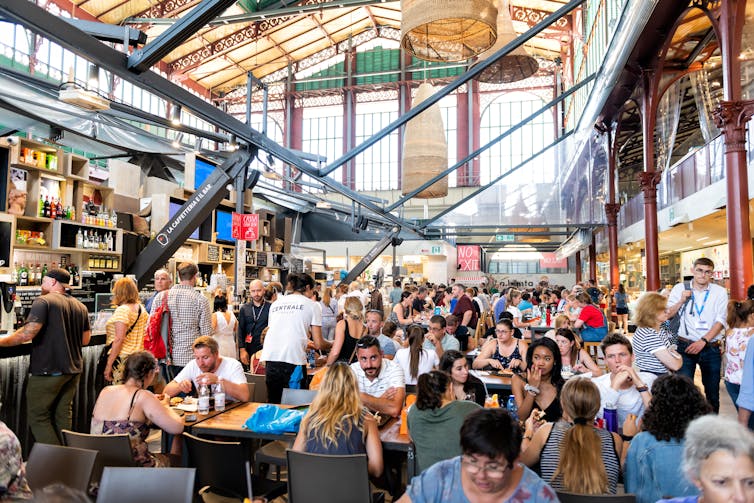 The food and atmosphere may be great, but scenes such as this food hall in Italy are over for now.
www.shutterstock.com
The food and atmosphere may be great, but scenes such as this food hall in Italy are over for now.
www.shutterstock.com
As consumers, our senses play a major role in how much we enjoy retail experiences. Retailers have long employed the art of store atmospherics to encourage us to stay and spend.
Read more: New Zealand's COVID-19 Tracer app won't help open a 'travel bubble' with Australia anytime soon
Atmospherics – such as scent, music, touch, temperature and crowding – all help create an engaging sensory experience for shoppers and patrons. Research suggests customers will stay longer, spend more, feel better, and be more satisfied in a retail environment they find pleasing to their senses.
The new COVID-19 environment has changed all that.
Will shoppers now prefer a reassuring freshly cleaned smell? The Hyatt hotel chain’s “seamless” scent (evocative of home and comfort) was an integral part of its brand experience. But the rival Hilton chain has just announced its CleanStay initiative in partnership with the manufacturer of Lysol disinfectant.
Keep the noise down and don’t touch
In New Zealand, tips on how to stay safe under its COVID-19 alert level 2 include restaurants and bars turning down the music volume. Raised voices, it seems, generate a wider “moist breath zone” that may increase viral spread.
Read more: Denied intimacy in 'iso', Aussies go online for adult content – so what's hot in each major city?
Reduced sound levels might help anxious consumers relax, but what will the atmosphere be like in a painfully quiet pub or restaurant? It could influence customer perceptions of the establishment, which in turn affect financial returns. Studies have found people bought more drinks in a bar when the music was louder than usual.
Retail guidelines in New Zealand recommend consumers only touch and try on merchandise they intend to buy. In the US, no touch retailing seems increasingly likely.
Such measures confound conventional retail theory, which suggests the more consumers touch, sort through, sample and try on, the more they buy. The removal of testers for products such as cosmetics, for example, significantly changes the shopping experience.
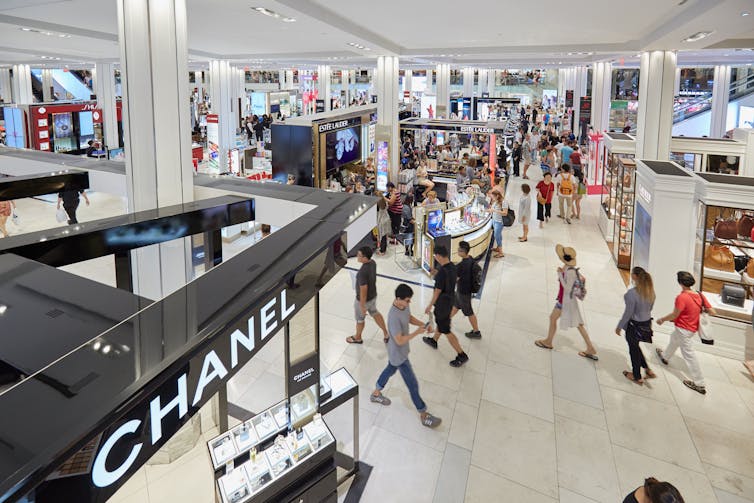 Sampling makeup and trying on clothes have long been part of the department store experience. How will consumers take to no-contact shopping?
www.shutterstock.com
Sampling makeup and trying on clothes have long been part of the department store experience. How will consumers take to no-contact shopping?
www.shutterstock.com
Don’t stand so close to me
Retailers in countries entering winter will also need to think quite literally about the atmosphere in their stores. Warmer temperatures tend to create a relaxing environment that encourages shoppers to linger. And physical warmth can even enhance the perceived value of products. But poorly ventilated or air-conditioned indoor spaces have been identified as potential hot spots for the spread of COVID-19.
Will warmer stores subconsciously affect the way shoppers react? Restaurateurs and retailers will be hoping not.
Paradoxically, the advice to keep our distance in public can lead to perceived crowding – a psychological state based on the number of individuals in a store, the extent of social interactions and the configuration of merchandise and fixtures. Higher levels of perceived crowding can lead to less positive emotions and decreased satisfaction.
Read more: Here's how to stay safe while buying groceries amid the coronavirus pandemic
Shoppers may simply choose not to enter. If they do, they might feel on edge or even overwhelmed if they are trying to keep a safe distance from others. When personal space is invaded or when personal space zones are relatively large, it can lead to intolerance or even leaving.
The customer is always right
Ultimately, if retailers and hospitality service providers want customers to return in greater numbers the goal will be to minimise the perceived risks of infection. Emotionally taxing environments can negatively affect consumer behaviour, so managing the emotional component of the retail or dining experience becomes an even more crucial part of the overall value offered.
Adapting so-called “retail theatre” to include sanitation, hygiene, and keeping consumers calm will create a new kind of psychological comfort for the COVID-19 age. But how far will some go to give themselves an edge over competitors?
From pool noodles, mannequins and glass boxes to inner tubes, will these innovative adaptations draw in the crowds or make people run in the opposite direction?
How readily customers become comfortable with the etiquette of post-pandemic shopping will dictate how effectively retail and hospitality can provide that vital sense of well-being. In time, the words “retail” and “therapy” may again sit comfortably in the same sentence.
Authors: Jessica Vredenburg, Senior Lecturer (Assistant Professor) in Marketing, Auckland University of Technology


















