

6 ways to ensure HomeBuilder helps consumers, the climate and the economy
- Written by: Peter M Graham, Associate Professor - Architectural Performance, Monash University
The federal government’s new HomeBuilder scheme offers eligible Australians money to renovate or build a home. While it’s attracted controversy, HomeBuilder does offer a much-needed opportunity to make old homes more energy-efficient.
Research released in March showed the energy performance of housing must improve by an average 44-48% in the next decade for Australia to reach net zero emissions by 2050. This means building new homes above today’s energy standards and upgrading existing homes.
Australian houses built before 2004 weren’t required to meet national energy efficiency standards. In fact, many older homes average just 1.8 stars in energy efficiency, which means they need more than three times as much energy to heat and cool compared to today’s six-star standard.
Bringing forward their upgrade to incorporate better energy performance would help Australia’s COVID-19 economic stimulus, and save occupants money on energy bills.
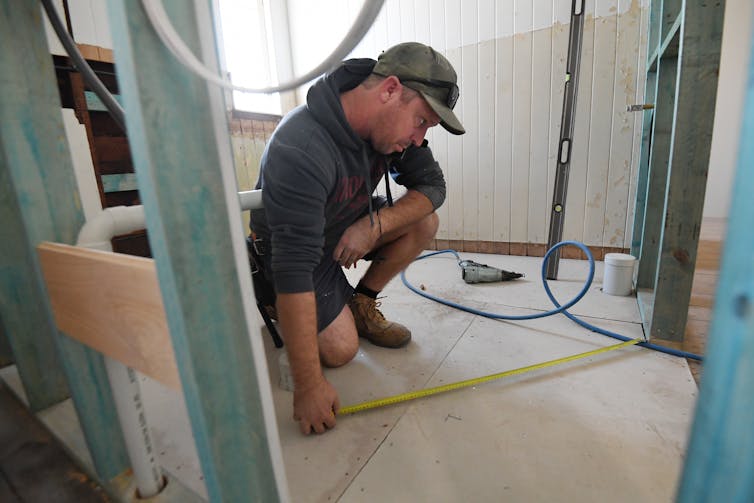 A tradesman working on a renovation in Brisbane. Homebuilder encourages Australians to build or renovate homes.
Dan Peled/AAP
A tradesman working on a renovation in Brisbane. Homebuilder encourages Australians to build or renovate homes.
Dan Peled/AAP
Potential win-win
The HomeBuilder initiative will provide a grant of A$25,000 to eligible property owners, with an income of no more than A$125,000 per year (or A$200,000 for a couple). And they’re required to spend at least A$150,000 on renovations. It’s touted as a way to protect construction jobs and help stimulate the post-coronavirus economy, but should be expanded to reach a greater proportion of home-owners and renters.
Energy-efficient home improvements include:
- draught-proofing doors and windows
- switching to LED lighting
- upgrading to solar hot water heaters
- insulating ceilings, floors and walls
- replacing windows with double glazing
- creating temperature zones so you don’t have to heat or cool the whole house
- adding shading to windows and orienting living areas to the north, to take advantage of winter sun.
A new report from the Global Building Performance Network shows how large-scale building renovation programs can boost energy efficiency, and create jobs and long-term cost savings.
Read more: Australia has failed miserably on energy efficiency – and government figures hide the truth
It found that globally, each US$1 million invested in energy-efficient buildings globally creates an average 14 years of net employment. And improving thermal comfort in homes can benefit heart and lung health, and productivity.
Drawing from international examples, here are six policies Australian governments should adopt to deliver both economic impact and emissions savings over the long term.
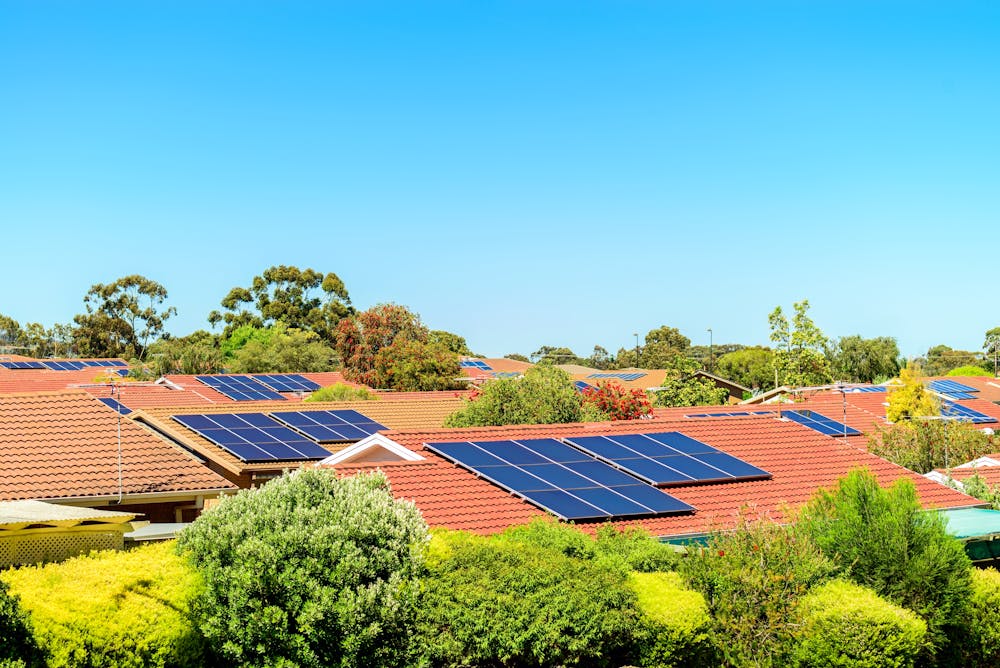 Low-carbon homes help meet climate targets and boost the economy.
1. Set renovation targets
Australian governments should commit to annual renovation targets to meet energy efficiency goals at a local, state and national level.
Australia can learn from the European Union’s energy efficient directive, introduced in 2012.
The directive includes increasing the rate of public building renovations to 3% a year to improve energy efficiency. It’s coupled with a long-term strategy to mobilise investment to renovate existing residential and commercial buildings. This has helped the EU stay on track to reach its 20% energy efficiency target this year.
Analysts estimate EU initiatives to renovate buildings provided the opportunity to lift the EU’s gross domestic product by up to 2.3% between 2012-2020.
2. Upgrade local precincts
Australia can deliver “net zero makeovers” to multiple buildings in particular precincts, cutting emissions at scale. It could follow the lead of the Netherlands’s Energiesprong (or “Energy Leap” in English) program.
Energiesprong homes are designed to pay for themselves over 30 years. Innovative construction techniques, such as prefabricated facades, mean the work takes as little as a week and residents don’t have to move out during the process.
The program is now being implemented in the UK, Italy, France, Germany, California and New York State.
3. Make home energy ratings and labelling clear
In Australia, home energy ratings are not mandatory. Without them, many Australians probably know more about the energy efficiency ratings of their refrigerators than their homes.
The recently released King Review recommended Australia develop an energy performance rating scheme for new and existing residential buildings.
This is what’s happening in places such as the EU, China and some US states. Buildings certified under the US “Energy Star” label use 50% less energy than typical buildings.
Read more: Homes with higher energy ratings sell for more. Here's how Australian owners could cash in
4. Enforce energy efficiency standards for renovation
One easy win available to governments is to ensure compliance with existing energy efficiency requirements.
By applying the energy efficiency provisions of the national building code to renovations, the Beijing municipal government substantially reduced emissions from existing buildings.
Australia’s National Construction Code, which sets out building regulations for new buildings, also requires major renovations to comply with its energy efficiency rules. But it’s poorly enforced.
Governments must urgently clarifying and enforce the code’s energy efficiency requirements for renovations.
5. Introduce standards for rental properties
In the rental market, landlords and tenants have “split incentives”: tenants pay the energy bills, but landlords make investment decisions. This means investments to improve energy efficiency in rental housing aren’t often made.
It also means many private renters are paying high energy bills and face health risks from heat and cold.
In some countries, such as France, rental properties must meet reasonable energy efficiency standards, which overcomes this problem. State governments in Australia should implement provisions like this.
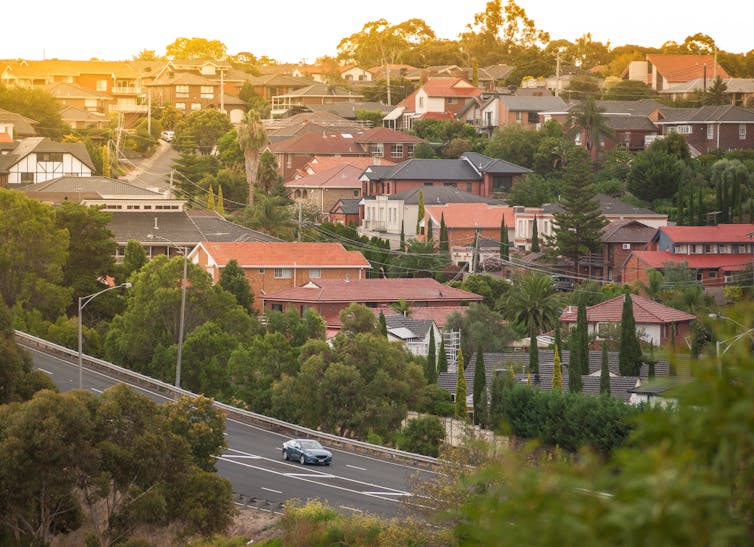 Renters can benefit from energy efficient homes.
Shutterstock
Renters can benefit from energy efficient homes.
Shutterstock
6. Offer financial incentives
Local, state or national governments can provide direct financial incentives or tax incentives to create low-energy homes.
In Australia, states already offer financial incentives for energy efficiency, but tax incentives would require federal support.
In Germany, a grant scheme for energy efficient renovations and new housing created 253,000 jobs according to one measure. It also created a net benefit to public finances of about €10 billion in 2011.
Looking ahead
The COVID-19 impact on Australia’s construction industry is likely to last years.
But by adopting these six policies, Australian governments can deliver healthier, lower-energy housing, and bring us closer to meeting our climate targets.
Read more: HomeBuilder might be the most-complex least-equitable construction jobs program ever devised
Authors: Peter M Graham, Associate Professor - Architectural Performance, Monash University


















