

Australia wants to build a huge concrete runway in Antarctica. Here's why that's a bad idea
- Written by: Shaun Brooks, University Associate, University of Tasmania
Australia wants to build a 2.7-kilometre concrete runway in Antarctica, the world’s biggest natural reserve. The plan, if approved, would have the largest footprint of any project in the continent’s history.
The runway is part of an aerodrome to be constructed near Davis Station, one of Australia’s three permanent bases in Antarctica. It would be the first concrete runway on the continent.
The plan is subject to federal environmental approval. It coincides with new research published this week showing Antarctica’s wild places need better protection. Human activity across Antarctica has been extensive in the past 200 years – particularly in the coastal, ice-free areas where most biodiversity is found.
The area around Davis Station is possibly Antarctica’s most significant coastal, ice-free area. It features unique lakes, fjords, fossil sites and wildlife.
Australia has successfully operated Davis Station since 1957 with existing transport arrangements. While the development may win Australia some strategic influence in Antarctica, it’s at odds with our strong history of environmental leadership in the region.
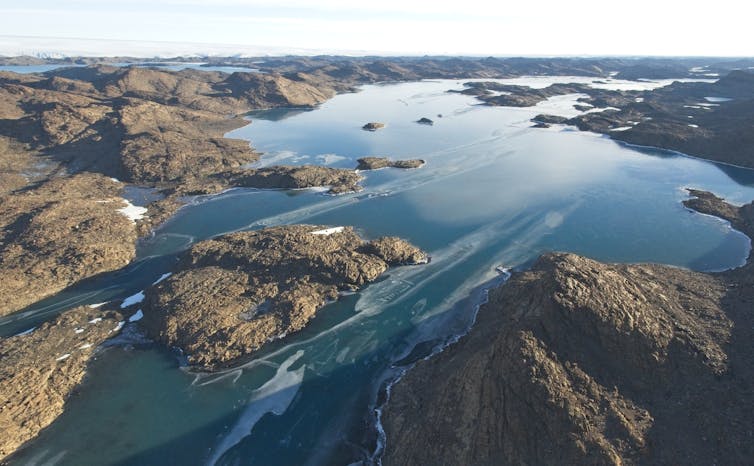 The Vestfold Hills, the proposed site of the aerodrome.
Nick Roden
The Vestfold Hills, the proposed site of the aerodrome.
Nick Roden
Year-round access
The Australian Antarctic Division (AAD), a federal government agency, argues the runway would allow year-round aviation access between Hobart and Antarctica.
Presently, the only Australian flights to Antarctica take place at the beginning and end of summer. Aircraft land at an aerodrome near the Casey research station, with interconnecting flights to other stations and sites on the continent. The stations are inaccessible by both air and ship in winter.
Read more: Humans are encroaching on Antarctica’s last wild places, threatening its fragile biodiversity
The AAD says year-round access to Antarctica would provide significant science benefits, including:
better understanding sea level rise and other climate change impacts
opportunities to study wildlife across the annual lifecycle of key species including krill, penguins, seals and seabirds
allowing scientists to research through winter.
Leading international scientists had called for improved, environmentally responsible access to Antarctica to support 21st-century science. However, the aerodrome project is likely to reduce access for scientists to Antarctica for years, due to the need to house construction workers.
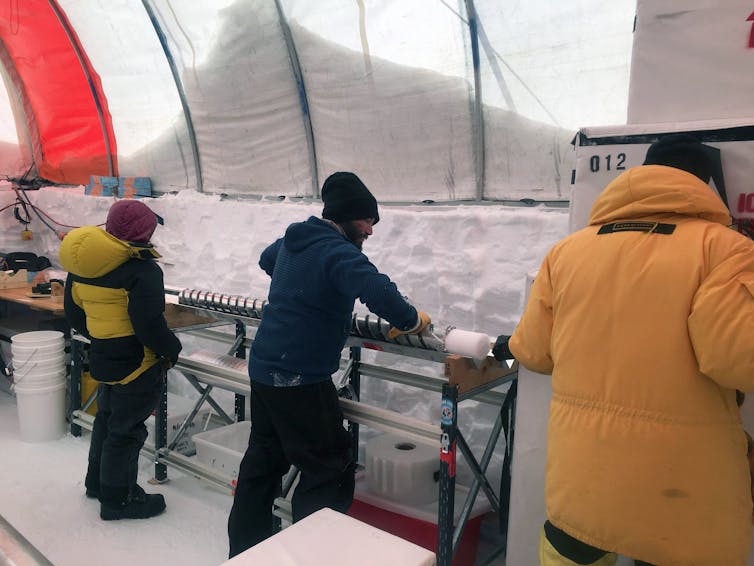 Australia says the runway would have significant science benefits.
Australian Antarctic Division
Australia says the runway would have significant science benefits.
Australian Antarctic Division
Australia: an environmental leader?
Australia has traditionally been considered an environmental leader in Antarctica. For example, in 1989 under the Hawke government, it urged the world to abandon a mining convention in favour of a new deal to ban mining on the continent.
Australia’s 20 Year Action Plan promotes “leadership in environmental stewardship in Antarctica”, pledging to “minimise the environmental impact of Australia’s activities”.
But the aerodrome proposal appears at odds with that goal. It would cover 2.2 square kilometres, increasing the total “disturbance footprint” of all nations on the continent by 40%. It would also mean Australia has the biggest footprint of any nation, overtaking the United States.
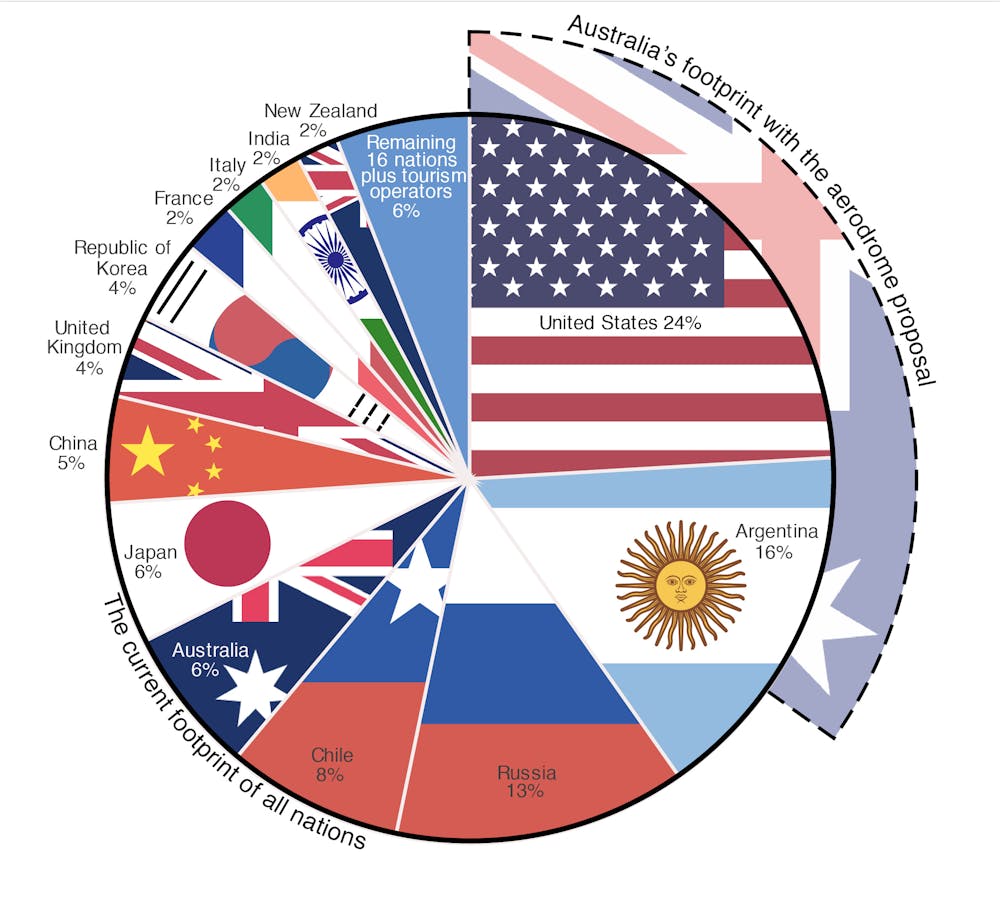 The contribution of disturbance footprint from countries in Antarctica measured from Brooks et al. 2019, with Australia’s share increasing to 35% including the aerodrome proposal.
Shaun Brooks
The contribution of disturbance footprint from countries in Antarctica measured from Brooks et al. 2019, with Australia’s share increasing to 35% including the aerodrome proposal.
Shaun Brooks
Within this footprint, environmental effects will also be intense. Construction will require more than three million cubic metres of earthworks - levelling 60 vertical metres of hills and valleys along the length of the runway. This will inevitably cause dust emissions – on the windiest continent on Earth - and the effect of this on plants and animals in Antarctica is poorly understood.
Wilson’s storm petrels that nest at the site will be displaced. Native lichens, fungi and algae will be destroyed, and irreparable damage is expected at adjacent lakes.
Weddell seals breed within 500 metres of the proposed runway site. Federal environment officials recognise the dust from construction and subsequent noise from low flying aircraft have the potential to disturb these breeding colonies.
Read more: Marine life found in ancient Antarctica ice helps solve a carbon dioxide puzzle from the ice age
The proposed area is also important breeding habitat for Adélie penguins. Eight breeding sites in the region are listed as “important bird areas”. Federal environment officials state the penguins are likely to be impacted by human disturbance, dust, and noise from construction of the runway, with particular concern for oil spills and aircraft operations.
The summer population at Davis Station will need to almost double from 120 to 250 during construction. This will require new, permanent infrastructure and increase the station’s fuel and water consumption, and sewage discharged into the environment.
The AAD has proposed measures to limit environmental damage. These include gathering baseline data (against which to measure the project’s impact), analysing potential effects on birds and marine mammals and limiting disturbance where practicable.
But full details won’t be provided until later in the assessment process. We expect Australia will implement these measures to a high standard, but they will not offset the project’s environmental damage.
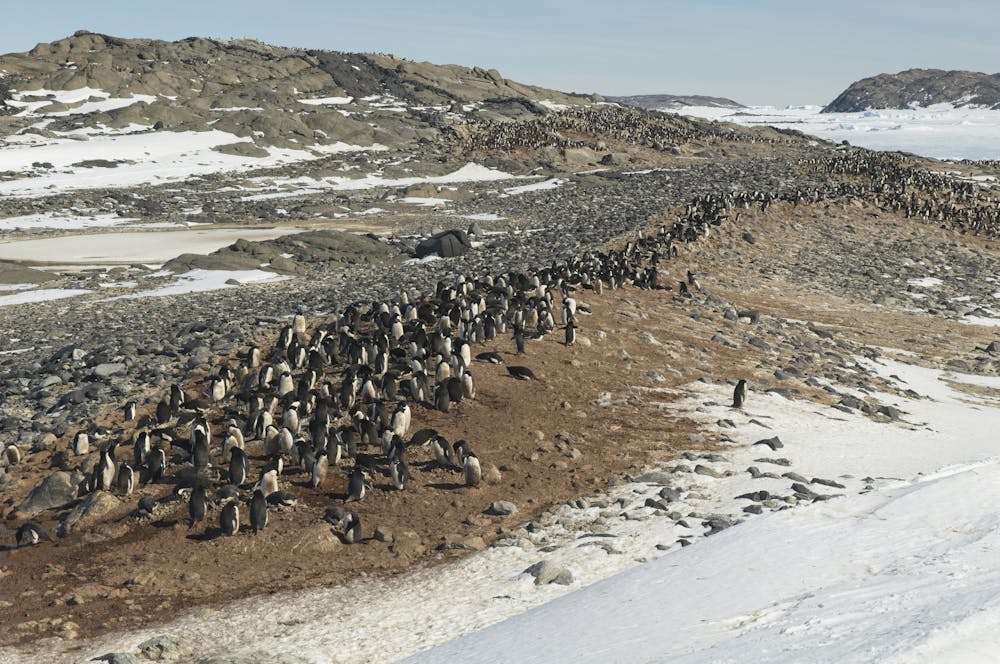 An Adélie penguin colony near Davis Station.
Nick Roden
An Adélie penguin colony near Davis Station.
Nick Roden
Playing politics
So given the environmental concern, why is Australia so determined to build the aerodrome? We believe the answer largely lies in Antarctic politics.
Australian officials have said the project would “contribute to both our presence and influence” on the continent. Influence in Antarctica has traditionally corresponded to the strength of a nation’s scientific program, its infrastructure presence and engagement in international decision-making.
Read more: Microscopic animals are busy distributing microplastics throughout the world's soil
Australia is a well-regarded member of the Antarctic Treaty. It was an original signatory and claims sovereignty over 42% of the continent. It also has a solid physical and scientific presence, maintaining three large year-round research stations.
But other nations are also vying for influence. China is constructing its fifth research station. New Zealand is planning a NZ$250 million upgrade to Scott Base. And on King George Island, six stations have been built within a 5km radius, each run by different nations. This presence is hard to justify on the basis of scientific interest alone.
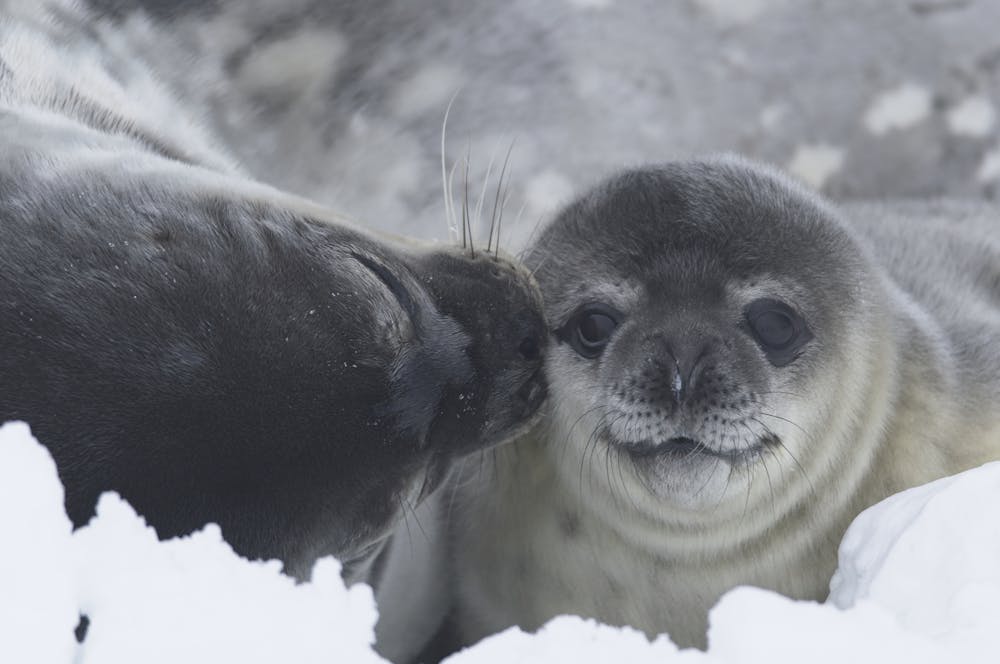 A Weddell seal and her pup near Davis Station.
Nick Roden
A Weddell seal and her pup near Davis Station.
Nick Roden
Getting our priorities straight
We believe there are greater and more urgent opportunities for Australia to assert its leadership in Antarctica.
For example both Casey and Mawson stations – Australia’s two other permanent bases – discharge sewage into the pristine marine environment with little treatment. And outdated fuel technology at Australia’s three stations regularly causes diesel spills.
At Wilkes station, which Australia abandoned in the 1960s, thousands of tonnes of contaminants have been left behind.
Australia should fix such problems before adding more potentially damaging infrastructure. This would meet our environmental treaty obligations and show genuine Antarctic leadership.
Authors: Shaun Brooks, University Associate, University of Tasmania


















