

We asked multicultural communities how best to communicate COVID-19 advice. Here's what they told us
- Written by: Abby Wild, Research fellow, BehaviourWorks Australia, Monash Sustainable Development Institute, Monash University
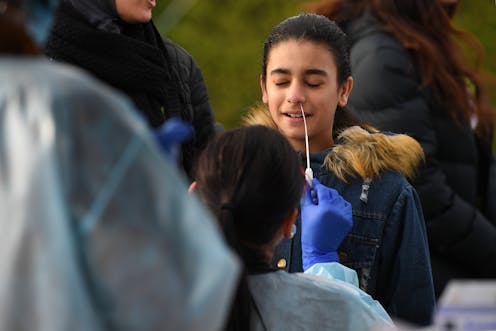
As COVID-19 cases began spreading across many multicultural communities in Melbourne last last month, Victoria’s chief health officer said it was essential for the government to properly engage with linguistically diverse communities.
From a behavioural science perspective, we know working in partnership with a target audience helps to understand what drives their behaviours and how best to communicate health messages that people respond to.
To find out how the government could better communicate with culturally and linguistically diverse (CALD) communities, we embarked on a research project to ask them.
The leaders we spoke with were from the Chinese Community Council of Australia, Islamic Council of Victoria, Asian Australian Alliance, Faith Communities Council Victoria, Ethnic Communities Council of Victoria, Federation of Ethnic Communities Councils of Australia and multicultural community leaders from Monash health.
1. Involve communities in developing strategies
During last summer’s bushfires, Australia’s Islamic community mobilised to support the relief efforts, delivering truckloads of supplies to victims and cooking breakfasts for firefighters. These efforts allowed other multicultural communities to understand the severity of the crisis and also contribute.
This kind of cooperation is now being seen in the coronavirus pandemic, too. Members of various multicultural groups are working together to educate their communities about the pandemic and how they can help control the spread.
This empowers communities to be part of the solution by developing strategies together and leaning from one another. As one leader from the Islamic Council of Victoria told us,
We said to the government: use our leaders and volunteers. [COVID-19] testing is a perfect example. If you are from a CALD community and you have someone coming to your door saying ‘we want to test you’ … if that person is someone from their own community of faith, does the traditional greetings in whatever language, you already have one foot in.
Read more: Melbourne tower lockdowns unfairly target already vulnerable public housing residents
2. Tailor messages to community values
Understanding the importance of cultural context and values, and tailoring messages to align with those values, is also important when communicating with multicultural communities.
Richmond AFL player Bachar Houli, a devout Muslim and community leader, provided a powerful example of this when he shared on social media that his mother has been admitted to the ICU with COVID-19.
Houli tailored his message to the values of the Muslim community, emphasising the sanctity of life and importance of close, physical connection and family.
The Islamic Council of Victoria leader explained to us,
One of the key things for the Muslim community is the sanctity of life. Life is most precious thing; whoever it is, whatever their faith, life is precious and we must do whatever we can to protect it.
3. Use trusted messengers
Health information also needs to be delivered by trusted messengers who are acceptable and accessible to the target community.
For example, multicultural community leaders and health workers have been reaching out to their communities directly to help them access services. One such leader told us,
Community [members] believe if they go to the hospital, they will not come back because that’s what they heard from overseas … I call this mother and daughter every hour, until they go and get tested, get treatment, and now they are doing very well.
Religious leaders also have an important role to play when it comes to modelling desired behaviours. Some have done so by shifting religious ceremonies online to encourage people to stay at home.
Multicultural leaders also pointed to the importance of gender sensitivity when it comes to face-to-face interactions in some communities. An Asian Australian Alliance leader told us,
Women from South Asian communities, especially Muslim women, may not feel comfortable speaking with a man who comes to the door. As the Muslim Women’s Association has been saying: if you want to talk to them, it should be a woman.
4. Use channels that your audience can access
Each communication channel must be chosen with the individual community in mind. For example, the Chinese community engages with messages sent via WeChat. Other communities might engage better with Facebook videos or phone conversations with respected community leaders.
The Islamic Council Victoria leader told us,
One of the things that we are doing … on a weekly basis is being proactive [and] getting the chief medical officer or one of his deputies to address the community and have a Q&A session using Zoom … this has been an ongoing thing to get the message out to the wider community and anyone is able to come and participate.
These outreach strategies must not only include translating health information into many languages, but also using different communication methods, for example, having community leaders record messages to send to members of the community.
As a Federation of Ethnic Communities Councils of Australia leader explained,
The [written] translations are probably reaching 80% of the community and that 80% probably also speaks English. It’s the 20% we are trying to reach who are disconnected from SBS, social media, etc., but do listen to their community leaders.
Read more: We could have more coronavirus outbreaks in tower blocks. Here's how lockdown should work
5. Establish a national peak body for multicultural health issues
The COVID-19 pandemic has created links across multicultural communities that have previously been unconnected. It has provided an opportunity to unite around a shared interest in community health and well-being, and to amplify community voices by coming together.
As one multicultural council leader told us,
there is a tendency for CALD communities to work within their own language or cultural group, Indians with Indians, Chinese with Chinese and so on … but during COVID, we are seeing some of these groups starting to talk to each other, and join together.
What’s lacking is a national platform to represent and support cooperative partnerships and working relationships across multicultural communities.
The creation of such a body would allow multicultural leaders to come together to share what they’ve learned and advise the national cabinet on health issues related to their communities.
If the government continues to partner with multicultural communities and adopts some of these strategies, it will certainly help ensure health-related messages are not lost in translation.
Authors: Abby Wild, Research fellow, BehaviourWorks Australia, Monash Sustainable Development Institute, Monash University


















