

Environment Minister Sussan Ley is in a tearing hurry to embrace nature law reform – and that's a worry
- Written by: Peter Burnett, Honorary Associate Professor, ANU College of Law, Australian National University
The Morrison government on Monday released a long-awaited interim review into Australia’s federal environment law. The ten-year review found Australia’s natural environment is declining and under increasing threat. The current environmental trajectory is “unsustainable” and the law “ineffective”.
The report, by businessman Graeme Samuel, called for fundamental reform of the law, know as the Environmental Protection and Biodiversity Conservation (EPBC) Act. The Act, Samuel says:
[…] does not enable the Commonwealth to play its role in protecting and conserving environmental matters that are important for the nation. It is not fit to address current or future environmental challenges.
Samuel confirmed the health of Australia’s environment is in dire straits, and proposes many good ways to address this.
Worryingly though, Environment Minister Sussan Ley immediately seized on proposed reforms that seem to suit her government’s agenda – notably, streamlining the environmental approvals process – and will start working towards them. This is before the review has been finalised, and before public comment on the draft has been received.
This rushed response is very concerning. I was a federal environment official for 13 years, and from 2007 to 2012 was responsible for administering and reforming the Act. I know the huge undertaking involved in reform of the scale Samuel suggests. The stakes are far too high to risk squandering this once-a-decade reform opportunity for quick wins.
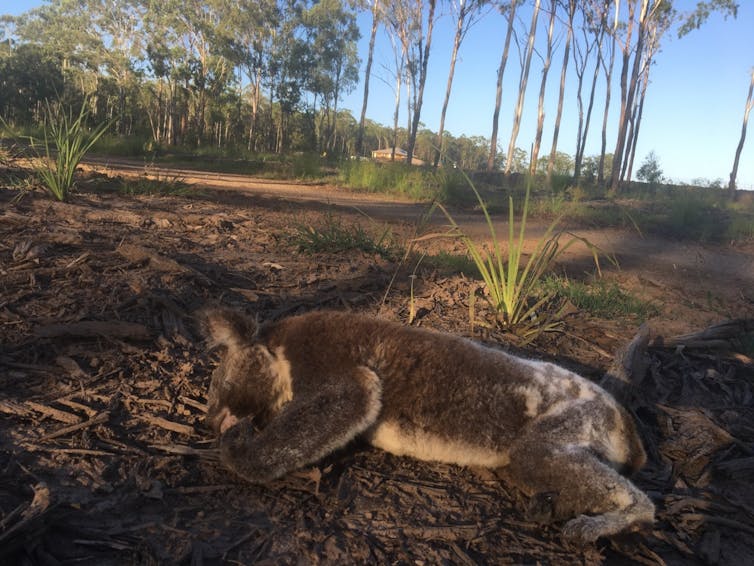 A dead koala outside Ipswich. Federal environment laws have failed to protect threatened species.
Jim Dodrill/The Wilderness Society
A dead koala outside Ipswich. Federal environment laws have failed to protect threatened species.
Jim Dodrill/The Wilderness Society
‘Fundamental reform’ needed: Samuel
The EPBC Act is designed to protect and conserve Australia’s most important environmental and heritage assets – most commonly, threatened plant and animal species.
Samuel’s diagnosis is on the money: the current trajectory of environmental decline is clearly unsustainable. And reform is long overdue – although unlike Samuel, I would put the blame less on the Act itself and more on government failings, such as a badly under-resourced federal environment department.
Samuel also hits the sweet spot in terms of a solution, at least in principle. National environmental standards, legally binding on the states and others, would switch the focus from the development approvals process to environmental outcomes. In essence, the Commonwealth would regulate the states for environmental results, rather than proponents for (mostly) process.
Read more: A major scorecard gives the health of Australia's environment less than 1 out of 10
Samuel’s recommendation for a quantum shift to a “single source of truth” for environmental data and information is also welcome. Effective administration of the Act requires good information, but this has proven hard to deliver. For example the much-needed National Plan for Environmental Information, established in 2010, was never properly resourced and later abolished.
Importantly, Samuel also called for a new standard for “best practice Indigenous engagement”, ensuring traditional knowledge and views are fully valued in decision-making. The lack of protection of Indigenous cultural assets has been under scrutiny of late following Rio Tinto’s destruction of the ancient Indigenous site Juukan caves. Reform in this area is long overdue.
And notably, Samuel says environmental restoration is required to enable future development to be sustainable. Habitat, he says “needs to grow to be able to support both development and a healthy environment”.
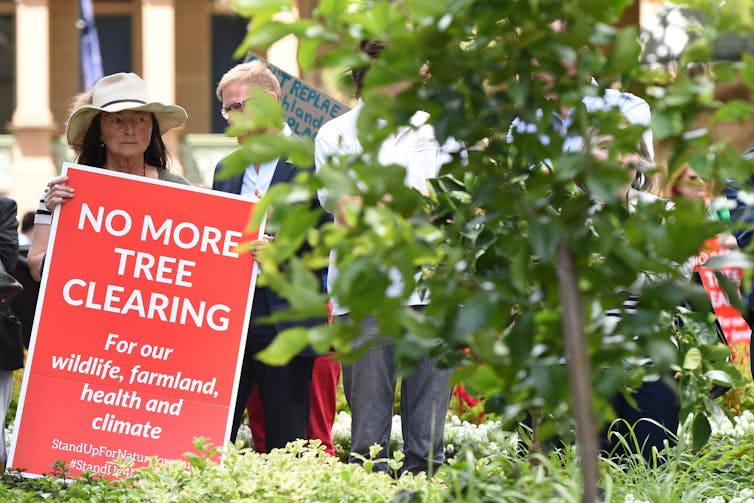 Many in the public are concerned at the state of Australia’s environment.
Dean Lewins/AAP
Many in the public are concerned at the state of Australia’s environment.
Dean Lewins/AAP
Streamlined approvals
Samuel pointed to duplication between the EPBC Act and state and territory regulations. He said efforts have been made to streamline these laws but they “have not gone far enough”. The result, he says, is “slow and cumbersome regulation” resulting in significant costs for business, with little environmental benefit.
This finding would have been music to the ears of the Morrison government. From the outset, the government framed Samuel’s review around a narrative of cutting the “green tape” that it believed unnecessarily held up development.
In June the government announced fast-tracked approvals for 15 major infrastructure projects in response to the COVID-19 economic slowdown. And on Monday, Ley indicated the government will prioritise the new national environmental standards, including further streamlining approval processes.
Read more: Environment laws have failed to tackle the extinction emergency. Here's the proof
Here’s where the danger lies. The government wants to introduce legislation in August. Ley said “prototype” environmental standards proposed by Samuel will be introduced at the same time. This is well before Samuel’s final report, due in October.
I believe this timeframe is unwise, and wildly ambitious.
Even though Samuel proposes a two-stage process, with interim standards as the first step, these initial standards risk being too vague. And once they’re in place, states may resist moving to a stricter second stage.
To take one example, the prototype standards in Samuel’s report say approved development projects must not have unacceptable impacts on on matters of national environmental significance. He says more work is needed on the definition of “unacceptable”, adding this requires “granular and specific guidance”.
I believe this requires standards being tailored to different ecosystems across our wide and diverse landscapes, and being specific enough to usefully guide the assessment of any given project. This is an enormous task which cannot be rushed. And if Samuel’s prototype were adopted on an interim basis, states would be free, within some limits, to decide what is “unacceptable”.
It’s also worth noting that the national standards model will need significant financial resources. Samuel’s model would see the Commonwealth doing fewer individual project approvals and less on-ground compliance. However, it would enter a new and complex world of developing environmental standards.
 The government has said little about improving the environment on the ground.
Eric Vanderduys/BirdLife Australia
The government has said little about improving the environment on the ground.
Eric Vanderduys/BirdLife Australia
More haste, less speed
Samuel’s interim report will go out for public comment before the final report is delivered in October. Ley concedes further consultation is needed on some issues. But in other areas, the government is not willing to wait. After years of substantive policy inaction it seems the government wants to set a new land-speed record for environmental reform.
The government’s fixation with cutting “green tape” should not unduly colour its reform direction. By rushing efforts to streamline approvals, the government risks creating a jumbled process with, once again, poor environmental outcomes.
Authors: Peter Burnett, Honorary Associate Professor, ANU College of Law, Australian National University

















