

Australia has an ugly legacy of denying water rights to Aboriginal people. Not much has changed
- Written by: Lana D. Hartwig, Research Fellow, Australian Rivers Institute, Griffith University
Water management in the Murray-Darling Basin has radically changed over the past 30 years. But none of the changes have addressed a glaring injustice: Aboriginal people’s share of water rights is minute, and in New South Wales it is diminishing.
In the 1990s, governments tried to restore the health of rivers in the basin by limiting how much water could be extracted. They also separated land and water titles to enable farmers to trade water.
Read more: Aboriginal voices are missing from the Murray-Darling Basin crisis
This allowed the recovery of water for the environment and led to the world’s biggest water market, now worth billions of dollars. For a range of reasons, Aboriginal people have largely been shut out of this valuable water market.
Our research, the first of its kind, shows Aboriginal water entitlements in the Murray-Darling Basin are declining, and further losses are likely under current policies. This water injustice is an ongoing legacy of colonisation.
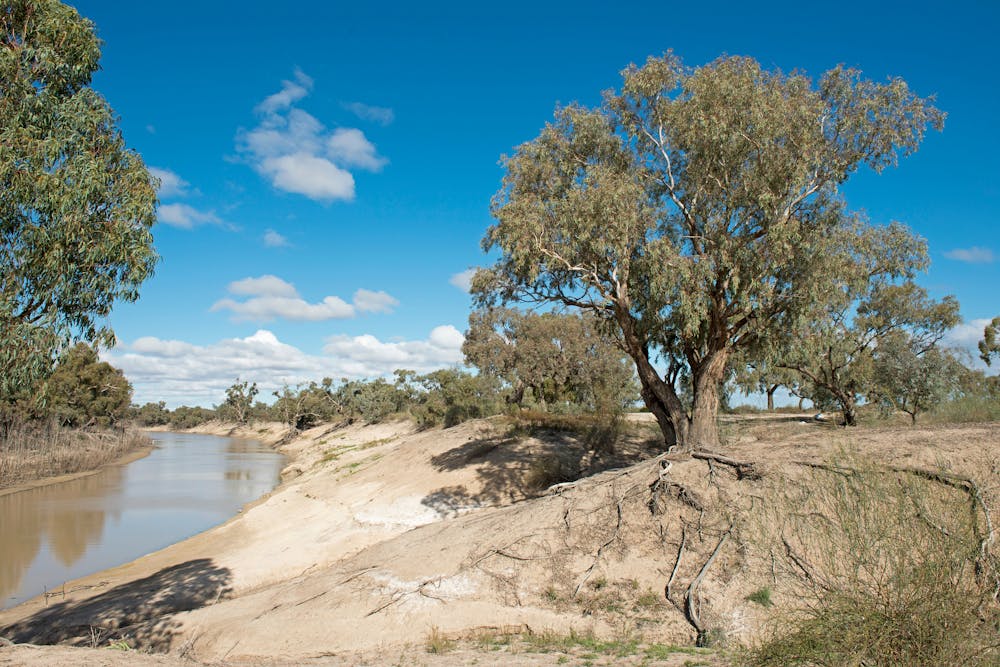 Aboriginal people have largely been shut out of the market.
Shutterstock
Aboriginal people have largely been shut out of the market.
Shutterstock
An unjust distribution of water
A water use right, also called a licence or entitlement, grants its holder a share of available water in a particular waterway. Governments allocate water against these entitlements periodically, depending on rainfall and water storage. Entitlement holders choose how to use this water. Typically, they extract it for purposes such as irrigation, or sell it on the temporary market.
We mapped Aboriginal water access and rights in NSW over more than 200 years, including the current scale of Aboriginal-held water entitlements.
Read more: Water in northern Australia: a history of Aboriginal exclusion
Across ten catchments in the NSW portion of the Murray-Darling Basin, Aboriginal people collectively hold just 12.1 gigalitres of water. This is a mere 0.2% of all available surface water (as of October 2018).
By comparison, Aboriginal people make up 9.3% of this area’s population.
The value of water held by Aboriginal organisations was A$16.5 million in 2015-16 terms, equating to just 0.1% of the value of the Murray-Darling Basin’s water market.
We wanted to understand how these limited water rights affect Aboriginal people today, and the challenges, if any, they face in holding onto these entitlements. This required examining Australia’s water history and its systems of water rights distribution.
Read more: No water, no leadership: new Murray Darling Basin report reveals states' climate gamble
What we found were key moments when governments denied Aboriginal people water rights and, by extension, the benefits that now flow from water access. This includes the ability to use water for an agricultural enterprise, or to temporarily trade water as many other entitlement holders do. We describe these moments as waves of dispossession.
The first wave of dispossession
Under colonial water law, rights to use water, for example for farming, were granted to whoever owned the land where rivers flowed. This link between water use and land-holding remained in place until the end of the 20th century.
As a result, Aboriginal people, whose traditional ownership of land (native title) was only recognised by the Australian High Court in 1992, were largely denied legal rights to water.
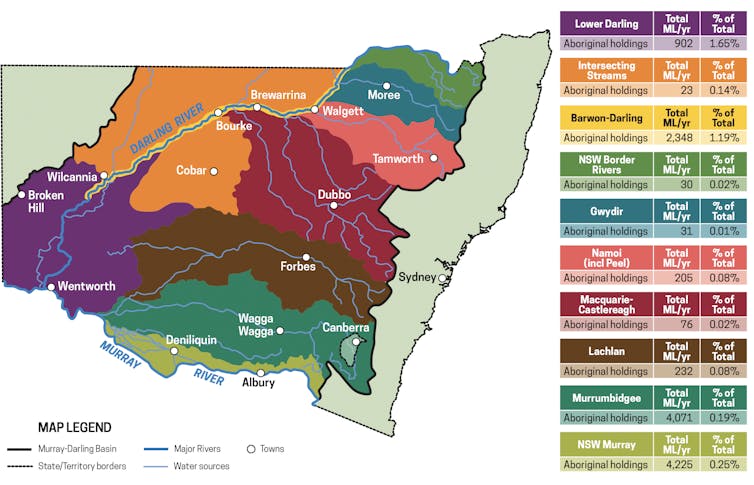 Water entitlements held by Aboriginal by catchment in the NSW portion of the MDB (as at October 2018)
The second wave
During the last quarter of the 20th century, governments introduced land restitution measures, such as the NSW Aboriginal Land Rights Act (1983), to redress or compensate Indigenous peoples for colonial acts of dispossession.
We found water entitlements were attached to some of the land parcels that were transferred to Aboriginal ownership under these processes – but this was the exception.
Read more: 5 ways the government can clean up the Murray-Darling Basin Plan
Land restitution processes intentionally restricted what land Aboriginal people could claim. They were biased against properties with agricultural potential and, therefore, very few of the properties that were returned to Aboriginal ownership came with water entitlements.
At this crucial juncture in land rights reform, federal and state governments entrenched the inequity of water rights distribution by increasing the security of the water rights of those who historically held entitlements. Governments have yet to pay serious attention to the claims of Aboriginal people who see a clear connection between the past and the present in the distribution of water entitlements.
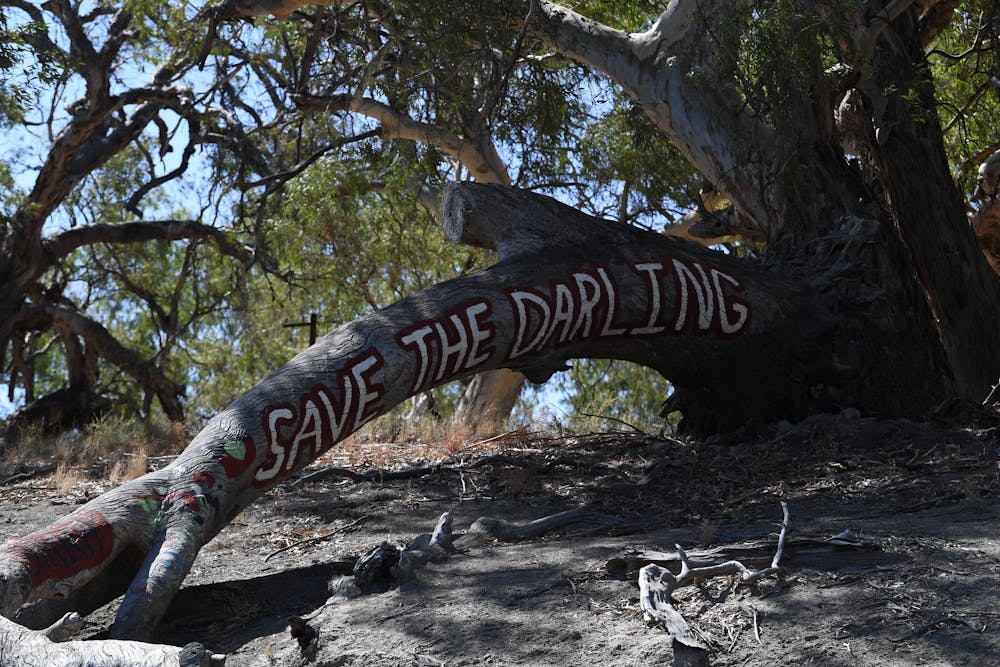 We found key moments when governments denied Aboriginal people water rights and the benefits that come with it.
AAP Image/Dean Lewins
We found key moments when governments denied Aboriginal people water rights and the benefits that come with it.
AAP Image/Dean Lewins
The native title framework has not helped the situation either. Native title is the recognition that Indigenous peoples have rights to land and water according to their own laws and customs.
But it’s difficult for those making a native title claim to get substantial interests in land and waters. The Native Title Act 1993 defined native title to include rights to water for customary purposes and courts are yet to recognise a commercial right to water.
The third wave
We also identified a third wave of dispossession, now underway. From 2009 to 2018, the water rights held by Aboriginal people in the NSW portion of the Murray-Darling Basin shrunk by at least 17.2% (2.0 gigalitres of water per year). No new entitlements were acquired during this decade.
The decline is attributable to several factors, the most significant being forced permanent water (and land) sales arising from the liquidation of Aboriginal enterprises.
Read more: Australia’s inland rivers are the pulse of the outback. By 2070, they’ll be unrecognisable
With water rights held by Aboriginal people vulnerable to further decline, the options for Aboriginal communities to enjoy the wide-ranging benefits of water access may further diminish.
We expect rates of Aboriginal water ownership to be even smaller in other parts of the Murray-Darling Basin (and in jurisdictions beyond the Basin). Research is underway to explore this.
 The Productivity Commission is currently reviewing the progress of reform in Australia’s water resources sector.
AAP Image/Lukas Coch
The Productivity Commission is currently reviewing the progress of reform in Australia’s water resources sector.
AAP Image/Lukas Coch
Australia urgently needs a fair national water policy
The Productivity Commission is now reviewing Australian water policy, and must urgently address the injustices faced by Aboriginal people.
In developing a just water policy, governments must work with First Nations towards the twin goals of redressing historical inequities in water access and stemming further loss of water rights. Treaty negotiations may offer another avenue for water reform.
Over recent decades, Australia has been coming to terms with its colonial history of land management, returning more than a third of the continent to some form of Indigenous control under a “land titling revolution”.
But a water titling revolution that reconnects water law and policy to the social justice agenda of land restitution is long overdue. Indigenous peoples must have the opportunity to care for their land and waters holistically, and share more equitably in the benefits of water use.
Authors: Lana D. Hartwig, Research Fellow, Australian Rivers Institute, Griffith University



















