

The mystery of the Top End's vanishing wildlife, and the unexpected culprits
- Written by Alyson Stobo-Wilson, Postdoctoral Research Associate, Charles Darwin University
Only a few decades ago, encountering a bandicoot or quoll around your campsite in the evening was a common and delightful experience across the Top End. Sadly, our campsites are now far less lively.
Northern Australia’s vast uncleared savannas were once considered a crucial safe haven for many species that have suffered severe declines elsewhere. But over the last 30 years, small native mammals (weighing up to five kilograms) have been mysteriously vanishing across the region.
Read more: Scientists and national park managers are failing northern Australia’s vanishing mammals
The reason why the Top End’s mammals have declined so severely has long been unknown, leaving scientists and conservation managers at a loss as to how to stop and reverse this tragic trend.
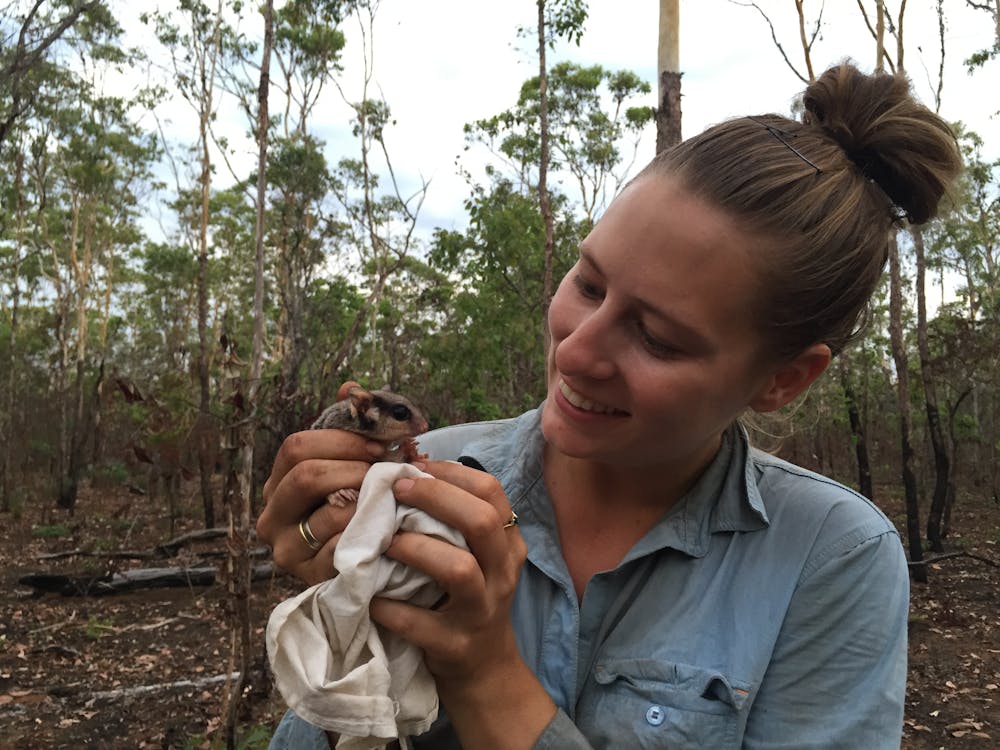 Alyson Stobo-Wilson with a savanna glider. Gliders are among the mammals rapidly declining in northern Australia.
Alyson Stobo-Wilson, Author provided
Alyson Stobo-Wilson with a savanna glider. Gliders are among the mammals rapidly declining in northern Australia.
Alyson Stobo-Wilson, Author provided
Our major new study helps unravel this longstanding mystery. We found that the collective influence of feral livestock — such as buffaloes, horses, cattle and donkeys — has been largely underestimated. Even at quite low numbers, feral livestock can have a big impact on our high-value conservation areas and the wildlife they support.
The race for solutions
In 2010, Kakadu National Park conducted a pivotal study on Top End mammals. It found that between 1996 and 2009, the number of native mammal species at survey sites had halved, and the number of individual animals dropped by more than two-thirds. Similar trends have since been observed elsewhere across the Top End.
Given the scale and speed of the mammal declines, the need to find effective solutions is increasingly urgent. It has become a key focus of conservation managers and scientists alike.
The list of potential causes includes inappropriate fire regimes, feral cats, cane toads, feral livestock, and invasive weeds.
Many small and medium-sized mammals are in rapid decline in northern Australia.With limited resources, it’s essential to know which threats to focus on. This is where our study has delivered a major breakthrough.
We looked for patterns of where species have been lost and where they are hanging on. With the help of helicopters to reach many remote areas, we used more than 1,500 “camera traps” (motion-sensor cameras to record mammals) and almost 7,500 animal traps (such as caged traps) to survey 300 sites across the national parks, private conservation reserves and Indigenous lands of the Top End.
A new spotlight on feral livestock
We found most parts of the Top End have very few native mammals left. The isolated areas where mammals are persisting have retained good-quality habitat, with a greater variety of plant species and dense shrubs and grasses.
This habitat provides more shelter and food for native mammals, and has fewer cats and dingoes, which hunt more efficiently in open areas. In contrast, sites with degraded habitat have much less food and shelter available, and native mammals are more exposed to predators.
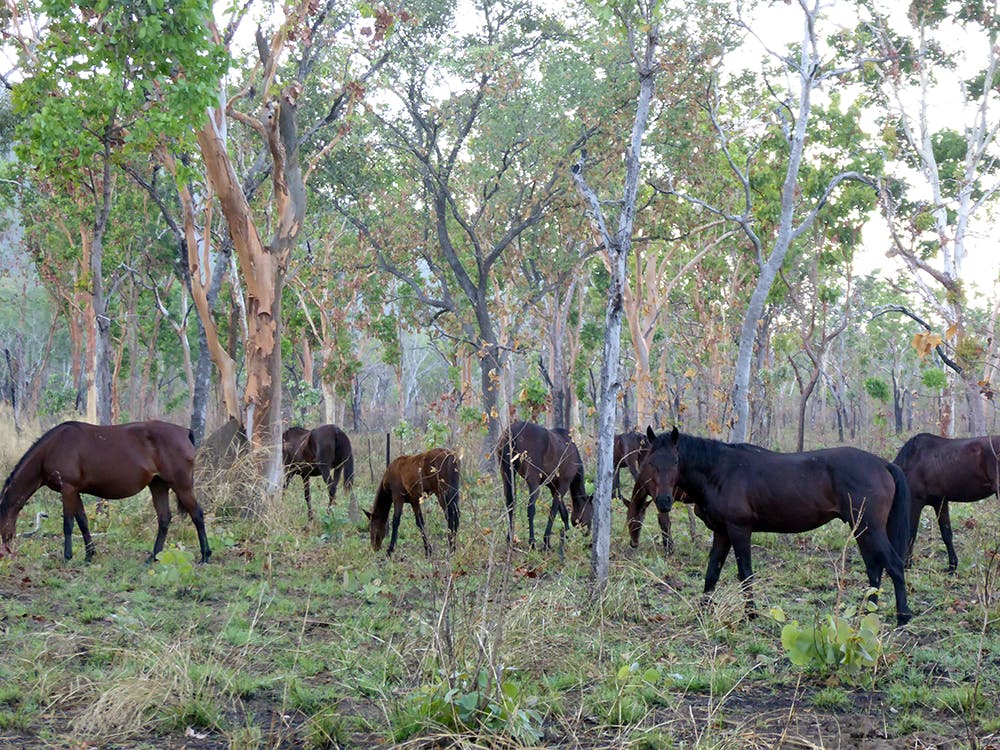 Feral horses can overgraze and trample over habitat, making it far less suitable for small native mammals.
Jaana Dielenberg, Author provided
Feral horses can overgraze and trample over habitat, making it far less suitable for small native mammals.
Jaana Dielenberg, Author provided
Across northern Australia, habitat quality is primarily driven by two factors: bushfires and introduced livestock, either farmed or feral.
Our surveys revealed that areas with more feral livestock have fewer native mammals. This highlights that the role of feral livestock in the Top End’s mammal declines has previously been underestimated.
Even at relatively low densities, feral livestock are detrimental to small mammals. Through overgrazing and trampling, they degrade habitat and reduce the availability of food and shelter for native mammals.
Frequent, intense fires also play a big role. Australia’s tropical savannas are among the most fire-prone on Earth, but fires that are too frequent, too hot and too extensive remove critical food and shelter.
Yet, even if land managers can manage fires to protect biodiversity, for example by reducing the occurrence of large, intense fires, the presence of feral livestock will continue to impede native mammal recovery.
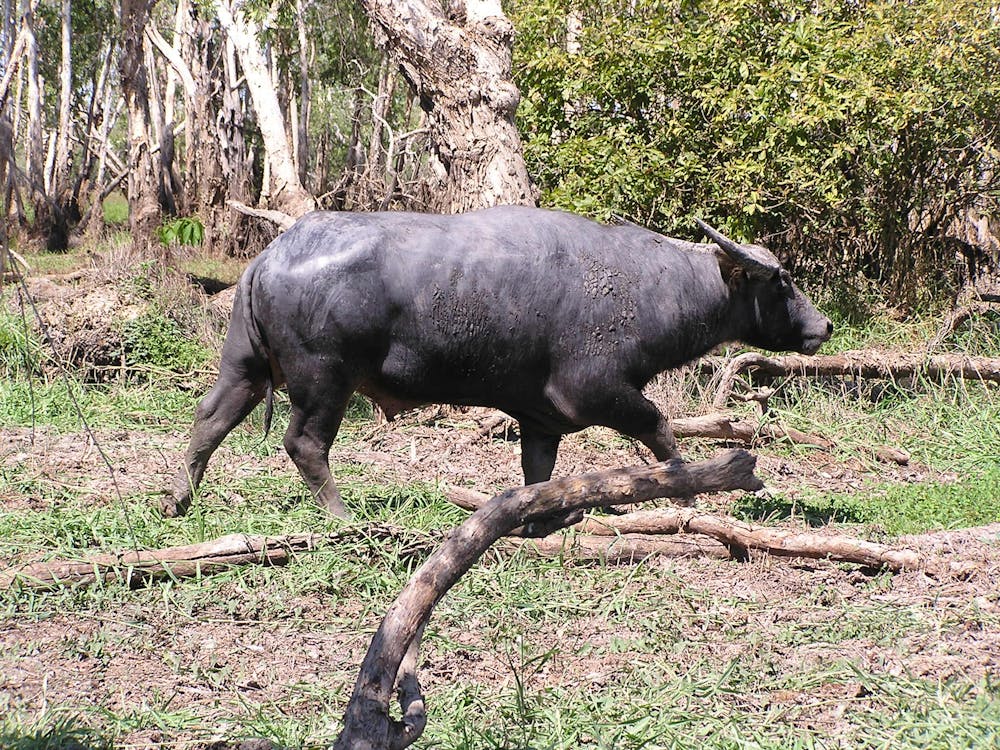 Even small numbers of feral livestock can play a big role in native mammal declines.
Northern Territory Government, Author provided
Even small numbers of feral livestock can play a big role in native mammal declines.
Northern Territory Government, Author provided
A new way to manage cats
Cats have helped drive more than 20 Australian mammals to extinction. So it’s not surprising we found fewer native mammals at our sample sites where there were more cats.
However, our results suggest the best way to manage the impact of cats in this region may not be to simply kill cats, which is notoriously difficult across vast, remote landscapes. Instead, it may be more effective to manage habitat better, tipping the balance in favour of native mammals and away from their predators.
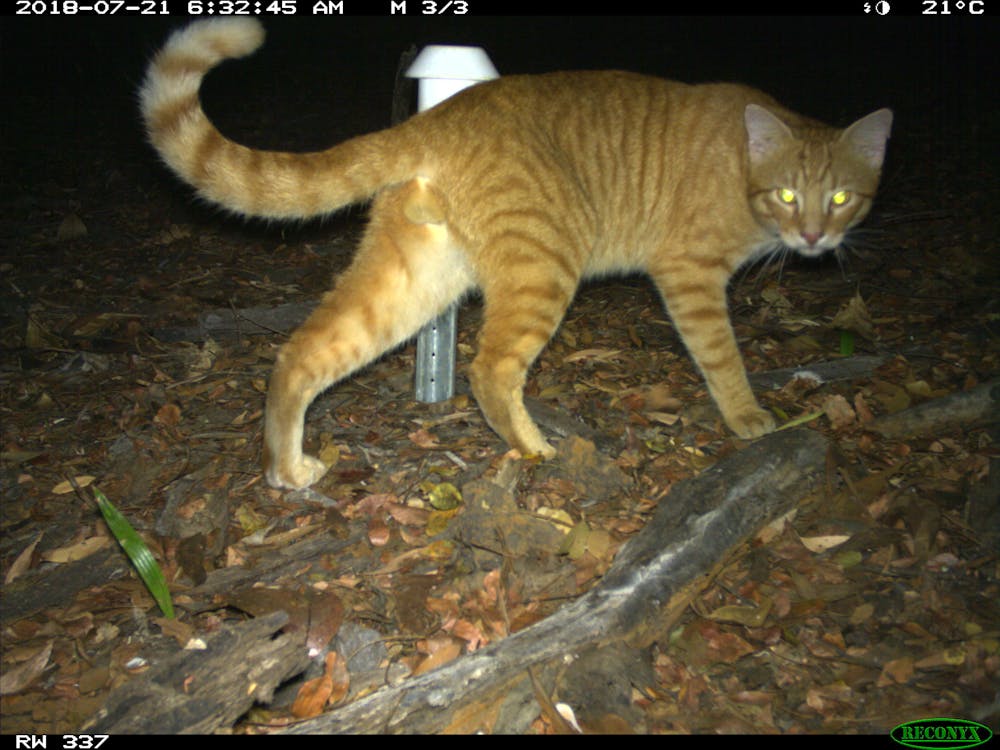 A feral cat at one of the study sites. Cats have helped cause more than 20 native mammal extinctions.
Northern Territory Government, Author provided
A feral cat at one of the study sites. Cats have helped cause more than 20 native mammal extinctions.
Northern Territory Government, Author provided
The combination of prescribed burning to protect food and shelter resources, and culling feral livestock, might be all that’s needed to support native mammals and reduce the impact of feral cats.
What about dingoes?
Many scientists have suggested dingoes could also be part of the solution to reducing cat impacts — as cats are believed to avoid dingoes. With this in mind, we explored the relationship between the two predators in this study.
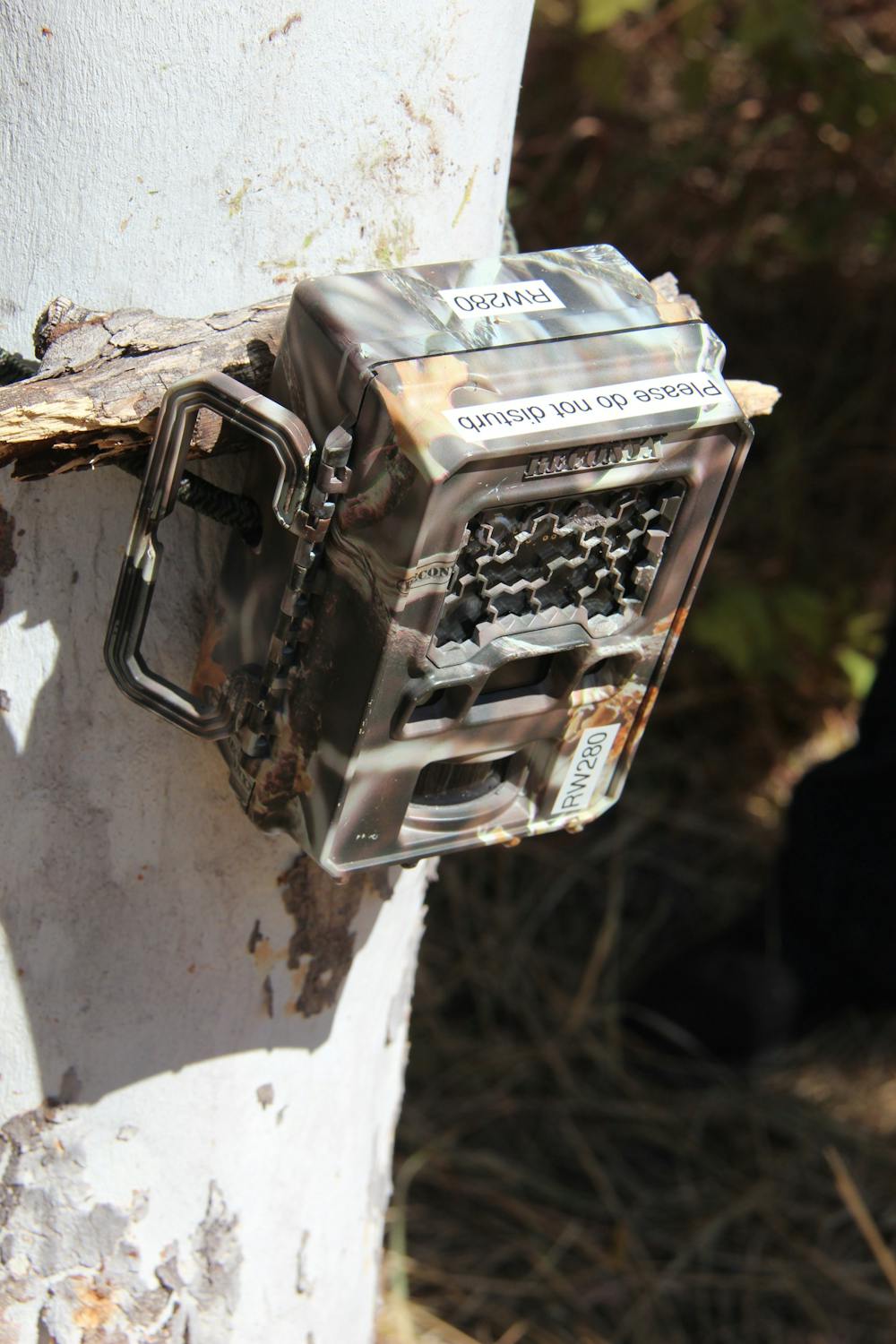 One of more than 1,000 motion detection cameras used in this study.
Jaana Dielenberg, Author provided
One of more than 1,000 motion detection cameras used in this study.
Jaana Dielenberg, Author provided
We found no evidence dingoes influenced the distribution of feral cats. In fact, survey sites with more dingoes had fewer native small mammals, suggesting a negative impact by dingoes.
But, unlike cats, culling dingoes is not an option because they provide other important ecological roles, and are culturally significant for Indigenous (and non-Indigenous) Australians.
Controlling herbivores, not predators
Our study suggests an effective way to halt and reverse Top End mammal losses is to protect and restore habitat. For example, by improving fire management and controlling feral livestock through culling.
Read more: EcoCheck: Australia's vast, majestic northern savannas need more care
It is also very important to conserve the environments that still have high-quality habitat and healthy mammal communities, such as the high-rainfall areas along the northern Australian coast. These areas provide refuge for many of our most vulnerable mammal species.
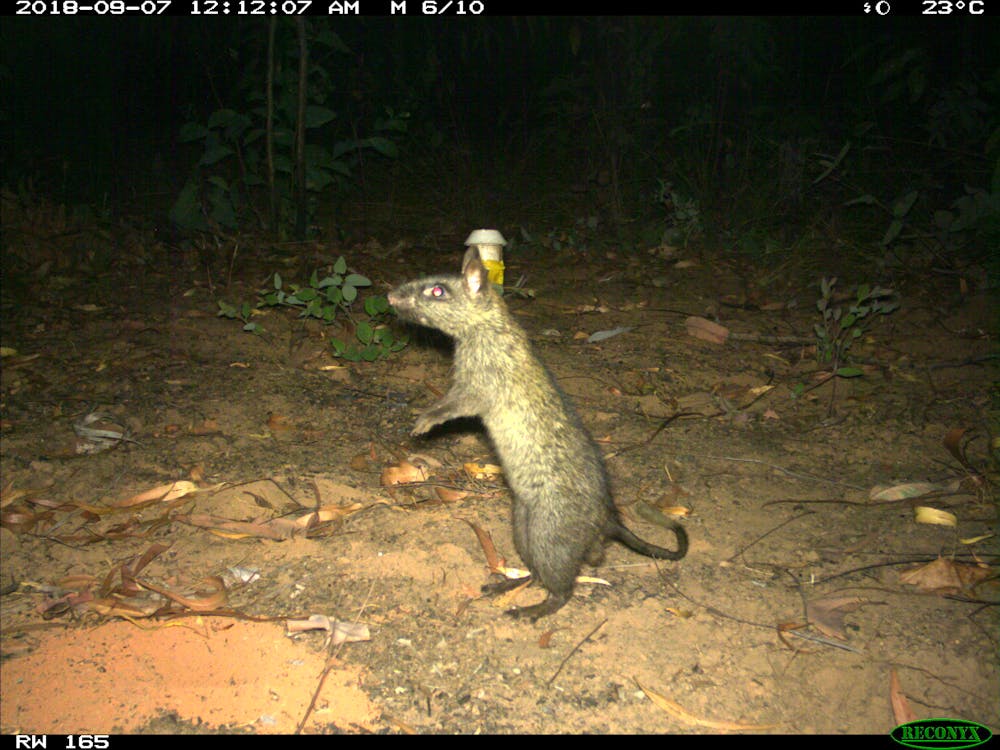 The native black-footed tree-rat has had major declines across northern Australia. It’s vulnerable to cats and is now restricted to areas that still have good quality habitat, fewer herbivores and less frequent fire.
Hugh Davies, Author provided
The native black-footed tree-rat has had major declines across northern Australia. It’s vulnerable to cats and is now restricted to areas that still have good quality habitat, fewer herbivores and less frequent fire.
Hugh Davies, Author provided
The tropical savannas of northern Australia are the largest remaining tract of tropical savanna on Earth and new species are still being discovered.
While there’s more research to be done, it’s crucial we start managing habitat better, before we lose more of our precious mammal species.
The authors would like to gratefully acknowledge the support from many Indigenous ranger groups, land managers and Traditional Owners. This includes the Warddeken, Bawinanga, Wardaman and Tiwi rangers, the Traditional Owners and land managers of Kakadu, Garig Gunak Barlu, Judbarra/Gregory, Litchfield and Nitmiluk National Parks, Djelk, Warddeken and Wardaman Indigenous Protected Areas, and Fish River Station and was facilitated by the Northern, Tiwi and Anindilyakwa Land Councils.
Authors: Alyson Stobo-Wilson, Postdoctoral Research Associate, Charles Darwin University

















