

Google AI


Modern Australian

New Zealand puts an end to new permits for exploration of deep-sea oil and gas reserves

  • Written by: James Renwick, Professor, Physical Geography (climate science), Victoria University of Wellington
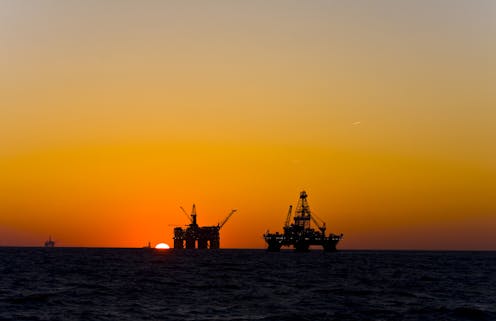
New Zealand puts an end to new permits for exploration of deep-sea oil and gas reserves

The New Zealand government’s announcement that it will not issue any new permits for offshore exploration for oil and gas deposits is exciting, and a step in the right direction.

We know that we can’t afford to burn much more oil if we want to meet the Paris Agreement target of keeping global temperature rise this century well below two degrees above pre-industrial levels. Almost all of the already known reserves must stay in the ground, and there is no room to go exploring for more.

Pursuing further reserves would only lead to stranded assets and would waste time and resources in the short term.

Read more: Why New Zealand should not explore for more natural gas reserves

Moving away from fossil fuels

New Zealand currently has 31 active permits for oil and gas exploration, and 22 of these are offshore. A program set up by the previous government invites bids each year for new onshore and offshore exploration permits. But this year it is restricted to the onshore Taranaki Basin, on the west coast of the North Island.

Complementing the move to shut down the exploration of new deep-sea fossil fuel reserves, the government’s new transport funding plan aims to reduce demand for fossil fuels by putting emphasis on public transport, cycling and walking.

This gets away from the outdated mantra of more roads and more cars that we have seen over the past decade and will tackle the transport sector, which has seen very rapid growth in emissions since 1990. This will help New Zealand onto a low-carbon pathway and promises a more people-focused future.

New Zealand is a small player in global emissions of greenhouse gases but our actions can carry symbolic weight on the world stage. Given our present position of 80% renewable electricity and an abundance of solar, wind, wave and tidal energy, if any country can become zero-carbon, surely New Zealand can. It can only benefit New Zealand - socially, economically and politically - to lead in this crucial race to stabilise the climate.

Read more: A new approach to emissions trading in a post-Paris climate

Rising emissions

As the government announced its ban on new offshore exploration permits, the latest greenhouse gas inventory was also released, showing some good news. New Zealand’s gross emissions went down slightly from 2015 to 2016.

But gross emissions are up nearly 20% since 1990, and net emissions (actual emissions minus the “sinks” from forestry) are up 54% over that time. The main factors that contributed to the increase were dairy intensification and increased transport and energy emissions.

Even though agriculture is still the largest source of emissions overall, energy and transport are close behind. We have seen a near-doubling in carbon dioxide emissions from road transport over the past 27 years.

It is encouraging to see a decrease in emissions from the waste sector. Per head of population, New Zealanders throw away significantly above the OECD average of rubbish, a lot of which is green waste that decomposes and releases methane, another potent but short-lived greenhouse gas.

While New Zealand emits a tiny fraction of the world’s greenhouse gases, on a per-capita basis we are sixth-highest among developed countries. We have as much responsibility as any country to reduce our emissions.

Even though emissions have risen, we are set to meet our national target for 2020 (a 5% reduction on 1990 levels) because of “carry-over” credits from the first Kyoto reporting period from 2008 to 2012. But to live up to more stringent future targets, we need a lot more action than we’ve seen over the last decade. The government plans to introduce zero-carbon legislation that will commit New Zealand to reaching the goal of carbn neutrality by 2050.

This will require serious investment and commitment to renewable technologies, changes in the transport sector, changes to agriculture and land use, and ultimately changes in the way we all live our lives.

Authors: James Renwick, Professor, Physical Geography (climate science), Victoria University of Wellington


Read more http://theconversation.com/new-zealand-puts-an-end-to-new-permits-for-exploration-of-deep-sea-oil-and-gas-reserves-94921

Why the Spring School Holidays Are a Great Time to Visit Coffs Harbour

The spring school holidays are a good time to spend a few days on the Coffs Coast. The weather is starting to warm up, there is plenty to do outdoor...

What to Do When an Older Car Is No Longer Worth Keeping in Melbourne

Ever looked at another repair quote and wondered whether your old car is still worth the trouble? It is a common turning point for Melbourne motoris...

Your Baby's First Year: A Local Guide to Feeding, Sleep, and When to Get Extra Support

Ask ten parents in a Brisbane mothers' group how their baby is feeding or sleeping, and expect ten different answers.  Someone's baby sleeps throug...

Kitchen and Laundry Makeover Ideas That Don't Require a Full Renovation

Full kitchen renos are expensive — and most people don't actually need one.  They need the kitchen to stop looking like it's stuck in 2009, or they...

How Technology Is Reshaping the Modern Australian Commercial Kitchen

The commercial kitchen has always been shaped by technology. Refrigeration changed how ingredients could be stored, modern ventilation transformed k...

The Number on a Roller Blind Fabric That Nobody Explains

Somewhere in the fabric book, next to the colour name, there is a percentage. Three per cent. Five per cent. Ten per cent. Nobody explains it, most c...

What’s Trending in Men’s Jewellery This Father’s Day!

Finding a Father’s Day gift that feels personal, stylish and genuinely wearable is not always easy. While socks and novelty mugs have traditionally ...

Road Signs: Understanding Their Role in Clear and Effective Signage

Effective signage and display hardware can help businesses communicate information, promote products and organise customer or visitor movement. Road...

Bottle Label Printing: Key Factors to Consider Before Your Next Packaging Run

Effective packaging begins with understanding the product, bottle material, artwork and production requirements when planning bottle label printing. H...

Planning a Long-Distance Move With Interstate Movers Melbourne

Moving between states involves more planning than a typical local relocation. Along with packing and transporting household belongings, you need to...

Understanding the Role of an I/O Controller in Industrial Automation

Modern industrial systems depend on accurate communication between sensors, machines and control systems. An I/O controller can help manage this commu...

How the Right Mining Hose Supports Demanding Operations

Mining environments place considerable demands on equipment used for material transfer, water management and processing. Hoses operating in these co...

Simple Ideas for Making Social Gatherings More Memorable

We have all been to those parties where everyone just stands around the kitchen island, staring at their phones, waiting for someone else to make a mo...

Outdoor Wall Lights: Improving Exterior Lighting Around Your Home

Lighting can influence how a room looks, feels and functions, so the right fitting should be selected according to both appearance and practical req...

Commercial Office Cleaning: Combining Routine Office Cleaning With Melbourne Service

Keeping a workplace clean requires a service that can accommodate everyday tasks as well as the particular needs of the business. Professional comme...

Caravan Sales in Queensland: How to Find the Right Caravan for Sale QLD

Caravan ownership is about more than having somewhere to sleep while travelling. For many Queenslanders, it is one of the best ways to explore regio...

What Sir Walter Buffalo Turf Actually Costs in 2026 (And Why Quotes Vary So Much)

Two quotes landed on a Hills District homeowner's kitchen table last spring for the exact same 80-square-metre backyard. One said $12 a metre. The o...

Nearly 1,300 NSW Hospital Beds Are Occupied By People Who Are Ready To Go Home

1,276 people in NSW hospitals have been medically cleared for discharge but remain in hospital because they're still waiting for NDIS or aged care sup...















