World-first mining standard must protect people and hold powerful companies to account
- Written by Deanna Kemp, Professor and Director, Centre for Social Responsibility in Mining, The University of Queensland
This month, the first global standard to prevent mining catastrophes was released, following the tragic collapse of a tailings dam in Brazil last year which killed 270 people.
People living near or downstream from a mine deserve to know they’ll be safe. While the standard requires mining operators to act transparently, it’s being rolled out without independent oversight. And it’s not clear how communities – many of them vulnerable – will be supported to understand mining projects and their implications.
The standard comes at a time when public visibility of the mining industry is at a low. The COVID-19 pandemic has restricted movement globally, making it harder for outside experts, journalists, investors and regulators to monitor what’s happening on the ground.
Tailings dams are among the largest human-made structures on the planet. Their collapse has become more frequent in recent years, and Australia is not immune. Independent oversight is necessary to hold mining companies to account.
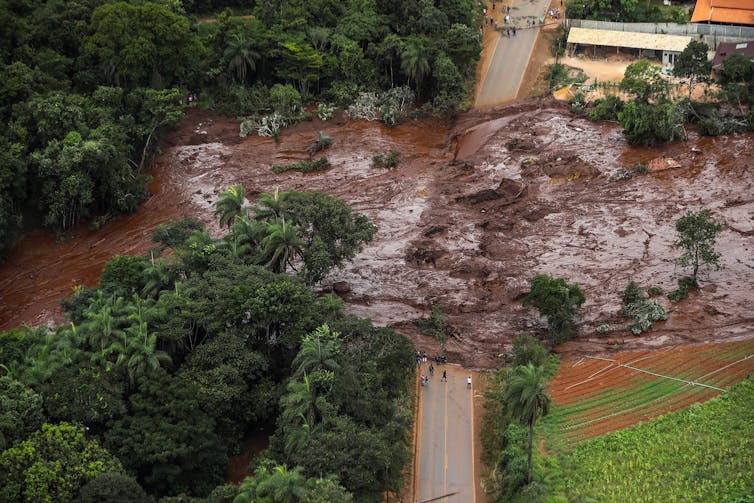 Tailings dam failures, such as this in Brazil last year, are becoming more common.
Antonio Lacurda/EPA
Tailings dam failures, such as this in Brazil last year, are becoming more common.
Antonio Lacurda/EPA
Towards safer tailings
Tailings are the residues left over from mining and minerals processing – a combination of finely ground rock, chemicals and water. They are commonly stored in the mining lease area, in huge engineered structures.
Tailings often contain tiny particles that can damage the environment by releasing toxic substances such as arsenic and mercury, contaminating soil and water.
The new global standard aims to guide the safe management of tailings facilities, with a goal of “zero harm” to people and the environment. It spans the earliest conception stages to planning, construction, operation, closure and post-closure activities such as rehabilitation.
The standard was developed through an independent process triggered by a devastating tailings dam collapse in Brazil in January 2019. Mud and mining waste from the Córrego do Feijão mine washed across the town of Brumadinho, killing 270 people.
Read more: Dam collapse at Brazilian mine exposes grave safety problems
That tragedy followed another tailings dam collapse in Brazil in 2015. The dam, part owned by Australia’s BHP, triggered a mud flow that killed 19 people and devastated the river system.
Tailings dam failures have also occurred in Australia. In 2018, a dam slumped at the Cadia gold mine in New South Wales, releasing more than a million tonnes of slurry elsewhere on the site.
This month, a report by Victoria’s Auditor-General revealed systemic regulatory failures in the management of former mines. It cited the Benambra copper and zinc mine, which ceased operations in 1996. A tailings dam containing 700,000 tonnes of sulphuric material was later found to be at risk of release due to erosion or embankment failure.
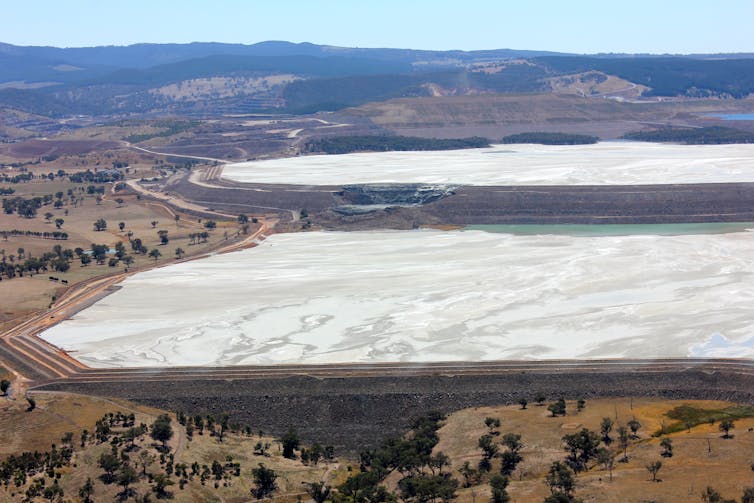 The Cadia gold mine in western suffered a partial tailings dam collapse in 2018.
Newcrest
The Cadia gold mine in western suffered a partial tailings dam collapse in 2018.
Newcrest
The right to know
The exact number of active tailings facilities globally is not known, but it’s thought to be in the tens of thousands. Thousands more are inactive or abandoned.
Local communities have a right to know about these structures and their risks, but sometimes struggle to access information.
The new standard includes unprecedented requirements for operators to publicly disclose information including:
- the rationale for site selection and facility design
- consequence classification (ranking the severity of a potential failure)
- risk management and emergency preparedness plans
- the outcomes of independent reviews
- operator capacity to cover the costs of reclamation for closure.
Our research shows a high number of tailings facilities around the world are in areas with low levels of literacy and governance, and correspondingly high levels of inequality and corruption.
This means local communities should be given strong support to access and understand tailings information. An independent entity is also needed to oversee implementation of the standard, and help make mines publicly accountable.
Mining investor groups, with trillions of dollars under management, are also seeking this information to safeguard their investments.
Public accountability
Civil society groups have argued the standard does not go far enough to protect workers, communities and ecosystems.
Critics also highlight that, as yet, there is no independent mechanism for implementation or enforcement. On this, we agree. To date, an oversight body for the standard has not been established, and the standard has not been incorporated into national laws. That means the role of investors, shareholders and the general public is critical to holding companies to account.
Read more: Investors push for positive global change in tailings management
A recent Australian example shows the pressure the public can bring to bear on mining companies. In May, it emerged Rio Tinto destroyed a 46,000-year heritage site on traditional lands in the Pilbara region of Western Australia. As information about the incident came to light, an outraged public demanded a federal inquiry, now underway.
Rio Tinto is also conducting a board-led review and, after public pressure, has promised to make it public.
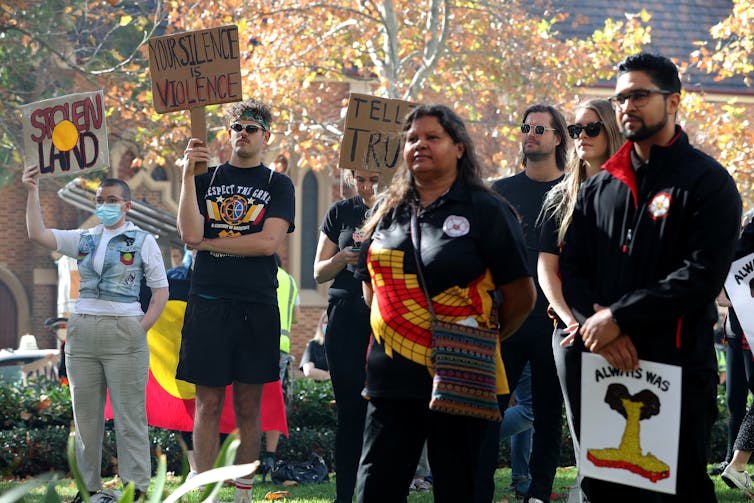 A public outcry followed news Rio Tinto had destroyed a 46,000-year-old site on traditional Indigenous land.
Richard Wainwright/AAP
A public outcry followed news Rio Tinto had destroyed a 46,000-year-old site on traditional Indigenous land.
Richard Wainwright/AAP
Next steps
The architects of the standard – the United Nations Environment Programme, the Principles for Responsible Investment, and the International Council on Mining and Metals – are now discussing how to implement it to achieve industry change.
The global transition towards low-emissions technology brings even sharper focus to this issue. Increased global demand is expected for metals including copper and gold, iron ore, lead, zinc, cobalt and lithium. Such mines tend to produce larger quantities of tailings than, say, coal mines.
Read more: Why most Aboriginal people have little say over clean energy projects planned for their land
Our research suggests this will lead to more mines – and more tailings facilities – in remote and fragile environments, and on the traditional lands of Indigenous peoples in Australia and elsewhere.
This means making mining companies accountable will become even more important in future, to keep people and the environment safe.
Authors: Deanna Kemp, Professor and Director, Centre for Social Responsibility in Mining, The University of Queensland