

What are universities for? If mainly teaching, can they sack academics for not meeting research targets?
- Written by Pnina Levine, Lecturer in Law, Curtin Law School, Curtin University
Questions about the purpose of universities have been highly topical lately. Federal Education Minister Dan Tehan has suggested the purpose of universities is to produce job-ready graduates – preferably in STEM (science, technology, engineering, maths) rather than HASS (humanities, arts, social sciences) areas.
This has spurred debate about the purpose of universities. Is it to “train young people for jobs” or to “nurture intellectual endeavour and the capacity for expansive conceptual thinking”? Put simply, is the primary focus of universities today meant to be education, or is it both education and research?
There appears to be no national consensus on these questions.
State laws on universities vary
One reason may be the lack of consistency in the objectives and functions set out in the different state laws that govern universities.
Former Chief Justice Robert French’s recent review of freedom of speech in higher education providers noted this inconsistency. Some university acts, he observed:
define the university’s functions by reference to the delivery of education, the provision of facilities for learning and research, and encouraging the advancement of knowledge.
French cited the Australian National University Act 1991 (Cth) as an example of this. Other university acts provide only a single object or none at all.
Read more: Coronavirus and university reforms put at risk Australia's research gains of the last 15 years
The High Court of Australia alluded to the lack of clarity resulting from this inconsistency in a 1982 case, Queen v McMahon; ex parte Darvall. It considered the general functions of universities to include education, research and the maintenance of intellectual standards and integrity.
The case of Zhao v UTS
More attention needs to be paid to the legislation governing universities when considering their purpose. The recent case of Zhao v University of Technology Sydney (UTS) illustrates the consequences of failing to consider this legislation. The Fair Work Commission instead opined about the purpose of a university and the primary working focus of its staff.
Zhao v UTS related to the dismissal of a business academic in mid-2019. UTS dismissed her for alleged unsatisfactory performance because she had failed to meet its research publication requirements.
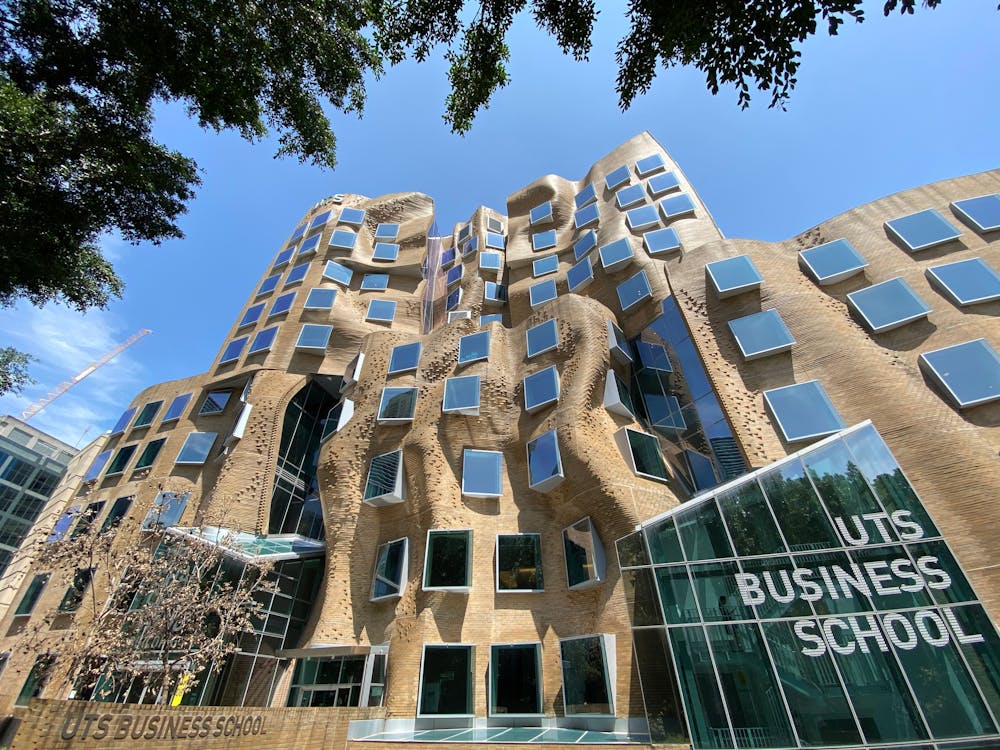 UTS Business School essentially dismissed the academic for failing to have at least one research article published in a high-ranked journal over a two-year period.
Shahram Babakhanian/Shutterstock
UTS Business School essentially dismissed the academic for failing to have at least one research article published in a high-ranked journal over a two-year period.
Shahram Babakhanian/Shutterstock
She sued for unfair dismissal at the Fair Work Commission and won. In his March 2020 decision, the commission’s deputy president, Peter Sams, made some contentious observations on the purpose of universities.
[…] in my humble opinion, the teaching of future generations of tertiary qualified students of all ages is the primary purpose of a first-class university.
[…] achieving the top research rankings and reputation […] may tend to distract from the focus of providing a quality learning experience for students.
His reasoning appeared to be that the academic had performed satisfactorily in her teaching. There was no evidence she was failing in her administrative duties, which meant she was satisfactorily performing the majority of her job. This made it “difficult conceptually and rationally” to conclude that her performance was unsatisfactory overall, warranting dismissal.
Sams did not, however, make any reference to the University of Technology Sydney Act 1989 (NSW). The act expressly states:
The object of the University is the promotion, within the limits of the University’s resources, of scholarship, research, free inquiry, the interaction of research and teaching, and academic excellence.
Commissioners divided on appeal
UTS sought to appeal the decision. Ruling on the university’s application, three Fair Work commissioners were split 2:1 as to whether Sam’s observations on the purpose of universities were “merely general observations” or formed part of his reasoning.
In their joint decision, Vice President Joseph Catanzariti and Commissioner Leigh Johns labelled his observations three times as “unhelpful”. They found, however, that these were “inconsequential musings” and not the critical “driving part” of the reasoning for the decision. They refused permission to appeal.
As they formed the majority, the decision that UTS had unfairly dismissed the academic stands.
Deputy President Alan Colman strongly disagreed. He considered the observations on the purpose of universities to be “highly relevant […] expressions of opinion”. He would have granted permission to appeal on the basis that UTS had not been heard on the purpose of the university and thus had been denied procedural fairness.
 The Fair Work Commission’s failure to consider the University of Technology Sydney Act 1989 (NSW) in its decision was a striking omission.
Shuang Li/Shutterstock
The Fair Work Commission’s failure to consider the University of Technology Sydney Act 1989 (NSW) in its decision was a striking omission.
Shuang Li/Shutterstock
Universities still waiting for clarity
The case has left universities uncertain about their ability to manage the performance of staff who are not meeting research expectations.
Can a university justifiably dismiss an academic whose teaching performance is satisfactory but whose research is non-existent or inadequate? Or is the university obliged to retain the academic, although it has the power to transfer them to a teaching-focused position?
Read more: The government's funding changes are meddling with the purpose of universities
If the primary focus of a university is said to be teaching, as Sams suggested, a decision to dismiss an incompetent teacher may be reasonable, irrespective of their research performance.
Universities are likely waiting with anticipation to see if UTS takes the case to the Federal Court. We can only hope that if the court considers the purpose of universities relevant to the case, it gives some regard to the University of Technology Sydney Act 1989 (NSW).
Authors: Pnina Levine, Lecturer in Law, Curtin Law School, Curtin University

















