can the federal government control the ability of states to sign deals with foreign governments?
- Written by Luke Beck, Associate Professor of Constitutional Law, Monash University
Prime Minister Scott Morrison has announced plans to introduce legislation that would allow the foreign minister to cancel agreements with foreign governments entered into by states, territories, local councils and universities if the agreement is contrary to Australia’s national interests.
Under the bill, the government could scrap the agreement Victoria signed last year to join China’s Belt and Road Initiative.
But it could also go beyond that. Morrison has indicated there are more than 130 existing deals that could come under review.
So, what powers do both the federal and state governments have when it comes to deals with foreign governments? What does the constitution say?
Who can enter into agreements with foreign countries?
Only the federal government can enter into binding international treaties on Australia’s behalf.
However, under Australian law as it currently stands, states, territories, local councils, universities and even private companies and individuals are free to enter into contracts with foreign governments and their entities.
Read more: NT election: is China's Belt and Road Initiative the answer to a struggling economy?
These agreements can relate to things like economic cooperation and development, research deals and cultural exchanges.
And there is no general obligation for states, territories, local councils or universities to tell the federal government of their plans to enter into these agreements.
They are also enforceable in the courts as ordinary contracts would be.
 Victoria Premier Daniel Andrews pushed ahead with the Belt and Road deal, despite misgivings in the federal government.
James Ross/AAP
Victoria Premier Daniel Andrews pushed ahead with the Belt and Road deal, despite misgivings in the federal government.
James Ross/AAP
What is the federal government proposing?
The full text of the proposed legislation has not yet been released. The plan seems to include three key elements.
First, Foreign Minister Marise Payne will be given power to cancel any existing or future agreements with foreign governments or their entities she judges to be inconsistent with Australia’s national interests.
Secondly, states, territories, local councils and universities will be required to notify the federal government in advance of any plan to enter into an agreement with a foreign government.
Thirdly, a public register of existing and future agreements with foreign governments will be established.
Read more: Why is there so much furore over China's Belt and Road Initiative?
Does the federal government have power to do this?
Under the Australian constitution, the federal parliament has power to make laws with respect to “external affairs”. This includes making laws with respect to Australia’s relations with other countries.
There appears to be a sufficient connection between what the government is proposing and Australia’s relations with other countries for the proposed legislation to be supported by the “external affairs” power.
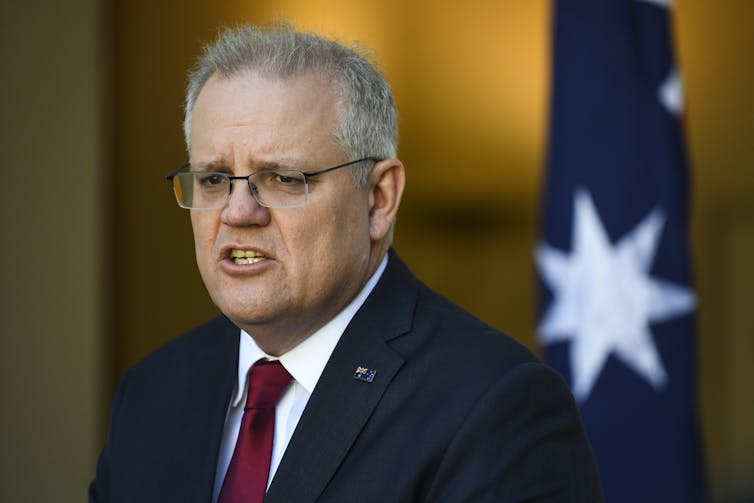 Scott Morrison says the proposed legislation is clear: if agreements are ‘inconsistent with federal foreign affairs policy, they’ll go’.
Lukas Coch/AAP
Scott Morrison says the proposed legislation is clear: if agreements are ‘inconsistent with federal foreign affairs policy, they’ll go’.
Lukas Coch/AAP
Are there limits to the federal government’s controls over the states?
Although Australia has a federal system granting states a certain degree of independence, the states are not completely autonomous from the federal government. There are many federal laws that restrict what the states can do, such as the Racial Discrimination Act 1975.
But there are important limits to the extent to which federal laws and the federal government can interfere with the states.
The drafters of the constitution set up a federal government and a series of separately organised state governments. This fact gives rise to a principle in constitutional law known as the intergovernmental immunities doctrine.
This doctrine prohibits federal laws and governmental actions that operate to destroy or curtail the continued existence of the states or their capacity to function as governments. Because territories are not states, the doctrine doesn’t protect them.
For example, the High Court has held that federal laws seeking to dictate which bank the states keep their money in or control who can be appointed to senior positions in state governments are invalid for breaching this doctrine.
Does the federal government’s proposal breach the doctrine?
The High Court has emphasised, however, the doctrine does not protect every activity or function a state might choose to undertake.
For example, the High Court has held it is not a breach of the doctrine for federal laws to dictate minimum wages and working conditions for non-senior state employees.
Perhaps most relevantly, in a 2013 case, the High Court also ruled that federal laws impacting the ability of states to set up favourable mining royalties schemes to attract local and foreign investment do not breach the intergovernmental immunities doctrine.
Depending on the precise details of the proposed foreign relations legislation, the federal government looks like it is on safe constitutional ground.
While it might negatively affect a state’s economic policies and plans, the proposed legislation does not appear to curtail the ability of any state to function as a government.
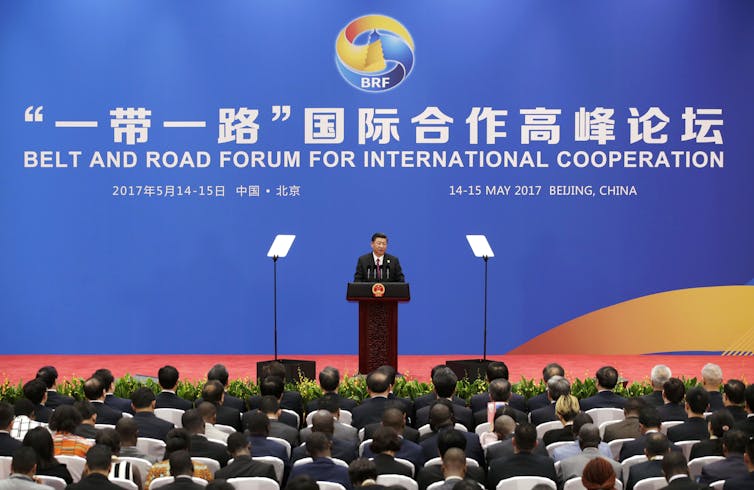 Chinese President Xi Jinping speaks at the Belt and Road Forum in Beijing in 2017.
Jason Lee/Reuters Pool
Chinese President Xi Jinping speaks at the Belt and Road Forum in Beijing in 2017.
Jason Lee/Reuters Pool
What’s the backstory here?
There has been recent controversy over agreements entered into by some states and universities with foreign government entities, especially those in China.
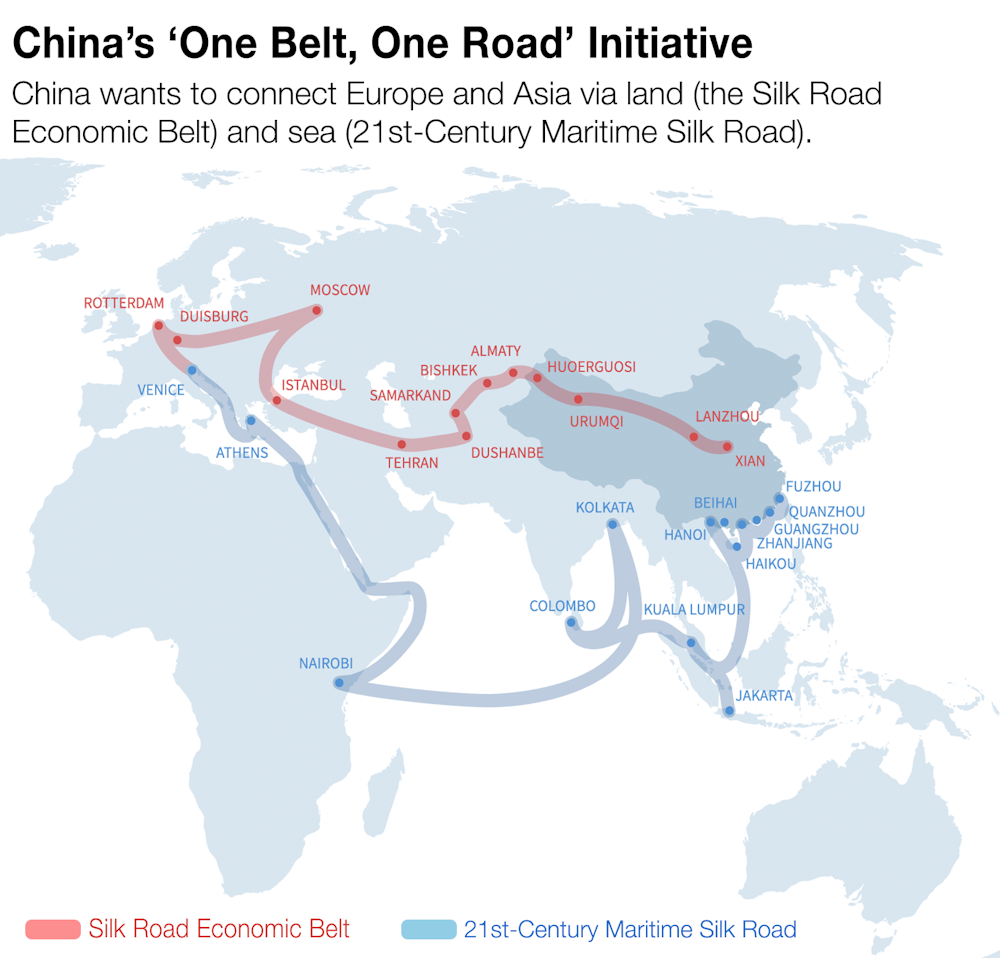
The most notable example is Victoria’s decision to sign up to the Belt and Road Initiative.
This has been controversial because it is seen by some analysts as a strategic geopolitical move by China to deepen other countries’ economic reliance on it, thus increasing its influence.
 CC BY-ND
The decision to lease the port of Darwin to a company with Chinese government links has also sparked concern.
In addition, some states and universities have entered into agreements with Chinese government-linked entities to set up Confucius Institutes or other language and cultural programs.
These agreements are controversial because of claims they facilitate Chinese Communist Party propaganda or allow the Chinese government to influence Australian education and teaching.
Read more:
Explainer: what are Confucius Institutes and do they teach Chinese propaganda?
Is the legislation likely to pass?
Penny Wong, the shadow foreign minister, has indicated Labor supports the general idea underlying the proposed legislation.
So, subject to some scrutiny and negotiation over the precise wording, it looks like the legislation could pass federal parliament easily.
CC BY-ND
The decision to lease the port of Darwin to a company with Chinese government links has also sparked concern.
In addition, some states and universities have entered into agreements with Chinese government-linked entities to set up Confucius Institutes or other language and cultural programs.
These agreements are controversial because of claims they facilitate Chinese Communist Party propaganda or allow the Chinese government to influence Australian education and teaching.
Read more:
Explainer: what are Confucius Institutes and do they teach Chinese propaganda?
Is the legislation likely to pass?
Penny Wong, the shadow foreign minister, has indicated Labor supports the general idea underlying the proposed legislation.
So, subject to some scrutiny and negotiation over the precise wording, it looks like the legislation could pass federal parliament easily.
Authors: Luke Beck, Associate Professor of Constitutional Law, Monash University