COVID-19 cases are highest in young adults. We need to partner with them for the health of the whole community
- Written by Philippa Collin, Associate Professor, Institute for Culture and Society, Western Sydney University
The World Health Organisation recently warned that people in their 20s, 30s and 40s, who may be unaware they’re infected, are driving the spread of COVID-19.
Australian data confirms coronavirus is more common in younger adults. People aged 20-29 have continually had the highest rates of COVID-19 cases.
To reduce these rates and support young people to play their part in stemming community transmission, we need to understand their experiences during the pandemic.
Less severe, but more prevalent
There’s limited evidence on the physical effects of the disease in young people. But epidemiological data suggests it’s less severe in young adults than older adults, and recovery among people in their 20s and 30s is usually rapid and complete.
The virus may be present for several days before there are any symptoms, and many young people will have few or no symptoms at all.
Of course, there are exceptions. Some young people, particularly those who have underlying health conditions or who smoke, may experience severe illness, with potentially long-term effects on their health.
Even young people with mild cases may have prolonged symptoms that prevent their return to work and normal activities.
Read more: Young people are anxious about coronavirus. Political leaders need to talk with them, not at them
Because one of the key indications for testing is the presence of symptoms, testing is understandably lower in this age group.
At the same time, everyday activities common to young people — such as working in casualised and frontline jobs, or visiting multiple venues on a night out — may mean an infected person without symptoms inadvertently transmits the virus across different networks.
Recent public health messaging targeting young people portrays them as naïve or lax. But if we’re going to advise and support them effectively, we need a greater appreciation of the indirect effects COVID-19 has on young people — and how they’re responding.
The indirect effects
COVID-19 has radically affected young adults’ work, study, social lives and caring responsibilities.
Importantly, the various restrictions have exacerbated the social and economic inequalities many young people experience.
Among those aged 15-24, 30% were unemployed or underemployed already before COVID-19.
Nearly 50% of young people have experienced housing stress in the past five years — a continuing trend during the pandemic — while youth homelessness has substantially increased in recent years.
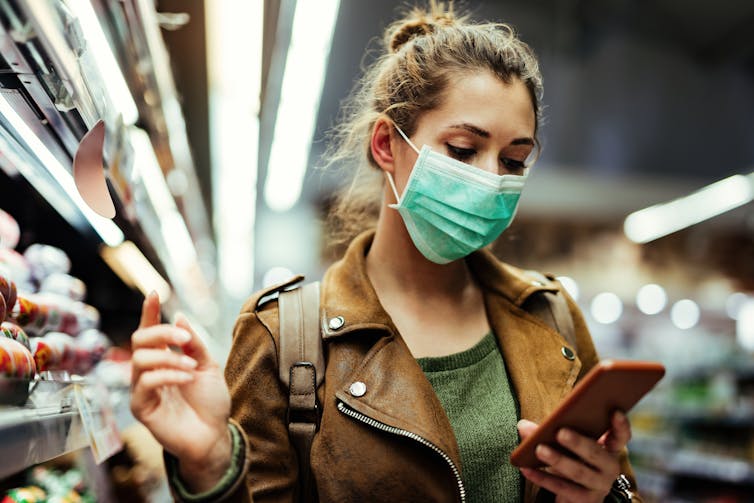
 Younger people who catch COVID-19 often have mild or no symptoms.
Shutterstock
Younger people who catch COVID-19 often have mild or no symptoms.
Shutterstock
The OECD has urged governments to take an intergenerational approach to policy making to reduce the long-term social and economic adversities young people could face from deep recession, extreme unemployment and worsening mental illness.
The most disadvantaged are likely to be worst affected, including those young people who already experience barriers to accessing social, psychological and health services.
How are young people responding?
In the community, young people have reported they’re aware of and are trying to adhere to public health directives to avoid catching or spreading the virus.
Their top concern has been the health and welfare of their family and friends, followed by the pandemic’s effects on their study and immediate and long-term employment. Young people are also reporting declines in their mental health, especially feelings of depression and hopelessness.
Young Australians from multicultural backgrounds have raised concerns about unequal access to technology as universities, health services and many workplaces shift to remote and online modes. They also worry about the effect of COVID-19 on their education, increases in domestic violence and discrimination.
 Public health messaging is likely to be most effective for young people if it’s designed with them.
Shutterstock
Public health messaging is likely to be most effective for young people if it’s designed with them.
Shutterstock
However, young people right across the community are also demonstrating they want to play an active role in the COVID-19 response and recovery, and help others.
They’re leading initiatives to address growing inequalities and inform social and health research and policy; they’re working with advocacy organisations to create relevant COVID-19 resources; and more.
Engaging with young people
Unsurprisingly, many young people are turning off from news media, because they’re feeling fatigued, want to look after their mental health, or because they’re trying to avoid misinformation.
Meanwhile, public health communications to date have been generic, allocated blame or been confusing.
As Australians learn to live with changing or fewer restrictions, governments can start by listening to and communicating respectfully with young people — including those most vulnerable, unaware, or distrustful of government messaging.
While we commend Victorian Premier Daniel Andrews for using videos and memes to share information on his Facebook page, peer-based communication is most likely to engage young people.
Moreover, research on how to achieve adherence with public health directives — such as vaccination — shows messaging must be evidence-based, tailored to the needs of different groups, and directly address their concerns.
Importantly, communications need to be two-way, regular, transparent and respectful.
Read more: Young people's mental health deteriorated the most during the pandemic, study finds
Government policy and communications will be more likely to positively influence community behaviours if they’re developed with the people they’re targeting — something the NSW government has started to do.
Governments everywhere should partner with young people to understand their changing contexts and views, and channel these insights, along with latest epidemiology, into youth-centred public health responses. This will be fundamental to addressing the social determinants of health, arresting community spread and protecting the whole community.
Authors: Philippa Collin, Associate Professor, Institute for Culture and Society, Western Sydney University