

What is the COVID 'bubble' concept, and could it work in Australia?
- Written by Mary-Louise McLaws, Professor of Epidemiology Healthcare Infection and Infectious Diseases Control, UNSW
The concept of a COVID-19 “germ bubble” refers to close contacts with whom we don’t practise mask use or keep physical distancing. In strict lockdown, this generally means just the members of your own household. But several countries, such as New Zealand and the United Kingdom, have experimented with bubbles larger than a single household.
Victorian Premier Dan Andrews will unveil a roadmap out of restrictions on Sunday. Many will be keen to see if a bubble strategy is part of this, after Chief Health Officer Brett Sutton confirmed the concept is under “active consideration”.
Extended bubbles mean your household can nominate other people or households with whom you could have close contact. These would need to be exclusive, so the infection risk is contained, and your nominated households would be required to live in the same town or city.
It’s a way of balancing the risk of exposure to COVID-19 with our need for social interaction, allowing vulnerable and isolated people to have social connections to help cope with the stress of a pandemic.
While the idea undoubtedly comes with risks, it’s crucial for governments to implement restrictions with compassion. A pandemic is a marathon, not a sprint, and if people feel that policies are crafted with compassion they may be more likely to adhere to restrictions in the long run.
Bubbles across the Tasman
In the current lockdown in Victoria, the germ bubble is restricted to people in our immediate household. Only those in an “intimate relationship” are allowed to visit each other.
This increases loneliness and has a large impact on mental health. And, understandably, it has left many single people and people from differing family structures frustrated.
The bubble idea tries to overcome this by allowing people to have close contact with a very defined and exclusive group. It’s a relatively new concept, and was not used in the management of the SARS epidemic in 2003.
New Zealand was the first country to implement an extended bubble during COVID-19, allowing people to have close contact with family members outside their household, under its “alert level 3” restrictions. Its bubble extension was a compassionate solution to the mental health effects of strict lockdowns.
New Zealand’s approach was not just compassionate, but realistic about the modern social structure.
Read more: The loneliness of social isolation can affect your brain and raise dementia risk in older adults
Socially, our important connections are complex and culturally diverse. Our understanding of who is family includes blended families, step-family members, partners, lovers and close friends — all of whom may not share our dwelling.
Nominating members into a compassionate germ bubble may benefit the community in the long run as we move in and out of lockdown.
A bubble approach was also used in the UK when easing restrictions in June, allowing single-person households to form a bubble with one multi-person household.
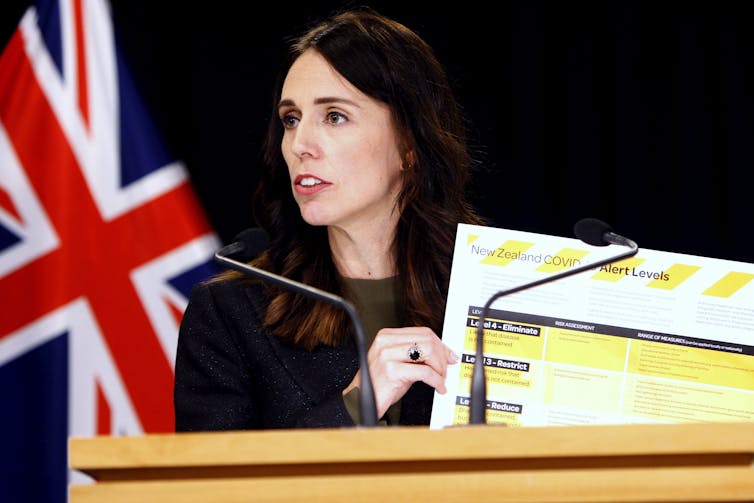 Under New Zealand’s extended bubble, in alert level 3, you could connect with close family members outside your household.
Nick Perry/AP/AAP
Under New Zealand’s extended bubble, in alert level 3, you could connect with close family members outside your household.
Nick Perry/AP/AAP
What about the risks?
Despite the social benefits, there are indeed risks with a virus as infectious as SARS-CoV-2. The advantages of a compassionate approach to mental well-being must be weighed against any infection transmission disadvantages.
If a bubble system was to be implemented anywhere in Australia, a formalised process for joining a germ bubble would be needed. The maximum number of people allowed in any single bubble would also have to be limited.
The bubble would need to be exclusive. If you were “bubbling” with one household, you could not just decide to change to a different one whenever you please. If you did need to alter your bubble, there would have to be a 14-day gap between one set of people leaving and another group joining, to reduce the risk of transmission between bubbles.
Read more: COVIDSafe tracking app reviewed: the government delivers on data security, but other issues remain
A bubble tracker app could facilitate the nomination process. The app would need to include consent to join by both, or all, parties. A bubble system would also need to consider what to do with different areas of varying degrees of transmission.
For example, if one member of a multi-household bubble lives in an area of very high community transmission, this brings a greater risk to the whole bubble, even if other members of the bubble are in areas of low transmission. It means the virus could enter areas of low transmission via these bubbles. People can also pose a greater degree of risk to their bubble if they work in a risky zone or occupation.
In epidemiology, our aim is to reduce risk as much as possible, but in a long pandemic we have to leave room for compassion (without increasing the risk for the wider community).
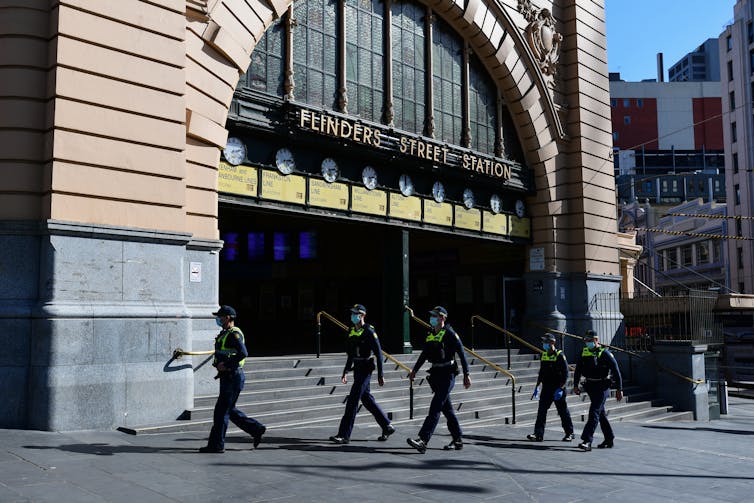 Many Victorians are hoping the state government will consider bubbles as a way of balancing infection risk with the need for social connection.
Erik Anderson/AAP
Many Victorians are hoping the state government will consider bubbles as a way of balancing infection risk with the need for social connection.
Erik Anderson/AAP
Compassionate policies breed compliance
Isolation causes stress and may reduce cooperation. But a compassionate germ bubble may foster resilience by reducing a sense of isolation for people living alone and friends, extended family and partners distressed by the separation.
Developing a compassionate bubble for our future lockdown plans may also help us endure a lengthy pandemic that features multiple lockdowns and ringfencing of hotspots when required. Compassion may improve the community’s willingness to adhere to restrictions rather than merely being forced to comply.
Authorities who respond scientifically may be viewed by their community as competent and reliable. But there cannot be a ration on compassion. A safe and compassionate plan will ensure there is little incentive for some to game the system by joining multiple germ bubbles. A compassionate approach, coupled with the appropriate checks and balances, could lead people to view authorities as trustworthy and capable of leading us safely out of COVID-19.
Read more: As 'lockdown fatigue' sets in, the toll on mental health will require an urgent response
Authors: Mary-Louise McLaws, Professor of Epidemiology Healthcare Infection and Infectious Diseases Control, UNSW
Read more https://theconversation.com/what-is-the-covid-bubble-concept-and-could-it-work-in-australia-144938

















