

4 perspectives on how Victoria should exit stage 4 lockdown
- Written by Adrian Esterman, Professor of Biostatistics and Epidemiology, University of South Australia
Metropolitan Melbourne’s stage 4 lockdown is due to end on Sunday September 13.
While there’s been much speculation around what will come next, we’ll have a clearer picture this Sunday, when Victorian Premier Daniel Andrews announces the state’s “roadmap” for easing COVID-19 restrictions.
Ahead of this announcement, we asked four experts what they see as the most important aspects of Victoria’s path out of stage 4.
Trade-offs and transparency
Adrian Esterman, Professor of Biostatistics and Epidemiology, University of South Australia
I believe we need a much more nuanced approach than simply, say, going back to stage 3 restrictions.
The stage 4 restrictions are taking a heavy toll on people’s mental health. Every restriction must be carefully examined as a trade-off between improved quality of life and increased probability of transmission.
Read more: We need to flatten the 'other' coronavirus curve, our looming mental health crisis
There are some no-brainers. Anecdotally, many people are already breaking the one-hour limit on daily exercise. Increasing it to two hours per day would be a great relief and should have little effect on transmission, provided people stick to social distancing.
Similarly, it’s not clear what evidence underpins the rule that bans people from travelling more than 5km from home (with some exceptions). Surely it could be increased to, say, 10km with little impact on case numbers.
UNSW epidemiologist Mary-Louise McLaws has suggested a bubble approach, which allows spending time with nominated people outside one’s own household. This would go a long way to reducing loneliness for those living on their own.
The 8pm-5am curfew has been contentious, with some experts arguing more attention should be placed on workplace safety rather than policing people’s movements. Given the high number of cases arising from nursing homes and health-care settings, there’s some merit in this argument.
Some restrictions, such as mandatory face masks, probably need to stay for a while longer.
Whatever actions the Victorian government takes at the end of lockdown, I would like it to publish the reasoning and evidence behind the restrictions that remain. This would go a long way towards building public trust.
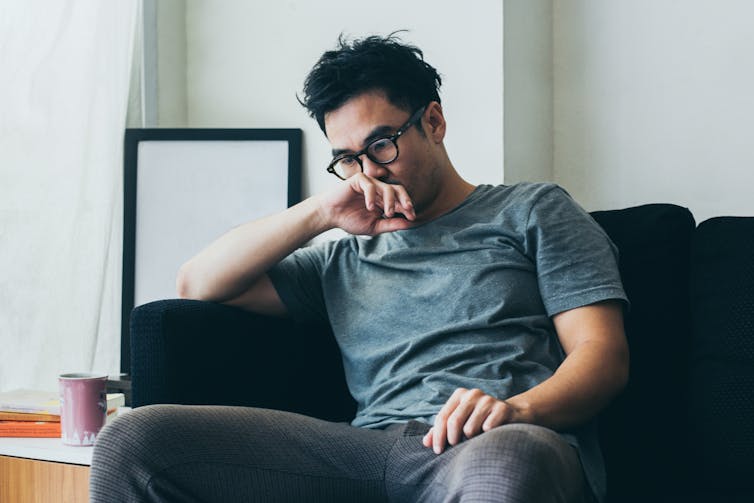 A bubble approach could make a big difference for people living alone.
Shutterstock
A bubble approach could make a big difference for people living alone.
Shutterstock
Being prepared for any sign of resurgence
C Raina MacIntyre, Professor of Global Biosecurity, UNSW
The best path out of stage 4 would be, once daily cases are in the low double digits, to use a step-wise, careful easing of restrictions, maintain the mask mandate, and to promote mask use as a tool that enables freedom rather than removes it. The biggest problem is asymptomatic infection, which means we cannot always identify who is infected and infectious.
We also need to keep up social distancing, make testing easy by continuing to provide drive-through sites widely, control the size and structure of gatherings, and continue hotel quarantine programs (heeding lessons from previous mistakes).
Importantly, we should have a low and clearly defined threshold for increasing the use of these measures, including lockdowns, at the first sign of a resurgence. A few weeks’ delay or procrastination can see the epidemic grow as it did in Melbourne within weeks, from low double digits to high triple digits.
Read more: Which face mask should I wear?
We will continue to live with COVID-19 until we have an effective vaccine. Until then it will be a balancing act between applying and releasing the brakes to enable as much activity as possible, while keeping the disease under control.
As we approach the end of the year and the festive season, we want to make sure the disease incidence is as low as possible, or we could face a large resurgence after New Year.
Plans for safe Christmas and New Year activities should be starting now. This includes seriously considering the safety of religious services, given the risky combination of large gatherings with singing. If going ahead, religious services should be smaller in size, socially distanced, outdoors if possible, or with open windows combined with fans.
Opening up the performing arts
Philip Russo, Associate Professor, Monash University
The first steps of the roadmap need to include a reopening of performing arts venues in Victoria. In regional centres, these venues are often the cultural lifeblood of the town, and a return to live entertainment will offer some minor relief to small businesses, and importantly, provide entertainment, joy and hope to the community.
Some simple strategies can minimise any risk of COVID-19 transmission in these settings.
First, make use of any outdoor venues and provide controlled audience sections (where individual groups are separated from one another). Indoors, restrict attendance to 25% of house capacity, and over time that can increase.
Second, for outdoor or indoor venues, minimise the number of performers on stage, ensure performers step no further than mid-stage, and keep the first four or so rows empty. Cast and crew would need to continue to physically distance, and they might also undergo regular testing.
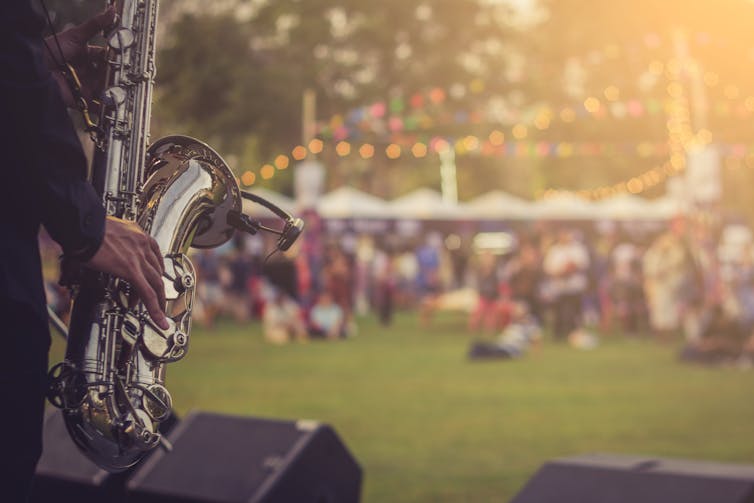 Utilising outdoor spaces would be a good way to get performing arts up and running again.
Shutterstock
Utilising outdoor spaces would be a good way to get performing arts up and running again.
Shutterstock
The audience would need to wear masks, as well as provide their contact details in case of the need to follow up.
Minimise mingling of the audience. No hanging out in the foyer before or after the show, and no interval. Get in, get out. And no loitering near the stage door to meet your idol.
Other strategies could include temperature checking on arrival, and using one door in and one door out. If successful, audience and performer numbers could gradually increase.
If all this was in place, it’s quite likely it would be safer to go the to the theatre than to your local supermarket.
Read more: What is the COVID 'bubble' concept, and could it work in Australia?
A focus on prevention for safe work and play
Catherine Bennett, Chair in Epidemiology, Deakin University
The way ahead needs to be focused as much on prevention as it is on response. We need early warning systems and reliable contact tracing for outbreak identification and control, but we also need more emphasis on how we prevent transmission in the first instance.
Prevention is in our hands. Wearing masks, particularly when we can’t physically distance and in indoor public settings, will reduce transmission, minimise the likelihood restrictions will need to be reintroduced, and pave the way for a time when we might not have to wear masks all the time outdoors.
Our essential workplaces are now operating under COVID-safe plans, and other businesses and industries will need COVID-safe plans to reopen.
We now have the advantage of warmer weather ahead. If cafes and pubs can set up more outdoor seating alongside spaced seating indoors, and if everyone practises good hygiene and distancing, we can work and play safely.
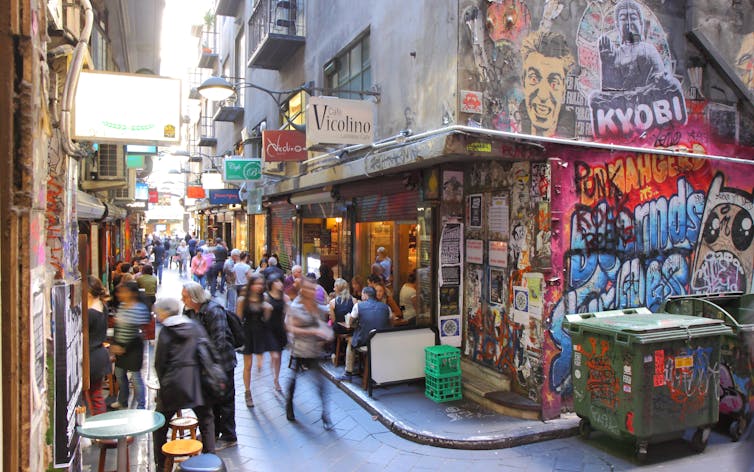 Many Victorians are keen to get back to restaurants and cafes.
Shutterstock
Many Victorians are keen to get back to restaurants and cafes.
Shutterstock
The idea of a “traffic light” alert system is a hot topic right now. This approach designates areas at different levels of transmission, with corresponding travel or other restrictions to be implemented depending on whether the area is green, amber or red.
But blanket restrictions on movement, social networking and business operation are not a precise way to disrupt local transmission chains. We must aim to be as targeted as possible in our interventions to minimise collateral damage as we contain outbreaks.
Read more: Could 'traffic-light' alerts help Victoria exit lockdown safely?
Authors: Adrian Esterman, Professor of Biostatistics and Epidemiology, University of South Australia
Read more https://theconversation.com/4-perspectives-on-how-victoria-should-exit-stage-4-lockdown-145448

















