

screen games are still 'real' play
- Written by: Jane Mavoa, PhD candidate researching children's play in digital games, University of Melbourne
Play is a core part of a healthy childhood, through which children develop social, communication, cognitive and physical skills.
Children’s play adapts to its circumstances. Recently children have been incorporating pandemic related themes into their play, such as coronavirus tag, where the point is to “infect” as many children as possible. Play is also likely to help children process feelings of loss associated with the pandemic.
With playgrounds, playdates and playcentres often off the menu, many parents and children are relying on digital games for play. But children’s use of screens remains a source of anxiety and conflict for many parents.
Our recent research finds children are mimicking real world play in the digital space. This means screen play can help substitute for what kids may be missing out on during the pandemic.
Digital play is still play
Research shows playing on a screen builds many of the same skills as playing off screen. This includes spatial and cognitive skills, as well as learning and creativity.
But compared to non-digital play, we still know comparatively little about play in digital spaces.
In 2018, we conducted a survey of 753 Melbourne parents to find what sort of digital games children were playing, on which devices and with whom. It showed 53% of children aged 6 to 8, and 68% of children aged 9 to 12, were actively playing Minecraft. More than half of those played more than once per week.
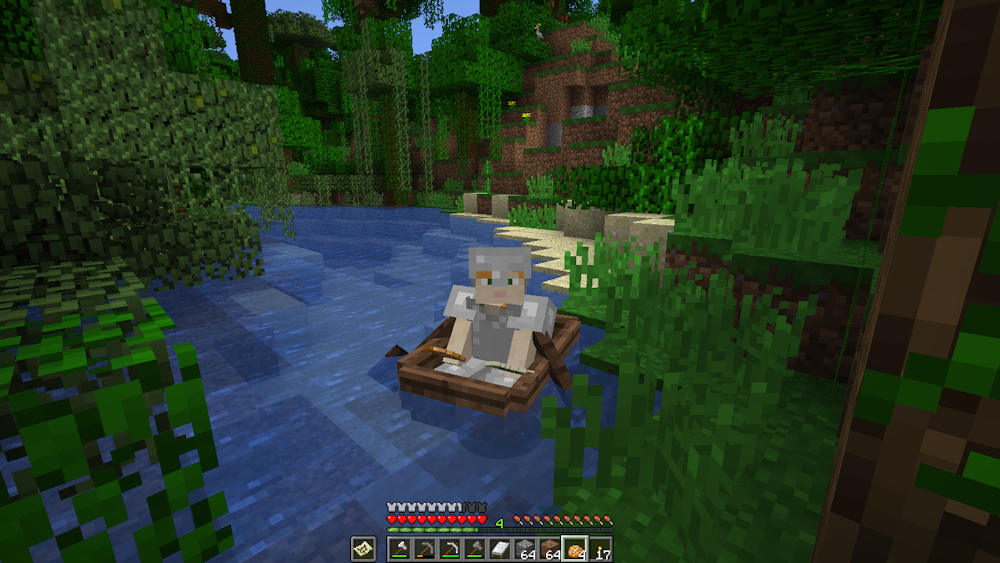 In Minecraft, the onscreen world is a kind of digital playground.
Flickr/Tamahikari Tammas, CC BY
In Minecraft, the onscreen world is a kind of digital playground.
Flickr/Tamahikari Tammas, CC BY
In Minecraft, players can build, fight for survival or engage in imaginative play, using the digital landscape as a kind of virtual playground. It can be played offline or online, alone or with other people, on a range of devices.
Read more: Minecraft teaches kids about tech, but there’s a gender imbalance at play
Since the survey, we have been studying in depth the Minecraft play of 6-8 year-old children from ten families across Melbourne. We interviewed children and their parents and recorded many hours of Minecraft play. We saw children engaging in many types of important play.
In 1996, theorist Bob Hughes identified 16 different types of play. These include
sociodramatic play where children act out everyday scenarios such as playing “school” or “families”
symbolic play where children use objects to stand in for other objects, such as a stick becoming a broom or a sword
creative play where children make use of colour, form, texture and spatial awareness to produce structures or art
dramatic play where children incorporate popular media content into their play, such as acting like pop stars
locomotor play where the joy of movement and a sense of vertigo is key to action, like going on swings or climbing a tree.
Here’s some of what we saw children doing in Minecraft, and how it fell into these categories of play:
two children set about building a town, complete with movie theatre and Bunnings hardware store, while pretending to be a couple with twin babies (sociodramatic play)
kids designated on-screen “emeralds” as telephones, insisting one player must be “holding” an emerald to talk to other players who were far away in game space. They followed telephone conventions, such as saying “ring ring, ring ring”, then waiting for someone to say “hello” (symbolic play)
kids broke into spontaneous song and dance both on and off-screen, and playfully teased siblings on text chat (communication play)
kids made careful choices in relation to design and aesthetics when building. They used “Redstone”, which functions like electricity in the game and can be used to make structures light up or move, and made weird and wonderful machines with it (creative play)
several children flew their screen characters high into the sky, and then had them fall back down while crying “whee!”. We also saw them zipping around on a “roller coaster” made of Minecart tracks, which seemed to give a sense of vertigo and thrill of movement (locomotor play)
some kids pretended to be YouTubers while commentating or dramatising their own play in the style of a YouTube video (dramatic play).
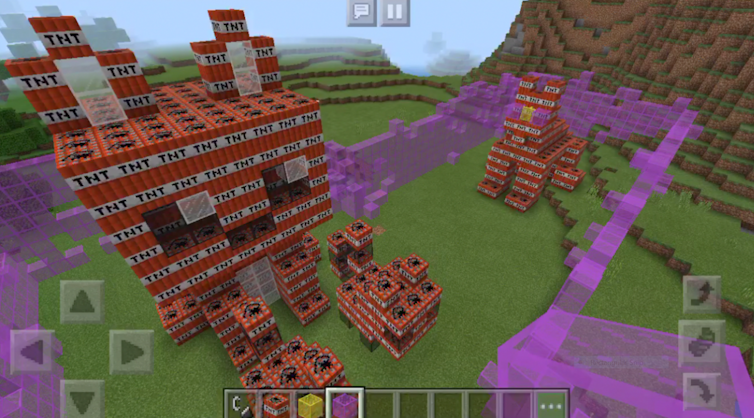 Seven year old ‘Beth’ and her dad put the finishing touches on their TNT cat sculptures before determining who wins the prize for ‘most satisfying explosion.’
study participant data
Seven year old ‘Beth’ and her dad put the finishing touches on their TNT cat sculptures before determining who wins the prize for ‘most satisfying explosion.’
study participant data
There are obvious differences — both negative and positive – between play on a screen and play in a physical space. “Making a cake” in Minecraft doesn’t involve the same sensory and fine motor experiences as making a real cake. Nor does running around Minecraft terrain work major muscle groups. But children jumping off high structures in Minecraft also don’t risk physical injury.
And it’s important to note no play activity — digital or otherwise — offers every range of experience. A “varied diet” of play activities is best.
Physical lockdowns, digital freedom
Parents can take note of what is going on in the worlds of Roblox, Minecraft, Fortnite and whatever other digital spaces their children are playing in to get a better idea of their kids’ onscreen play worlds.
Read more: Stop worrying about screen 'time'. It's your child’s screen experience that matters
Playing with them is one good way to do this. But, not every parent has the desire, and children may not want parents tagging along. So, parents can ask questions about what their child likes about a particular game; what happened in a recent play session; and note connections between digital and non-digital play and events.
Children have the right to play. It is up to adults to ensure we uphold that right. This is especially relevant when many children’s play-worlds have been dramatically altered.
The eSafety Commissioner website has a great range of resources for parents to help make online play as safe and enjoyable as possible.
Authors: Jane Mavoa, PhD candidate researching children's play in digital games, University of Melbourne
Read more https://theconversation.com/childs-play-in-the-time-of-covid-screen-games-are-still-real-play-145382


















