

The rise of ultra-processed foods and why they're really bad for our health
- Written by Phillip Baker, Research Fellow, Institute for Physical Activity and Nutrition, Deakin University, Deakin University
Humans (and our ancestors) have been processing food for at least 1.8 million years. Roasting, drying, grinding and other techniques made food more nutritious, durable and tasty. This helped our ancestors to colonise diverse habitats, and then develop settlements and civilisations.
Many traditional foods used in cooking today are processed in some way, such as grains, cheeses, dried fish and fermented vegetables. Processing itself is not the problem.
Only much more recently has a different type of food processing emerged: one that is more extensive, and uses new chemical and physical techniques. This is called ultra-processing, and the resulting products ultra-processed foods.
To make these foods, cheap ingredients such as starches, vegetable oils and sugars, are combined with cosmetic additives like colours, flavours and emulsifiers. Think sugary drinks, confectionery, mass-produced breads, snack foods, sweetened dairy products and frozen desserts.
Unfortunately, these foods are terrible for our health. And we’re eating more of them than ever before, partially because of aggressive marketing and lobbying by “Big Food”.
Ultra-processed foods are harming our health
So concludes our recent literature review. We found that more ultra-processed foods in the diet associates with higher risks of obesity, heart disease and stroke, type-2 diabetes, cancer, frailty, depression and death.
These harms can be caused by the foods’ poor nutritional profile, as many are high in added sugars, salt and trans-fats. Also, if you tend to eat more ultra-processed foods, it means you probably eat fewer fresh and less-processed foods.
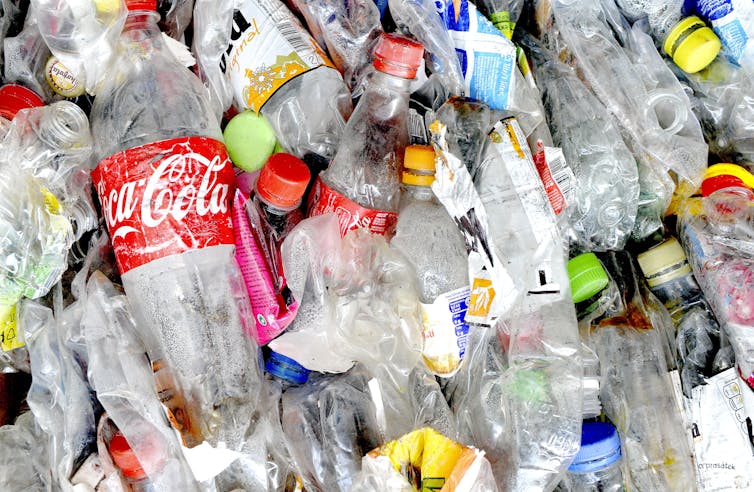 Put simply, ultra-processed foods are bad for our health and the environment.
Igor Sefr/AP/AAP
Put simply, ultra-processed foods are bad for our health and the environment.
Igor Sefr/AP/AAP
Industrial processing itself can also be harmful. For example, certain food additives can disrupt our gut bacteria and trigger inflammation, while plasticisers in packaging can interfere with our hormonal system.
Certain features of ultra-processed foods also promote over-consumption. Product flavours, aromas and mouthfeel are designed to make these foods ultra-tasty, and perhaps even addictive.
Ultra-processed foods also harm the environment. For example, food packaging generates much of the plastic waste that enters marine ecosystems.
And yet, we’re eating more and more of them
In our latest study, published in August, we found ultra-processed food sales are booming nearly everywhere in the world.
Sales are highest in rich countries like Australia, the United States and Canada. They are rising rapidly in middle-income countries like China, South Africa and Brazil, which are highly populated. The scale of dietary change and harms to health are therefore likely immense.
‘Big Food’ is driving consumption
We also asked: what explains the global rise in ultra-processed food sales? Growing incomes, more people living in cities, and working families seeking convenience are a few factors that contribute.
However, it’s also clear “Big Food” corporations are driving ultra-processed food consumption globally — think Coca-Cola, Nestlé and McDonald’s. Sales growth is lower in countries where such corporations have a limited presence.
 Aggressive marketing campaigns by Big Food companies are contributing to growing consumption of ultra-processed foods.
Shutterstock
Aggressive marketing campaigns by Big Food companies are contributing to growing consumption of ultra-processed foods.
Shutterstock
Globalisation has allowed these corporations to make huge investments in their overseas operations. The Coca-Cola System, for example, now includes 900 bottling plants worldwide, distributing 2 billion servings every day.
As Big Food globalises, their advertising and promotion becomes widespread. New digital technologies, such as gaming, are used to target children. By collecting large amounts of personal data online, companies can even target their advertising at us as individuals.
Supermarkets are now spreading throughout the developing world, provisioning ultra-processed foods at scale, and at low prices. Where supermarkets don’t exist, other distribution strategies are used. For example, Nestlé uses its “door-to-door” salesforce to reach thousands of poor households in Brazil’s urban slums.
Rising consumption also reflects Big Food’s political power to undermine public health policies. This includes lobbying policymakers, making political donations, funding favourable research, and partnerships with community organisations.
Read more: Sweet power: the politics of sugar, sugary drinks and poor nutrition in Australia
Here’s how things can change
The evidence that ultra-processed foods are harming our health and the planet is clear. We must now consider using a variety of strategies to decrease consumption. This includes adopting new laws and regulations, for example by using taxation, marketing restrictions and removing these products from schools.
We cannot rely on industry-preferred responses such as product reformulation alone. After all, reformulated ultra-processed foods are usually still ultra-processed.
Further, simply telling individuals to “be more responsible” is unlikely to work, when Big Food spends billions every year marketing unhealthy products to undermine that responsibility.
Should dietary guidelines now strongly advise people to avoid ultra-processed foods? Brazil and other Latin American countries are already doing this.
And for us as individuals the advice is simple — avoid ultra-processed foods altogether.
Authors: Phillip Baker, Research Fellow, Institute for Physical Activity and Nutrition, Deakin University, Deakin University

















