

Coronavirus disrupted my kid's first year of school. Will that set them back?
- Written by Elizabeth Rouse, Senior Lecturer, Early Childhood Education, Deakin University
Students in the first year of school to Year 10 have been learning remotely in Victoria. It’s estimated first-year students (known as prep in Victoria) in areas that have been under lockdown for some time have missed around 12 weeks of classroom schooling in terms two and three.
These first year students will also be one of the first groups to return to face to face classes when restrictions start easing in Melbourne. In other states when restrictions lifted, students in the first years of school, and the most senior years, were the first to go back.
This recognises the first year is important for children’s education. It provides the foundations for literacy, numeracy and socialisation, which all matter for lifelong success.
Given the disruption in 2020 to this important year of school all across Australia — particularly in Victoria — some school leaders have expressed concern over disadvantaged students, such as those living in households where English is a second language, and suggested children repeat the year in 2021.
Parents may be concerned about how this year’s disruption has affected their kids. But how worried should they really be?
Parents should remember that while remote school may look different to “normal” school, children are still being taught; they are still learning and many are still actively engaged in the curriculum. Teachers are still teaching, developing lessons and engaging with children in their learning.
Here are four other things to keep in mind.
1. Parent engagement matters as much as learning at school
Research shows parents’ engagement is one of the most important influences on children learning. Children’s educational outcomes improve not only when parents are actively engaged in their learning, but also when parents are genuinely interested.
So, simply asking your children how their day went and what they learnt can enhance their outcomes.
Remote schooling has highlighted inequities in the way children access education. This is particularly so for children who may not be confident English speakers, or families who have limited access to technology at home. But those aren’t the only tools necessary for success.
Read more: How to help your kids with homework (without doing it for them)
Home resources also include parents who are interested, supportive and committed to their child’s learning. And being confident in English isn’t mandatory either. Education departments encourage multilingual parents to speak their own language to the child as much as possible, as this actually enhances their English skills and helps with memory and attention.
2. Kids don’t start school as a blank slate
The importance of the early years of a child’s education (from birth to eight) is well documented. When children enter the first year of formal schooling, they do not begin as a blank slate.
Across Australia, around 90% of children starting school have already attended preschool. They start school with a range of skills and abilities — including having learnt independence, how to develop relationships and how to acquire new knowledge — that significantly contribute to their later school success.
3. It’s not what kids know that matters
More important than what children know is how they engage as learners. Children’s social and emotional competence is a significant measure of later school success. Having a positive attitude towards learning, a positive sense of self, strong emotional well-being and strong social competence are key indicators for effective learning.
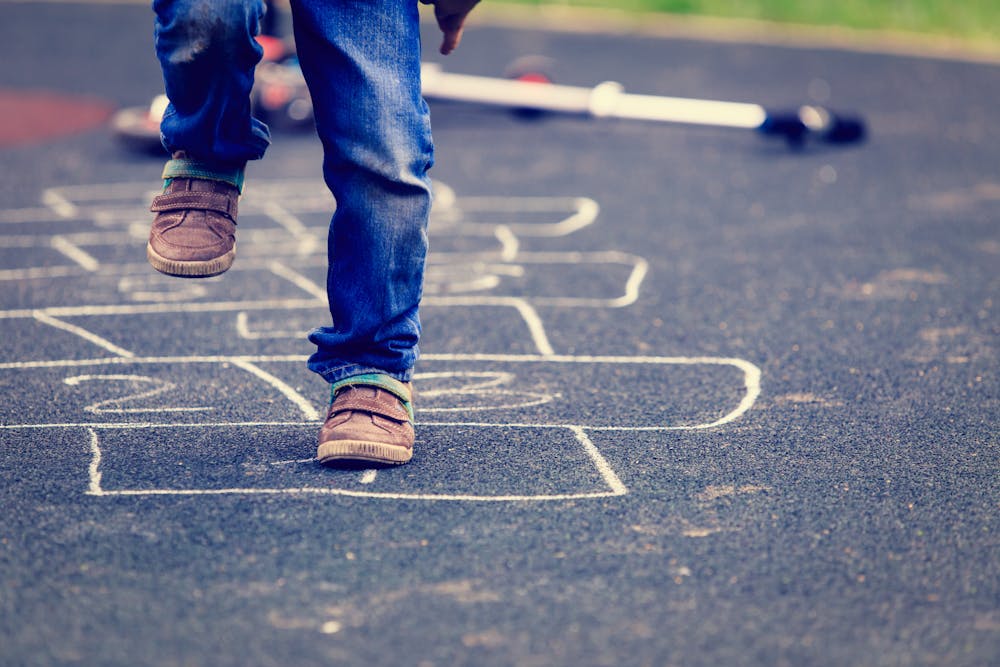 Children start school already having a range of skills and abilities they need for success.
Shutterstock
Children start school already having a range of skills and abilities they need for success.
Shutterstock
Rather than focusing on what academic learning kids may have missed, parents and teachers can support children to develop these positive dispositions.
4. Other factors affect learning
Nobody knows exactly how children’s learning and success will have been affected by the disruption to schools over 2020. There are, however, studies investigating how children’s learning was affected when school was disrupted due to natural disasters.
A 2019 study looked at the effects of school disruptions due to bushfires in Australia. It found a reduction in expected gains in Year 3 to 5 NAPLAN scores in schools affected by the bushfires. But a 2016 study into long-term effects on academic success for children who went through the Christchurch earthquake found increased school disengagement had no bearing on poorer academic performance.
These findings need to be considered in context. In both situations, children experienced trauma associated with being displaced, the loss of family and friends, and homes and schools destroyed. Trauma is linked to poorer educational outcomes.
We know many children are currently experiencing levels of trauma due to what they are seeing and hearing in the media, whose parents may have lost jobs, or whose family has been impacted by the illness. For these children, trauma may have affected their learning during the remote learning period.
Read more: Why every teacher needs to know about childhood trauma
However, given the findings from these previous events, when children do return to the classroom, they will be returning to an environment in which they feel safe and connected. It is important for teachers to recognise these children may have experienced trauma and to create a supportive classroom environment.
When contemplating whether your child should repeat their foundation year, it is important to not focus on what they haven’t achieved.
Instead, focus on their dispositions for learning, their self-confidence, and their emotional well-being, as these will be better predictors of their ability to catch up.
Authors: Elizabeth Rouse, Senior Lecturer, Early Childhood Education, Deakin University

















