

We can build a more inclusive government and economy out of the pandemic — this blueprint shows us how
- Written by Amanda Tattersall, Research Lead Sydney Policy Lab, Postdoctoral Fellow Geography, Host of ChangeMakers Podcast, University of Sydney
When the COVID-19 pandemic transformed our lives earlier this year, our political leaders joined hands and said we were all in this together — and for a while we saw glimpses of a different kind of politics.
But as things got tougher, the cohesive National Cabinet became more fractious. The blame game and “politics-as-usual” took over and distracted from finding new solutions to tough problems.
With the country facing an uncertain economic future, the University of Sydney’s Policy Lab has brought together community and climate groups, unions and business groups to identify strategies for creating a different way of making policy and building a new economy coming out of the crisis.
The product is our “Real Deal” report released this week.
The Real Deal isn’t a typical policy document that outlines a magic bullet to the problems the pandemic has created.
We tried to break with the old battlegrounds and ideologies that have failed us over the last century. Instead of calling for unfettered free markets or big welfare states, or simple solutions like budget surpluses or endless stimulus packages, we are calling for a new relationship between the markets, government and civil society.
At the centre of this, we are arguing for a more collaborative approach and for mass community participation to be valued in public life.
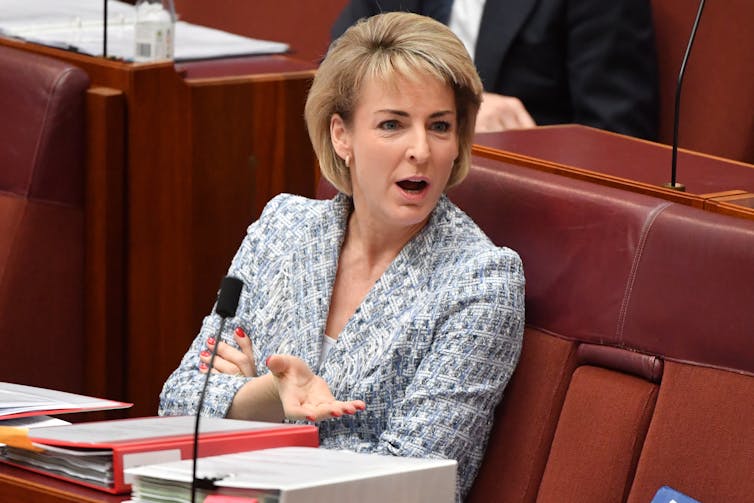 There is another way forward that isn’t ‘politics as usual’.
Mick Tsikas/AAP
There is another way forward that isn’t ‘politics as usual’.
Mick Tsikas/AAP
So how would we do that?
Collaboration works when different groups have the authority and ability to negotiate solutions.
We saw this during the second wave of the pandemic in Victoria when United Workers Union members at a Coles distribution warehouse were able to quickly push to make their workplace more COVID-safe by using the Occupational and Safety Act. While initially reluctant, management introduced a series of changes, including a deep clean of machinery and temperature checks upon entrance.
Compared to hot spots like the Cedar Meats warehouse, these workers minimised the transmission of the virus, securing a better deal for themselves and kept food on supermarket shelves.
Novel solutions emerge when unusual partners collaborate. In Queensland, for instance, a diverse coalition of religious organisations, unions and community organisations called the Queensland Community Alliance has worked with researchers and state and federal governments to create a strategy to combat loneliness.
Their solution wasn’t about spending a lot of money, but reshaping how people use the state health system. They created a new health department role called a “link worker” that could help people navigate the maze of services available to them, saving time and money.
Read more: After COVID, we'll need a rethink to repair Australia's housing system and the economy
Policy is also better when it involves the full participation of everyday people.
In the Hunter Valley, Australia’s largest coal-mining region, local unions, environmental groups, community members and businesses have formed an unusual alliance to find solutions for the regional economy, which is threatened by the closure of mines due to climate change concerns.
Having door-knocked residents to ask their opinions, the new group proposed plans for new industries and jobs to create economic security for local residents.
Participatory policy-making like this is easier when the government treats people as co-producers of solutions, not distant observers or barriers to change. It works best when it is built from the lived experiences of people who will be affected by these policies.
This was a weakness during the pandemic when policymakers often overlooked how their policy responses would affect different groups, such as those with mental illness,the residents of public housing towers in Melbourne or temporary migrants.
The lesson is that effective policy-making puts affected people at the centre of these discussions — much in the way the disability sector has long advocated a “nothing about us without us” approach.
Read more: Our lives matter – Melbourne public housing residents talk about why COVID-19 hits them hard
Five benchmarks for the solutions we need
In building the “Real Deal” report, we put these ideas into practice. We began our research not with books, but with the lived experience of leaders in civil society — listening to their stories and responding to the challenges their members were facing.
We took this research to a panel of Australian and international economists and academics, then began a slow process of writing a new framework together. We sought case studies — real solutions — tested in the field by our collaborators, like the ones outlined above.
The process took months, but that time enabled genuine collaboration and participation.
The report offers five benchmarks for measuring whether policy-making is contributing to the solutions we need. These include:
an awareness that reshaping how the state serves the people is even more vital than big stimulus packages
a focus on addressing pre-existing inequalities and injustices laid bare by the pandemic
a bold vision that matches the scale of our economic and climate crises
the active participation of people in decisions that affect them
a deeply collaborative process.
Central to a real deal is that people make a difference. We are the ones who can make the deals for regional economic development in the face of climate change or create a new health system based on people’s needs.
There is a growing lament in Australia that politicians let us down. But the lesson from the pandemic is we have the power to change our economy and politics, and if we do, we might emerge from these crises stronger.
Read more: Healthcare, minerals, energy, food: how adopting new tech could drive Australia's economic recovery
Authors: Amanda Tattersall, Research Lead Sydney Policy Lab, Postdoctoral Fellow Geography, Host of ChangeMakers Podcast, University of Sydney

















