

big health problems lead to big health spending
- Written by Stephen Duckett, Director, Health Program, Grattan Institute
The pandemic – and developments in health care – have forced the Commonwealth government to commit to a massive increase in spending on health care this year.
In the 2019-20 budget, the Commonwealth promised an increase of A$540 million in health spending in 2020-21. In this year’s version, delivered by Treasurer Josh Frydenberg last night, the promise is an order of magnitude greater: an uplift of $5.347 billion since the last economic statement.
During 2020-21 and 2021-22, likely to be the biggest years for the COVID-19 response, the Commonwealth is promising almost $10 billion of extra spending. Never before has the federal government opened the health purse strings to this extent.
Although there are 35 items in the health budget measures table – all detailed in a 163-page “Stakeholder Pack” – just five of them account for 94% of the increase in spending.
1. Pharmaceutical Benefits Scheme (PBS)
The government has committed to listing on the PBS all new drugs recommended as cost-effective. Even though each new drug must meet a cost-effectiveness threshold, the PBS spend is the biggest item in the health budget: $4.3 billion over the next two years, and more in the years beyond.
Although drug listings have been politicised recently, they are in fact technocratic decisions based on clinical, epidemiological and economic analysis.
The difference this year is the government is committing funds in advance for new listings, with a “PBS New Medicines Funding Guarantee”. In essence, this means Treasury has given up trying to extract savings from the health portfolio to offset the cost of new drugs. The cost of this new guarantee may be partly reduced by a price drop for medications approaching the end of their patent, with an increased price cut after 15 years.
Read more: How to slash half a billion dollars a year from Australia's drugs bill
2. COVID-19 vaccines
No one knows if or when a COVID-19 vaccine will be proven to work, which one of the hundreds of candidate vaccines it will be, when it can be manufactured at scale, or how it will be distributed across the world. The government seems to be banking on mid-2021 for a vaccine, with population vaccination programs to follow shortly after that.
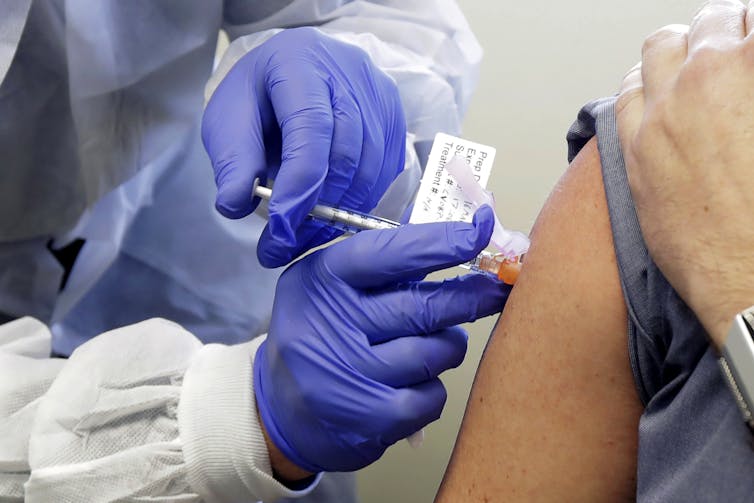 Trials of potential COVID-19 vaccines are proceeding all over the world, but we still don’t know which will ultimately succeed - or when.
Ted S. Warren/AP
Trials of potential COVID-19 vaccines are proceeding all over the world, but we still don’t know which will ultimately succeed - or when.
Ted S. Warren/AP
However, the government has also made contingency plans, allocating almost $2 billion over the next two years for licensing, production and distribution of a successful vaccine. There is no allocation for 2022-23 and beyond, so the government is either hoping the coronavirus will pack its bags and go, or waiting to see whether future budget allocations will be necessary.
Read more: The budget assumes a COVID-19 vaccine becomes available next year. Is this feasible?
3. Medicare Benefits Schedule (MBS)
The pandemic brought forward implementation of new ideas into the MBS — most notably telehealth. The government has allocated $1 billion for extending some MBS items in 2020-21.
The optimistic interpretation is that the government is already planning to extend this extra MBS funding 2020-21, and is spacing out the announcements to maximise positive publicity. The stark reality, though, is there is no budget provision for these needed items beyond this financial year.
Read more: How the old-fashioned telephone could become a new way for some to see their doctor
4 & 5. Aged care
The budget has two large aged care items: a one-off COVID response of $733 million, and a longer-term aged-care reform package worth more than $1 billion over the next two years, which will fund additional “home care packages”, assistance to older Australians to help them stay at home rather than be admitted to residential aged care. The assistance might include nursing care, allied health, personal care or help with house cleaning.
Although 23,000 more packages are funded in the budget, that is woefully inadequate. About 75,000 older Australians are waiting for a home care package, and a further 25,000 are waiting for a higher-level package which they have been independently assessed as needing. The home care budget allocation is welcome, but doesn’t meet the enormous need.
The government has kicked into the long grass the challenge of addressing the litany of failures in residential aged care identified by the Royal Commission on Aged Care Quality and Safety. Any such decisions are deferred until the royal commission reports its findings next year – meanwhile condemning thousands of older Australians to live in facilities with demonstrably substandard staffing.
Read more: Federal government did not prepare aged care sector adequately for COVID: royal commission
Hospitals
Outside the health portfolio, the government has allocated an extra $1.1 billion to the states as part of the 50-50 cost-sharing deal for the COVID-19 response. This pays for additional ventilators, “fever clinics” and other costs associated with meeting needs during and after the pandemic.
The rest: ‘rats and mice’
There are 30 other items in the health budget measures table — many worthy, many important, too many simply the result of special pleading and successful lobbying. Each will be very welcome to the recipients. Some will yield measurable benefits and improvements in health care; and some will not.
The 2020-21 budget rightly includes a huge increase in spending responding to the pandemic. But even in these COVID-19 times, it should have also signalled the government’s commitment to fix the aged care mess with a down payment towards residential care reform, and given GPs — and their patients — more certainty about the future of telehealth.
Authors: Stephen Duckett, Director, Health Program, Grattan Institute
Read more https://theconversation.com/budget-2020-big-health-problems-lead-to-big-health-spending-147580

















