

Budget funding for Beyond Blue and Headspace is welcome. But it may not help those who need it most
- Written by Louise Stone, General practitioner; Clinical Associate Professor, ANU Medical School, Australian National University
The COVID-19 pandemic has ushered in more anxiety and depression, raised rates of bipolar disorder and other psychoses, and left many Australians stricken with grief. And we will, devastatingly, lose more Australians to suicide.
Meanwhile, many people are facing job losses, financial hardship, isolation and some are suffering long-term symptoms of COVID-19 or other chronic illnesses.
At first glance, it’s fitting the 2020-21 federal budget, unveiled on Tuesday, includes A$7 million for mental health organisations Beyond Blue, Headspace, Kids Helpline and Lifeline.
Look more closely, however, and some concerning patterns emerge. The commitment to mental health is channelled through these services, which provide a narrow spectrum of care. These organisations favour people who are resourced, resourceful, literate in English, urban, and have more easily treated conditions than those with complex or multiple chronic illnesses. In fact the people with the deepest need tend to receive the least care.
These services aren’t suited for those with complex needs
People with mental illnesses aren’t all the same. Mental health concerns range from grief and loss, to chronic severe schizophrenia, to depression and anxiety, and many of these conditions overlap. Many people have also survived considerable trauma, and this has a deep and lasting impact on their health and well-being. Others live with disability, homelessness, chronic pain, domestic violence and poverty.
Professor Ian Hickie, who was a founding director of Headspace, says:
The Headspace model was never set up to deal with more complex presentations, people with impairments already established, those who had complex mixes of anxiety, depression and substance misuse.
As clinicians with a particular interest in mental health, we are wary of the “single illness fallacy” — one person, one illness — that underpins many of Australia’s current mental health policies. People with ongoing or serious mental illnesses almost always suffer other physical conditions which compound their mental illness, and die decades earlier than the average Australian. They deserve support.
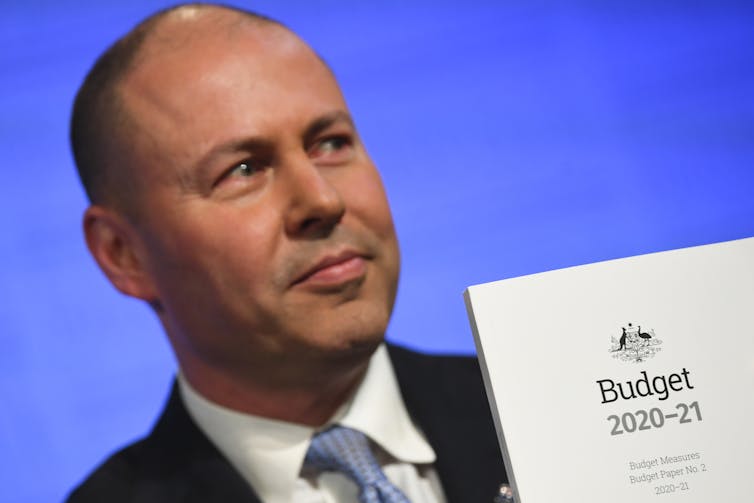 The federal budget included $7 million for support services like Beyond Blue, and over $100 million to double the number of Medicare-subsidised mental health sessions to 20.
Lukas Coch/AAP
The federal budget included $7 million for support services like Beyond Blue, and over $100 million to double the number of Medicare-subsidised mental health sessions to 20.
Lukas Coch/AAP
Many people with disabilities also encounter difficulty in accessing appropriate care for their needs. One example, among many, is that in the ACT, public child and adolescent mental health services exclude patients with autism or attention deficit disorder.
Patients describe being too complex or not complex enough for services, and a little like Goldilocks they have difficulty finding a service that is “just right” for their needs.
Read more: Three charts on: why rates of mental illness aren't going down despite higher spending
Doubling Medicare-subsidised sessions won’t help those who receive no care
People who commonly don’t receive adequate care include those who are homeless, poor and unemployed, as well as Aboriginal and Torres Strait Islander people, and those on temporary visas. All tend to have higher rates of mental illness than the general population.
All people with mental distress and illness should be able to access mental health care. In theory, this is the basis of the federal government’s Better Access program, which allows people to access ten Medicare-subsided sessions per year with a psychologist or psychiatrist. It’s a useful initiative, but only for those who can afford the co-payments and live in areas where psychologists are available.
The budget’s commitment to extend the program to 20 sessions, at a cost of more than A$100 million, is welcome. But it doesn’t ensure equity. It also puts considerable strain on the psychology profession, which is already overloaded, especially in rural areas.
Like Headspace, Better Access risks excluding people with complex conditions or unstable mental illnesses. Those who are on the margins of society, and rely on the social safety net or charity, are unlikely to use this model of care.
Read more: When it's easier to get meds than therapy: how poverty makes it hard to escape mental illness
How do get the best value for our mental health services?
It’s hard to see the value-add of a narrow mental health response that funds a set of services which can only care for people with mild to moderate distress, while ignoring the people with the greatest disability.
The value-based care movement argues there are four elements that create value for people. Services should:
provide outcomes that matter to the person receiving the service. We need to decide whether every dollar spent on clinical treatment of mild to moderate depression and anxiety could be better spent on housing, trauma therapy, employment or other forms of social care
alleviate suffering. People should be able to form close and continuing relationships with clinicians, so their story and needs are known and trust can develop. The evidence for this relationship-based care is deep, but often services use multiple teams with health professionals who change frequently. We need to understand that continuity often matters to people and developing trust helps reduce distress
create calm, which means addressing the chaos people experience trying to access services. The experience of telling your story multiple times to multiple providers, and then finding the service won’t accept care, is traumatic and unnecessary
be cost-effective for the whole population who need mental health support, not just for the patients each service chooses to treat.
We need each of these government-funded services to report against these outcomes, including recording those people who are directed away from the services and essentially denied care.
Policies should be driven by data
We know little about the wider mental health needs of the Australian population. Our most recent national mental health survey was back in 2007. We know a lot about patients who present to services, but little about patients who don’t.
The largest providers of mental health care in the country, GPs, are invisible in the budget. Their patients, who have no other option for mental health care because they are too poor, too rural, too unwell or not unwell enough, are invisible in policy. Our only data from GPs is billing and prescribing data; hardly sufficient to understand the unmet needs of the Australian population.
If we are to meet the needs of all Australians, not just those who can access and afford care, we need more data. Offering simplistic solutions to complex problems means there are larger chasms for people to fall through.
Authors: Louise Stone, General practitioner; Clinical Associate Professor, ANU Medical School, Australian National University

















