'Parts of life will be damaged forever' — arts workers describe the pandemic's impact on their mental health
- Written by Jacinthe Flore, Vice-Chancellor's Postdoctoral Research Fellow, Social and Global Studies Centre, RMIT University
The arts industry is among the most devastated by the pandemic. Artists and arts workers often rely on casual, project-based or fixed-term contracts, and COVID-19 restrictions have left many with little or no income. This has affected the mental health of many working in the arts.
In August, we set out to learn more about the impact of the arts shutdown on workers’ emotional and mental health. While statistics might present data on the scale of lost work or income, qualitative accounts of people’s personal experiences are revealing. So far 28 Victorian performers, writers, teachers, and those in technical or support roles, have provided detailed responses.
Emerging themes include how the pandemic has made unsteady work even more precarious; how community and identity are interrelated; how online performances and connections are far from a cure-all; and, ultimately, workers are on the verge of giving up on their artistic dreams.
Read more: The government says artists should be able to access JobKeeper payments. It's not that simple
Insecurity is standard — the pandemic made it worse
Australian arts workers are familiar with the precarity of creative work. But the pandemic challenges this “normal uncertainty”.
With suddenly empty schedules and an interruption to seasonal work patterns, arts workers have lost the structures and routines that provided rhythm — and mental stability — to their lives. As a stage manager commented:
The performing arts and events are defined by constant, tangible deadlines. All of the structures in my life are built around the presence of this pressure. To have it suddenly and totally removed threw my entire world into disarray.
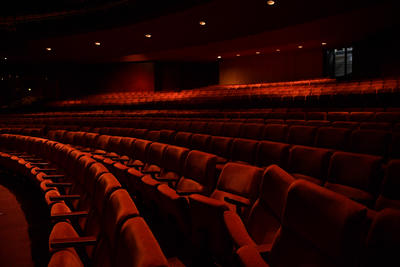
 Theatre seasons ground to a halt this year.
AAP Image/Joel Carrett
Theatre seasons ground to a halt this year.
AAP Image/Joel Carrett
Creative community and identity are tied to mental health
Mental health challenges are linked to collective, not just individual, experiences. One production manager told us:
Watching all my fellow artists … descend into depression has taken its toll on me … For my own mental health, I have had to funnel certain exposure to the outside world and social media.
Physical restrictions isolated participants from supportive peers. A production technician from the LGBTI community shared:
Being separated from the community that loves and supports me has definitely compounded what I’m feeling.
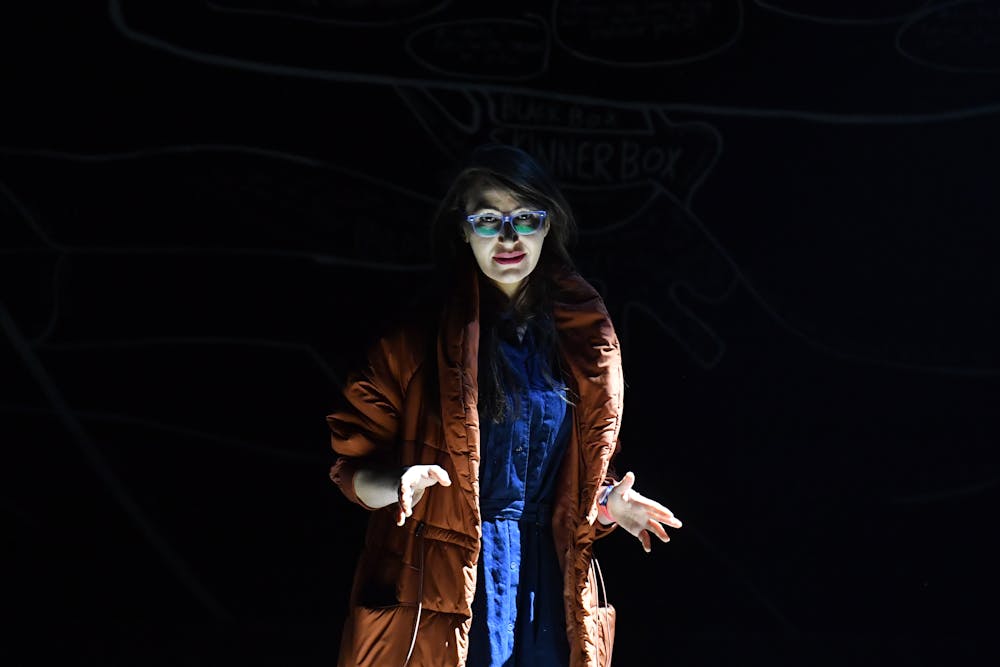 Some Sydney shows, like artist Giselle Stanborough’s at Carriageworks, have resumed but Victorian stages remain bare.
AAP Image/Mick Tsikas
Some Sydney shows, like artist Giselle Stanborough’s at Carriageworks, have resumed but Victorian stages remain bare.
AAP Image/Mick Tsikas
Read more: Like the care economy, arts and culture are an opportunity missed in the 2020-21 budget
Digital work offers (limited) opportunities
Some had shifted their creative work, teaching and performances online. Others struggled to make their live events digital. One theatre performer distinguished between these modes:
It is important to me that (theatre) remains what it is: live. I have taught and developed shows online, all through Zoom. It has been challenging but gets easier over time.
While some performers and artists were adept enough to shift their practice online and work from home, workers in technical or administrative roles were often left out of this transition.
However, some technical workers have used online resources to further develop skills in their field of expertise with the expectation of returning to work.
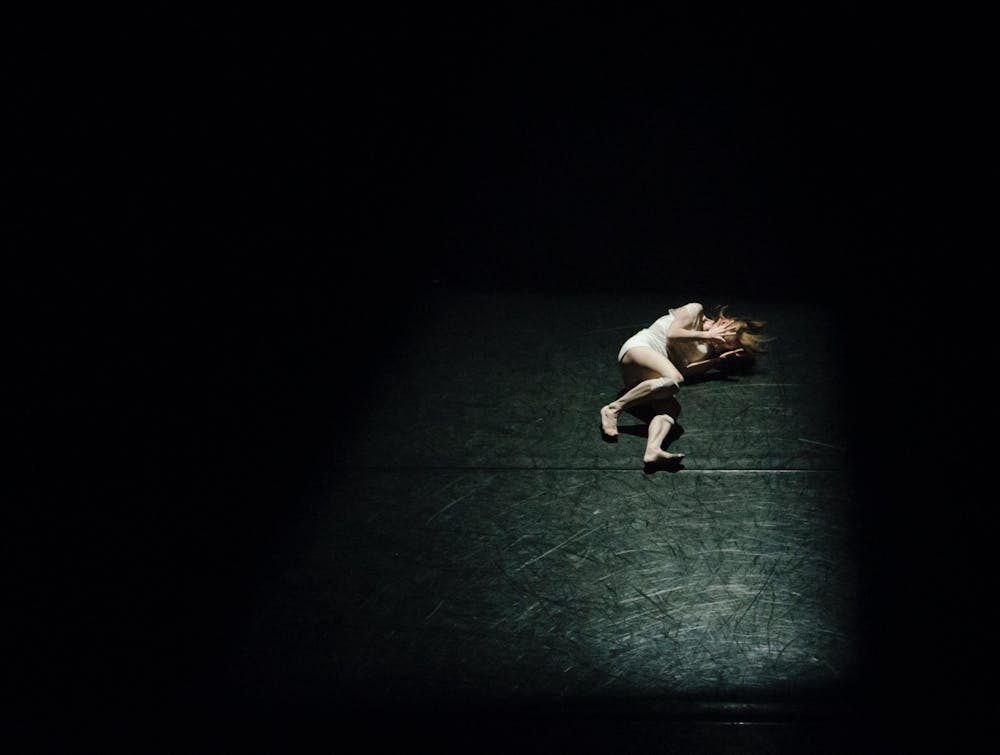 Loss and helplessness have affected the mental health of arts workers.
Unsplash/Hailey Kean, CC BY
Loss and helplessness have affected the mental health of arts workers.
Unsplash/Hailey Kean, CC BY
Read more: Giving it away for free – why the performing arts risks making the same mistake newspapers did
Losing hope
While numerous respondents described productive ways of working or taking a break during the restrictions, many also felt hopeless. Participants said they were worried about their skills “becoming rusty” or being “past (their) prime”. They oscillated between feeling hopeless and resigned to the devastating impact of the pandemic.
Feeling powerless to control what was happening in their lives and communities contributed to poor mental health. One respondent, who worked as a teacher, performer and music producer said:
These feelings have become more pronounced since the second lockdown … feeling a strong disconnection from community (creative or otherwise) … I feel despair over the state of the arts sector and how this will impact the rest of society.
Living with uncertainty and loss of hope, arts workers are waiting to see what happens next. A visual artist wrote:
I expect to see the damage in the next year as some things return to normal, while other parts of life will be damaged forever.
Read more: Artists shouldn't have to endlessly demonstrate their value. Coalition leaders used to know it
Towards recovery
Repairing the already suffering arts industry is an opportunity to boost the creative and economic “health” of the sector, but also the mental health of those who work in it.
Analysis of the sector prior to the pandemic shows there is not one solution. With promises of confusing or inappropriate government funding packages and schemes, many respondents found it difficult to see a way out.
Read more: Too little, too late, too confusing? The funding criteria for the arts COVID package is a mess
A global crisis such as COVID-19 prompts a re-think of the place of the arts. Indeed, the arts could help in recovery and support creative ways of coming together as a society after crisis.
‘We have a battle ahead. We need to make sure we take everyone along on this path.’ Reach out for help if needed.The survey is still open to respondents and will close on 26 October. We hope it will be the first stage in a larger project to capture the experiences of arts and creative sector workers beyond Victoria.
If this article has raised issues for you, or if you’re concerned about someone you know, call Lifeline on 13 11 14.
Authors: Jacinthe Flore, Vice-Chancellor's Postdoctoral Research Fellow, Social and Global Studies Centre, RMIT University