

NSW needs to prohibit religious discrimination, but not like this
- Written by Liam Elphick, Adjunct Research Fellow, Law School, University of Western Australia
It has long been a glaring problem that the New South Wales Anti-Discrimination Act (ADA) does not prohibit religious discrimination.
One Nation’s Mark Latham recently proposed a new Religious Discrimination Bill. One key part of the bill is to fill that gap: to prohibit religious discrimination.
This is a welcome and long-overdue development in NSW.
No-one should be refused employment or access to goods and services because of their religious beliefs. The ADA should provide protection for religion as it does for race, sex and disability.
Public parliamentary committee hearings on the bill, which start this week, will undoubtedly reaffirm the importance of prohibiting religious discrimination.
However, the bill goes far beyond this.
It privileges and prioritises religion over all other views, practices and attributes.
It provides wide exceptions to religious bodies to permit them to discriminate and to refuse to comply with some existing NSW laws.
And it renders it near impossible for employers to enforce codes of conduct and promote safety and equality in their workforces.
These issues undermine the bill’s ability to effectively prohibit religious discrimination, and unduly infringe on other laws and rights.
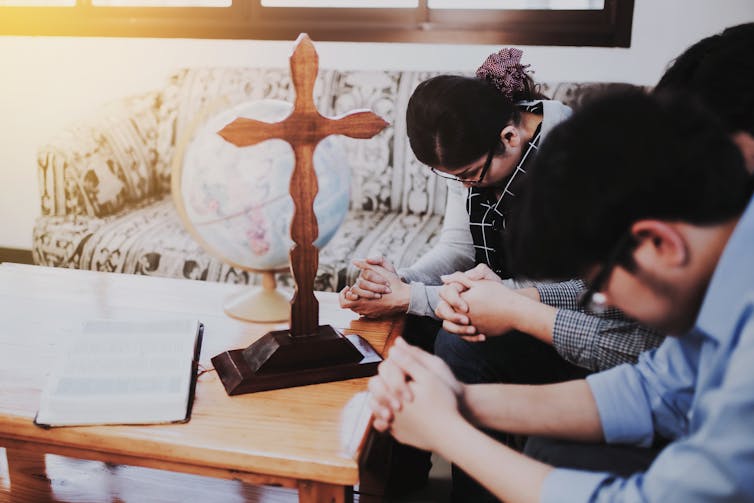 The proposed bill allows wide exceptions for religious bodies to discriminate.
Shutterstock
The proposed bill allows wide exceptions for religious bodies to discriminate.
Shutterstock
How is religious discrimination defined?
The bill adds two new protected attributes to the ADA, making it unlawful to discriminate because of one’s “religious belief” or “religious activity”.
Unlike the simpler definitions provided in other state laws, religious belief has been given an unnecessarily complex definition.
“Religious belief” is defined as either:
a) having a religious conviction, belief, opinion or affiliation, or
b) not having any religious conviction, belief, opinion or affiliation.
This definition is entirely subjective: each person can effectively decide what their religious beliefs are. The explanatory notes to the bill say this is intended “as a means to avoid courts determining matters of religious doctrine”.
But as two High Court justices remarked in the famous 1983 case of Church of the New Faith:
The mantle of immunity would soon be in tatters if it were wrapped around beliefs, practices and observances of every kind whenever a group of adherents chose to call them a religion.
This definition also likely excludes agnostics from protection: by definition, they do not have a specific religious conviction and also cannot be said to have no religious conviction.
“Religious activity” is defined as an “activity motivated by religious belief”. This wide definition would capture a vast array of actions, even where the link to religious doctrine is only tenuous.
The only limitation is that it excludes “offences punishable by imprisonment”. This means some unlawful acts can still be protected.
Employers, goods and service providers and accommodation providers would not be able to treat someone differently based on them breaking the law. Schools would be unable to sanction students for engaging in religiously motivated bullying or harassment.
The biggest challenge will be for employers to determine if an activity is indeed motivated by religious belief.
If an employee (Person A) makes a complaint of harassment against another employee (Person B) and that harassment is based on a religious view of, say, gender or sexuality, employers would be placed in an impossible position.
They would either need to investigate and sanction Person B and risk them bringing a religious discrimination claim against them, or they would need to reject the complaint and risk Person A bringing a harassment claim against them.
Employers will be forced to act unlawfully, no matter what they do.
Other states, such as Victoria, have avoided this conflict by protecting only “lawful” religious activities.
The NSW bill also does not prohibit religious vilification, despite this being a widespread problem for Muslim and other faith groups.
How does the bill apply to religious conduct?
The bill applies to religious conduct in three key ways, each of which goes far beyond equivalent discrimination laws in Australia.
First, employers are barred from restricting or limiting their employees from engaging in “protected activity”.
A “protected activity” means a religious activity performed by the employee when they are not working and not at their workplace. This includes religious views expressed on social media, in a clear nod to the Israel Folau saga.
Let’s assume an employee expresses religious views or comments on social media – hypothetically, that “hell awaits homosexuals” – that breach an employment code of conduct. Under this bill, the employee cannot be punished for this.
They can actually sue their employer for any such punishment, unless the comment directly criticises the employer, attacks the employer and causes financial detriment to the employer. The bill, though, provides that withdrawal of sponsorship or of financial support does not count as “financial detriment” – so it seems an impossibly high threshold for any employer to meet.
As a result, these provisions would significantly curtail the ability of employers to protect their brand and reputation, enforce codes of conduct and promote the safety and equality of their workforce. Employers would need to uncover the motivation behind an employee’s comments or actions before they could even attempt to enforce codes of conduct.
Because this protection is only afforded to views and activities that have a religious basis, employers would be forced to treat employees of faith differently from other employees. An atheist employee could make the same comment – that “hell awaits homosexuals” – and their employer would be free to sanction them.
These “protected activity” provisions also extend to qualifying bodies, universities and schools.
This means a school would be unable to sanction a student for bullying another student after school, so long as their bullying is religiously motivated.
Second, the bill makes it unlawful to require any religious body, when performing functions under NSW laws, to engage in conduct in a manner contrary to their religious doctrines. There appears to be no equivalent provision in any other Australian discrimination laws.
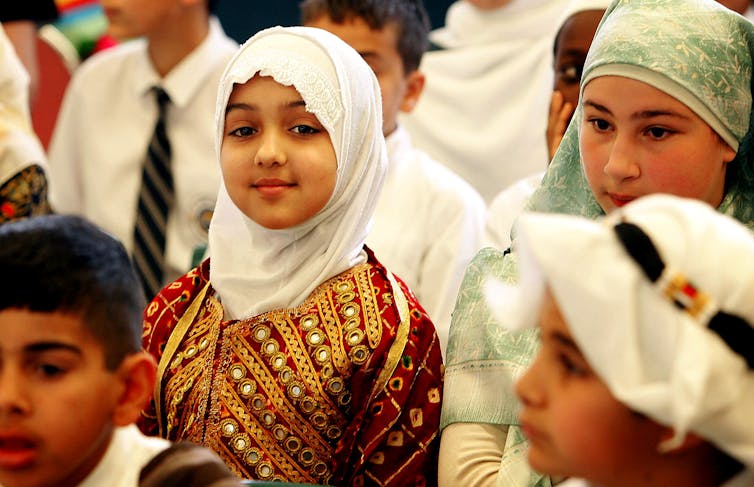 The proposed bill would allow religious schools to discriminate against students who did not hold the same faith.
AAP/Jenny Evans
The proposed bill would allow religious schools to discriminate against students who did not hold the same faith.
AAP/Jenny Evans
The breadth of this provision may mean that, for instance, religious bodies could challenge and avoid criminal laws imposing duties to report child abuse and neglect to authorities. This could be on the basis that a particular religious body’s doctrines oppose unsealing the confessional.
Local governments might also be unable to impose noise restrictions on religious ceremonies. The NSW government might even be unable to impose COVID-19 public health restrictions on religious ceremonies.
Third, religious bodies are granted wide exceptions from the operation of the entire bill. These allow religious bodies to discriminate against people of other religious beliefs.
Religious bodies are defined widely to include all schools and charities conducted in accordance with religious beliefs.
Read more: Grattan on Friday: Scott Morrison will go into 2020 with a challenging cluster of policy loose ends
In some instances, this is entirely appropriate. For example, an Anglican school is likely to want its religious education teachers to be of the same faith – and this seems fair.
But this bill goes much further. The exception covers any conduct that “furthers or aids” the religious body in acting in accordance with their religious beliefs. This is an easier test to satisfy than in any other Australian discrimination laws.
Imagine, for example, a student joins an Islamic school in Year 7 and at the time shares the same religious beliefs. Halfway through Year 12, that student may decide they do not identify strongly with those beliefs anymore.
This bill would allow the school to expel that student on the basis that they do not share the same religious beliefs as the school.
Similarly, a Catholic soup kitchen could refuse to serve food to Jewish people, or require them to participate in Catholic practices to receive food.
Allowing organisations primarily engaged in charity, health or education to be granted a carte blanche to discriminate is a step too far. Indeed, this frustrates and undermines the fundamental purpose of the bill: to prohibit religious discrimination.
What’s the best path forward?
The ADA is an outdated piece of legislation. It often provides ineffectual protection from discrimination.
While NSW has stood still, other states and territories have reformed their discrimination laws. These provide much stronger protection for all individuals.
As we argued in our joint submission on this bill, a wider, expert review of the ADA is the best way to effectively prohibit religious discrimination. This bill will only be a stop-gap measure.
As its own committee inquiry recently recommended, the NSW parliament should “undertake a thorough review of the Anti-Discrimination Act 1977 with the aim of updating and modernising the Act”. This would provide better protection for all people in NSW, not just those of faith.
It is tempting to approach reform to discrimination law as a “patch-up” job. But such an approach only enshrines and exacerbates the flawed NSW regime.
Authors: Liam Elphick, Adjunct Research Fellow, Law School, University of Western Australia
Read more https://theconversation.com/nsw-needs-to-prohibit-religious-discrimination-but-not-like-this-148007

















