

Our minds may be wandering more during the pandemic — and this can be a good thing
- Written by Jennifer Windt, Senior Research Fellow, Monash University
Many feel the coronavirus pandemic has changed not just our everyday lives, but also our inner mental lives. There has been talk of a mental health pandemic, but also of lockdown brain fog when we are awake, as well as reports of more frequent, vivid, and bizarre dreams when we are asleep.
We tend to think of our waking and dream lives as separate. But it is striking how deeply they are linked.
Spontaneous thought, or mind wandering, occupies up to 50% of wakefulness. Our thoughts and attention frequently drift away from what we are doing and what is happening in our immediate surroundings, with one thought following another along an associative trajectory.
Spontaneous thoughts and experiences are also pervasive in sleep. The clearest example is dreaming, which has been described as an intensified form of the mind wandering that happens when we are awake.
Considering dreaming and mind wandering together suggests the fluctuations in spontaneous experience, the natural ebb and flow of attention and somewhat erratic trajectory of thoughts continue throughout waking and sleep.
In normal circumstances, we mostly remain oblivious to the fact our minds have wandered. Most people also only rarely remember their dreams, but when awakened in the sleep laboratory can report multiple dreams per night. Like mind wandering, dreaming is also largely (with the exception of certain lucid dreams) beyond our control.
However, attention to our inner lives may be amplified at a time when control over our everyday lives is elusive.
Paying attention to your dreams when you first wake up in the morning drastically increases dream recall. And attempting to harness our thoughts and attention throughout the day can actually make us more aware of our failures, including lapses in attention. If you have been paying more attention to your spontaneous thoughts during the pandemic, you might have become more aware of what was were there all along.
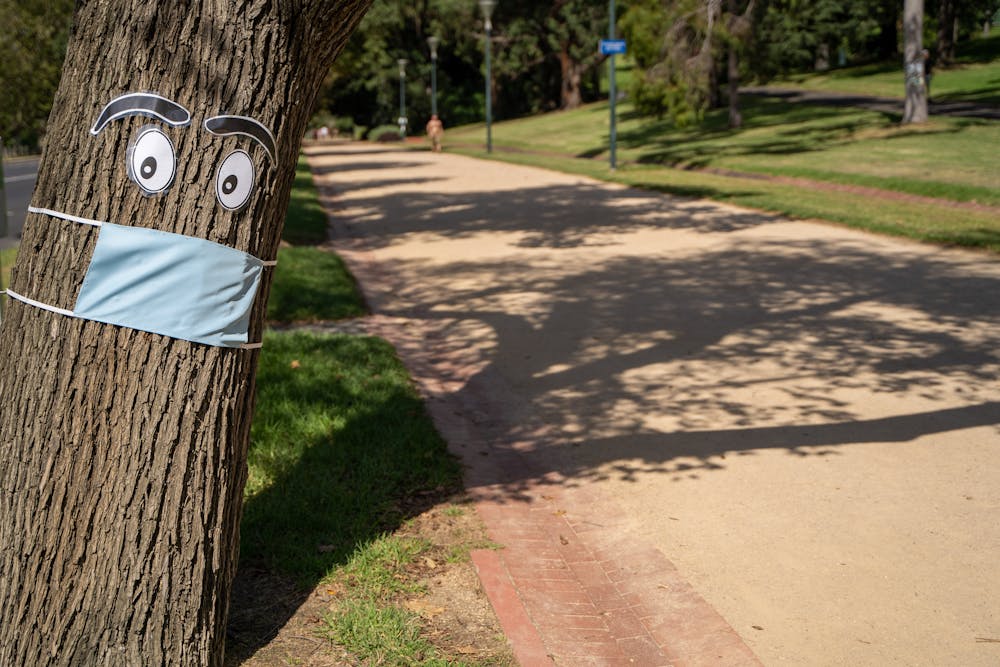 Melbourne under lockdown: attention to our inner lives may be amplified at a time when control over our everyday lives is elusive.
shutterstock
Melbourne under lockdown: attention to our inner lives may be amplified at a time when control over our everyday lives is elusive.
shutterstock
Read more: Unravelling the mysteries of sleep: how the brain 'sees' dreams
Changes in spontaneous thought — for better or worse
If you have been sleeping more during lockdown, you are probably experiencing more early morning REM sleep. Because REM sleep is typically associated with the most vivid and complex dreams, this might lead to an increase in actual dreaming.
If you have also ditched your alarm clock, you are probably awakening directly from REM sleep, which further increases dream recall.
The pandemic has also changed what we daydream and dream about. Waking concerns about the pandemic seem paralleled by more frequent nightmares and dreams about topics such as social distancing, contagion, or personal protective equipment.
Read more: What dreams may come: why you're having more vivid dreams during the pandemic
Some changes to our spontaneous mental lives can indicate something is amiss. Anxiety and stress are linked to increased repetitive thoughts and rumination; trouble focusing, disturbed sleep, nightmares, and unpleasant dreams, all of which seem to have increased during the pandemic.
 There are reports of increased nightmares during the pandemic.
shutterstock
There are reports of increased nightmares during the pandemic.
shutterstock
These repetitive, sticky and non-progressive thoughts contrast with the free, meandering movement that characterises most dreams and mind wandering.
Spontaneous thought might be beneficial
The restlessness of our minds might also have a silver lining. Mind wandering certainly does compromise how well we perform tasks demanding attention. But because of their associative nature, dreams and mind wandering can also help make new connections and see familiar topics in a new light. When our minds wander, our thoughts are often drawn to the future and personal concerns.
Similarly, dreams have the tendency to weave disparate waking experiences and concerns into new and sometimes bizarre narratives. You might encounter a dream character who is a mixture of different people you have been close to at different times in your life.
Or your initially pleasant dream of visiting friends in a faraway city might morph into a nightmare about getting infected, putting your family at risk, and being pursued by the police because you are breaching lockdown.
Spontaneous thoughts in waking and sleep might help process memories and guide future planning and decision making, for example by enabling us to imagine alternative courses of action; they can also be a source of insight and creativity.
Such thoughts may also contribute to coping and emotional processing. Future-oriented mind wandering is often positive, whereas past-oriented mind wandering tends to be associated with negative moods and emotions.
A great escape
Being in the here and now is often lauded as a virtue we should aim to cultivate through mindfulness. But sometimes, distraction can be useful: Mind wandering can provide a welcome break from boring tasks, allowing us to return with refreshed attention.
Other times, distraction might just be pleasant. In our dreams, we experience alternative realities; we can travel freely and, because dreams are rich in social interactions, we can interact with people we are separated from in waking life.
Given the monotony, restrictions, and social isolation many of us are experiencing, the unruliness and unboundedness of our minds might sometimes be a great escape.
If you are interested in joining a study on mind wandering and dreaming, please email spontaneous.experiences.sr@gmail.com.
Authors: Jennifer Windt, Senior Research Fellow, Monash University

















