Fierce female moles have male-like hormones and genitals. We now know how this happens.
- Written by Jenny Graves, Distinguished Professor of Genetics and Vice Chancellor's Fellow, La Trobe University
Moles live a tough life underground. As a result, they’ve evolved helpful adaptations, such as excavator-like claws. Female moles in particular have evolved an unusual strategy: high levels of the male hormone testosterone.
This is an evolutionary advantage. It produces stronger muscles for digging and foraging and aggression, to help mothers defend themselves and their young.
Most of the year, female moles look and behave like males. They have masculinised genitals, with no external vagina and an enlarged clitoris. But when mating season comes, testosterone levels drop and a vagina is formed; mating and birth follow.
How they accomplish this remained a mystery for a long time. But now, the complete sequencing of the mole genome has revealed the genetic tweaks underpinning this strange cycle in female moles, by which reproductive organs (gonads) develop and hormones are produced.
Gonads and hormones
Male development in humans and other mammals is determined by chromosomes (the structures within cells of living things that contain genes). Females have two copies of an X chromosome. Males have a single X and a male-specific Y chromosome.
In XY embryos, a gene called SRY on the Y chromosome intervenes in a network of another 60 genes. SRY turns on testis genes and turns off ovary genes to transform a ridge of cells into a testis.
In the testis, one cell type becomes specialised to make sperm and another (Leydig cells) makes male hormones, including testosterone.
Read more: What makes you a man or a woman? Geneticist Jenny Graves explains
Testosterone is responsible for the most visible sex differences in males, such as bigger bodies, more muscle mass, male genitalia and more aggression. In XX embryos, an alternate pathway makes an ovary, which pumps out oestrogen.
So in mammals, different genetic pathways drive the same patch of embryonic tissue to become either an ovary or a testis. Generally, there’s no in-between.
But female moles have a patch of testis within their ovaries.
An evolutionary balancing act
In 1993, it was discovered the basis for “intersex development” in female moles is a gonad with both ovarian and testicular tissue.
Like other male mammals, male moles have a Y chromosome, bearing the SRY gene which directs testis formation.
Also like other mammals, female moles lack a Y chromosome. Curiously, however, instead of developing ovaries they develop “ovotestes”, with ovarian tissue at one end and testicular tissue at the other.
The ovarian tissue makes eggs and gets larger during breeding, then regresses. The testicular tissue is full of Leydig cells that make testosterone (but not sperm). Outside of breeding season, it expands until it’s larger than the ovarian end.
This explains why female moles have male-like genitalia, and are muscular and aggressive. But how does a patch of testis form in female moles if they have no SRY gene to trigger the process?
Genetic tweaks behind ovotestis development
To look for genetic changes that could allow this to happen, a global consortium of scientists sequenced the entire mole genome.
They found no differences between moles and other mammals in the protein products of the 60-odd genes involved in sex determination. However, they did discover mutations that altered the regulation of two of these genes in female moles.
One difference was found in the DNA sequences of a gene that’s vital for developing testes: FGF9. In all mammals, this gene switches on testis growth in XY embryos and inhibits genes that determine ovarian development.
In females of other mammals, the FGF9 gene is turned off in the absence of SRY, but in female moles it stays on.
Genome sequencing revealed why: a big patch of DNA just upstream of FGF9 is flipped around in moles. This inversion removes the usual control sequences from the gene, allowing it to stay on for longer in XX embryos.
The other gene impacted in female moles is CYP17A1, which codes for an enzyme that’s key to producing androgens (male hormones). In female moles, this gene and its surrounds have two extra copies, which increases testosterone output.
To show these genomic changes were indeed responsible for masculinising female moles, the researchers introduced them into mice, causing sex reversal and higher testosterone levels.
It’s important to note these evolutionary changes are in the regulation of gene activity, rather than in the regulation of protein products — which could compromise other normal functions.
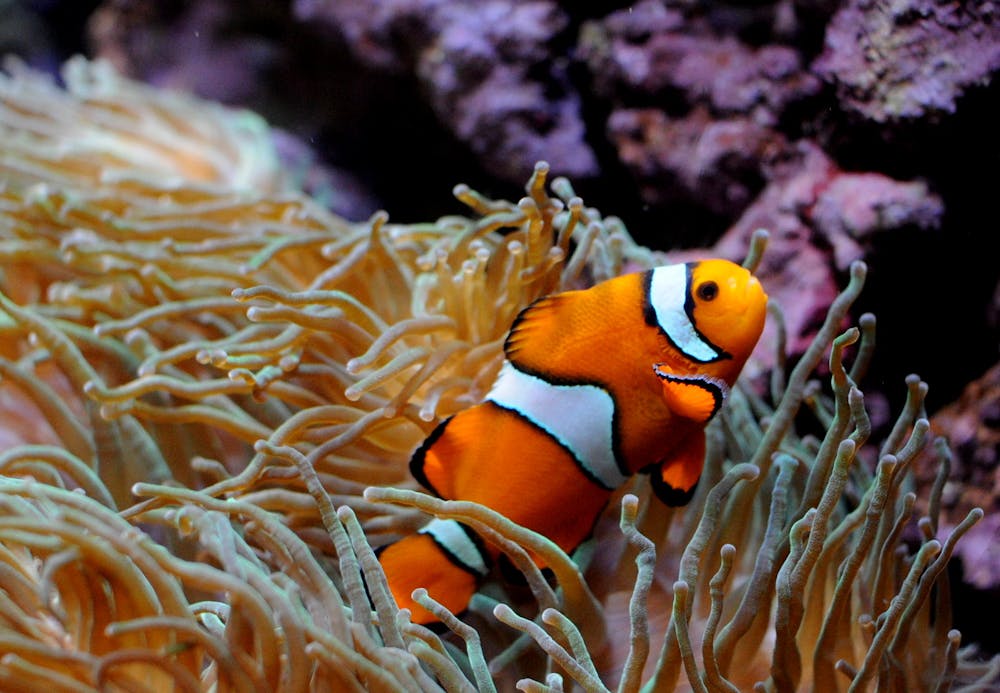 Other than mammals, many marine animals have gender-bending tendencies. Clownfish always begin life as hermaphrodites carrying both female and male reproductive organs. Later in life, males can become female on an as-needed basis to mate with other males.
Istvan/Flickr, CC BY
Other than mammals, many marine animals have gender-bending tendencies. Clownfish always begin life as hermaphrodites carrying both female and male reproductive organs. Later in life, males can become female on an as-needed basis to mate with other males.
Istvan/Flickr, CC BY
Read more: What we learn from a fish that can change sex in just 10 days
What this means for sex and evolution
Since mammals, including humans, develop as either males or females, we’ve been accustomed to regard testis or ovary development in the embryo as strict alternatives, depending on an on/off switch (the presence or absence of the Y chromosome and SRY gene).
But we now know there’s a complex gene network full of checks and balances that is the basis for alternate pathways of sexual development.
There are many studies of human babies born with mutations in one of these genes. This points to a more complex picture of the wiring behind the “switch” responsible for variation in human sexual development.
There are fierce females in other mammal species, too. Female spotted hyenas are bigger and more dominant than males and have male-like genitalia. We don’t know how this change works at a genetic level.
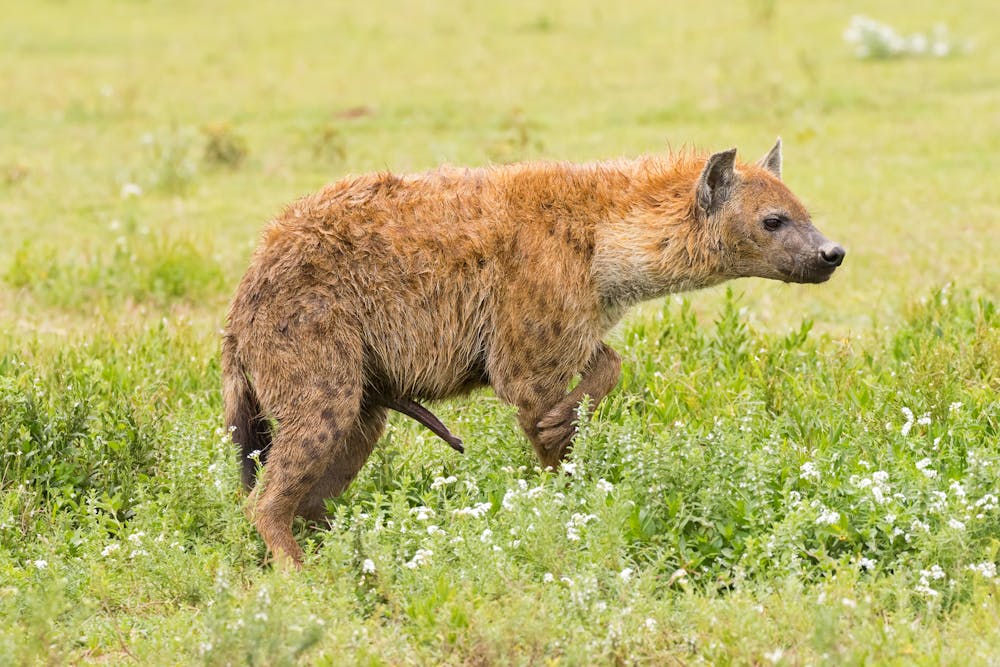 The spotted hyena, Crocuta crocuta (also known as the ‘laughing hyena’) is native to sub-Saharan Africa. In females such as this one, the clitoris is shaped and positioned like a penis that can become erect.
Shutterstock
The spotted hyena, Crocuta crocuta (also known as the ‘laughing hyena’) is native to sub-Saharan Africa. In females such as this one, the clitoris is shaped and positioned like a penis that can become erect.
Shutterstock
The downside of this is that mating is tricky. Cubs are birthed through the female’s narrow phallus. Mothers and/or cubs often die during this fraught process.
So while these larger, more aggressive females rule the hyena roost and get first pick at meals, like most things in nature, it seems this comes at a price.
Big fierce female moles and hyenas remind us the natural world, as always, features unique evolutionary differences — enlightening our view on human variation.
Authors: Jenny Graves, Distinguished Professor of Genetics and Vice Chancellor's Fellow, La Trobe University