

how one species quietly destroys native wildlife and cultural sites in arid Australia
- Written by Christine Schlesinger, Senior Lecturer in Environmental Science and Ecology, Charles Darwin University
Many of us are aware of the enormous destruction feral cats inflict on Australia’s native wildlife, but there’s another introduced species that will cause at least as much harm if left unmanaged — yet it receives far less attention.
We’re referring to buffel grass (Cenchrus ciliaris), a plant native to parts of Africa and Asia that has been widely introduced elsewhere for pasture and to stabilise soils.
Read more: One cat, one year, 110 native animals: lock up your pet, it's a killing machine
Buffel is fast growing, deep rooted and easy to establish, with each plant producing thousands of seeds. But these very characteristics for which it was prized have caused it to spread much further than ever planned.
We recently published two studies on buffel grass. One looked at just how serious the buffel invasion is to humans and wildlife by comparing it to other high-profile threats such as cats and foxes. The other study found that when buffel was removed, native wildlife quickly bounced back.
A catastrophic threat to wildlife
Buffel is now one of the worst invaders of dryland ecosystems worldwide. In Australia, this single species has replaced once diverse communities of native grasses and wildflowers across vast tracks of land. For example, most conservation reserves in the southern part of the NT have been invaded, including parts of Uluru-Kata Tjuta National Park.
Because it grows so thickly, the dense grassy fuel can feed bigger, hotter and sometimes unexpected fires. These new fires are a risk to wildlife, humans and large, old trees.
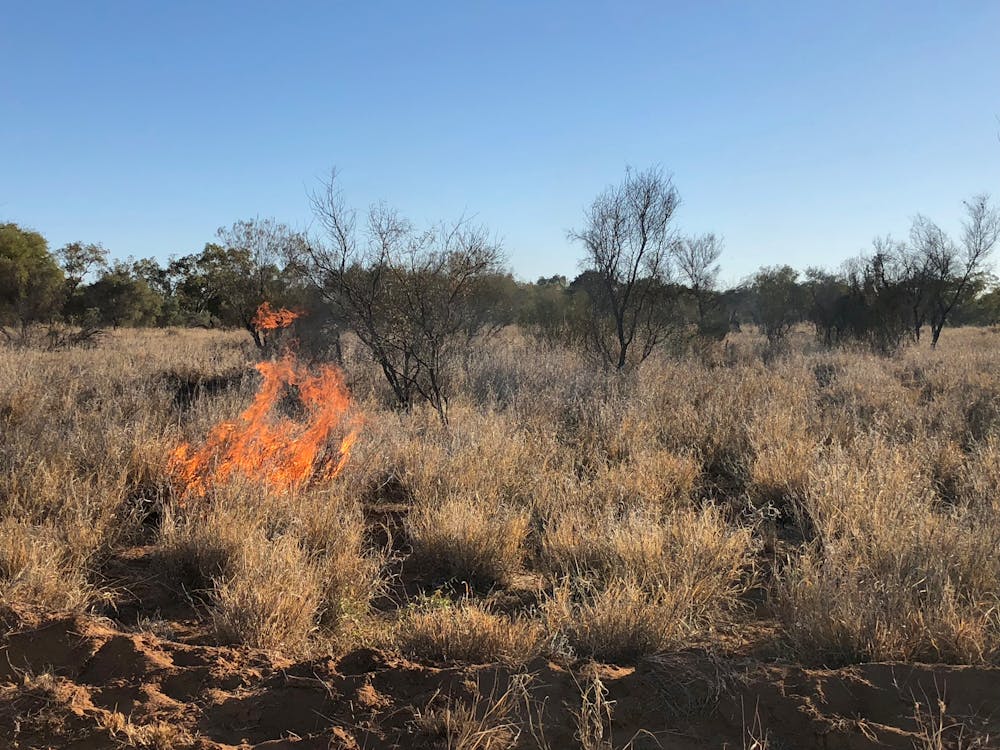 Buffel grass promotes new fire risks.
Jennifer Firn, Author provided
Buffel grass promotes new fire risks.
Jennifer Firn, Author provided
Our study compared buffel to threats posed by changed fire regimes, feral predators (cats and foxes) and feral herbivores (rabbits and camels). We found buffel was equal to feral cats and foxes in terms of future risk to biodiversity.
Feral cats are currently listed as threatening some 139 species under national environment legislation, including the night parrot and the central rock rat. Each year across Australia, feral cats kill more than three billion animals.
Read more: Feed or weed? New pastures are sowing problems for the future
Buffel is formally listed as threatening 27 species under this legislation, such as the floodplain skink (buffel can choke its burrows). But because there has been much less research on the impacts of buffel, this number is likely a significant underestimate.
Unlike cats, buffel impacts whole plant communities and the animals they support. For example, when large old trees are burnt, birds that rely on tree hollows for nesting can no longer breed successfully.
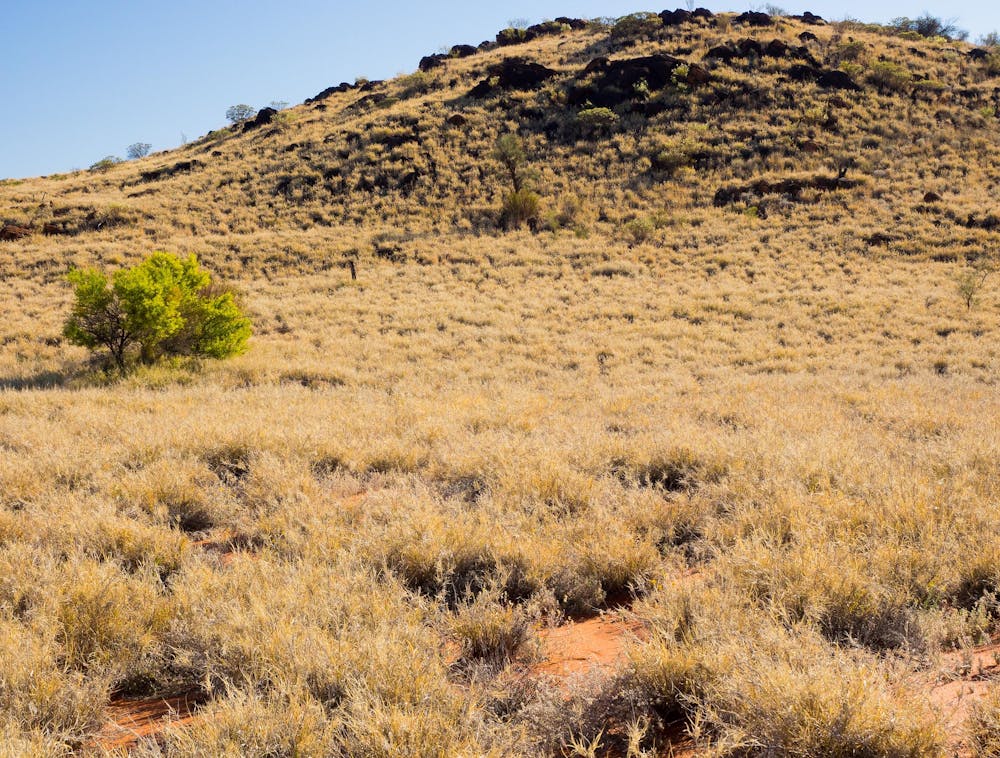 Buffel grass surrounding wattleseed, a bushfood.
Ellen Ryan-Colton, Author provided
Buffel grass surrounding wattleseed, a bushfood.
Ellen Ryan-Colton, Author provided
What’s more, buffel has only spread widely in the last 20-30 years, which means its full impact on ecosystems has not yet been realised. In fact, 70% of the Australian continent has suitable conditions for buffel growth and could, in time, become invaded.
In contrast, cats have already roamed Australia for more than 200 years and, tragically, have caused many species, like the lesser stick-nest rat, to become extinct.
A social and cultural threat for Aboriginal people
Our study found buffel ranked higher than any other environmental threat in terms of its social and cultural impacts for Aboriginal people.
Because buffel is valued as a pasture grass in some regions, much debate has focused on its agro‐economic benefits versus environmental costs.
Meanwhile, the views and values of Aboriginal custodians of inland Australia have remained marginalised. It’s time this changes.
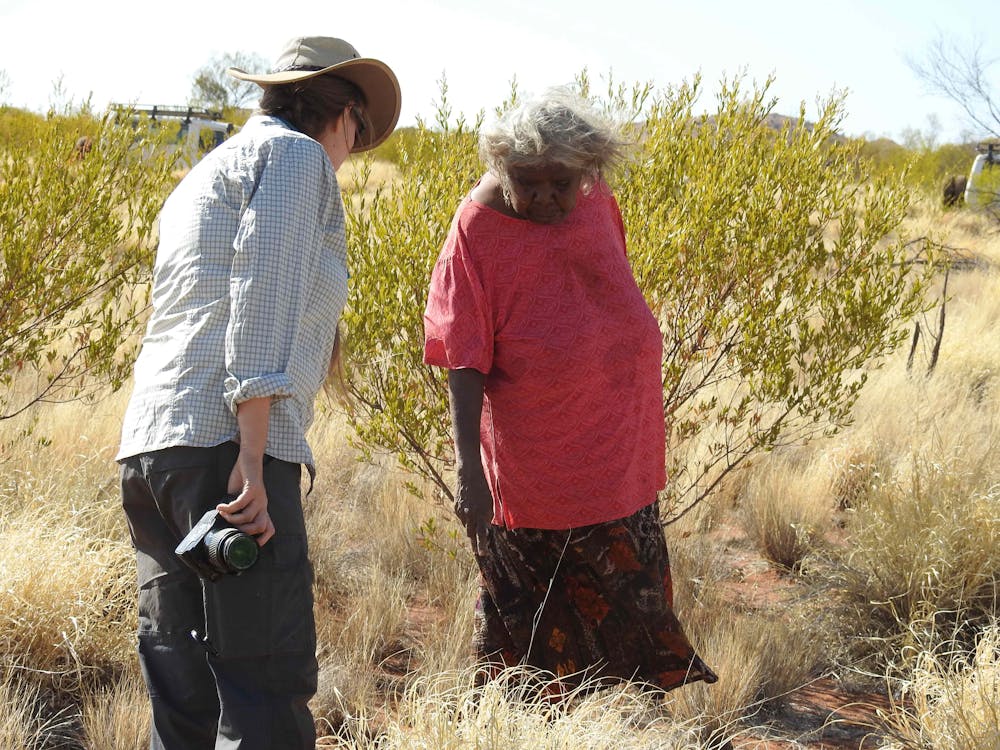 Nyanyu Watson showing how it’s harder to see animal tracks in areas occupied by buffel grass.
Ellen Ryan-Colton, Author provided
Nyanyu Watson showing how it’s harder to see animal tracks in areas occupied by buffel grass.
Ellen Ryan-Colton, Author provided
While feral cats and buffel both threaten culturally important wildlife, buffel is also causing the decline of valued plant foods and medicines.
For example, native desert raisin (Solanum centrale) — “katjirra” to Western Arrernte people and “kampuṟarpa” to Pitjantjatjara people — remains an important staple food across central Australia and is part of Australia’s living cultural heritage.
However, it is becoming harder for women to find and collect as buffel takes over country.
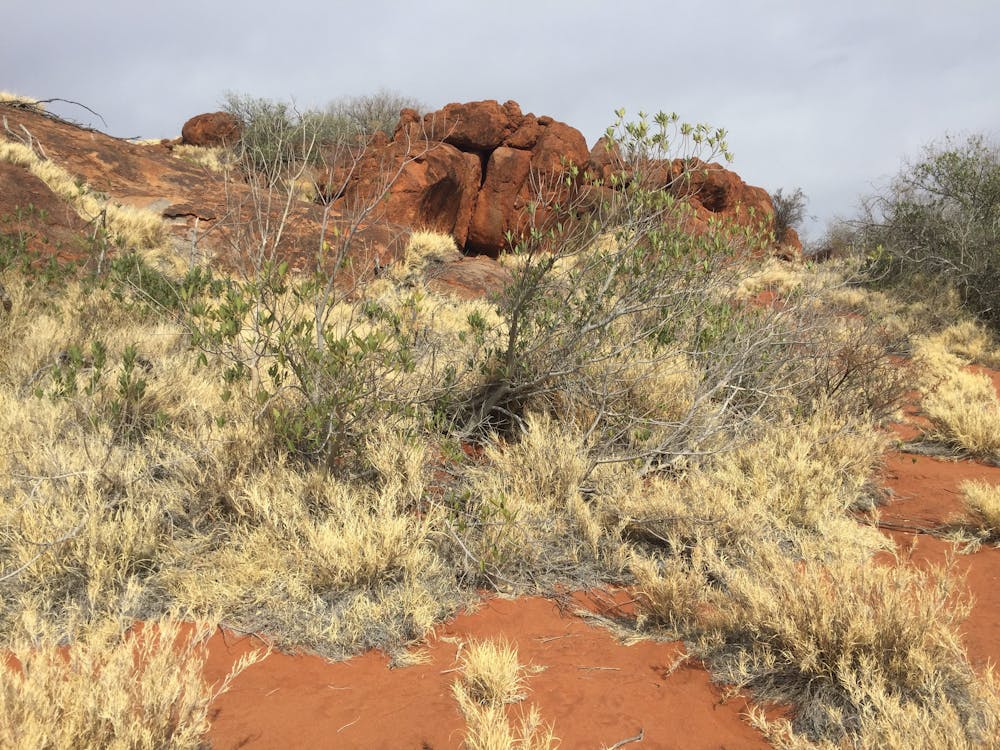 Buffel grass growing right under desert fig, a bushfood that’s sensitive to fire.
Ellen Ryan-Colton, Author provided
Buffel grass growing right under desert fig, a bushfood that’s sensitive to fire.
Ellen Ryan-Colton, Author provided
Buffel also damages important cultural sites by bringing fire and choking water holes. Thick grass makes it difficult to walk through country and it’s now hard to see tracks or animals.
Together with the loss of species, this inhibits the transfer of cultural knowledge from one generation to another.
The return of native wildlife
Buffel responds well to herbicide in smaller areas, and spread can be slowed or stopped by treating isolated infestations.
For six years, we tracked the response of native plants and animals (particularly lizards) after buffel was treated at six sites in the Tjoritja National Park near Alice Springs. And we found biodiversity soon bounced back.
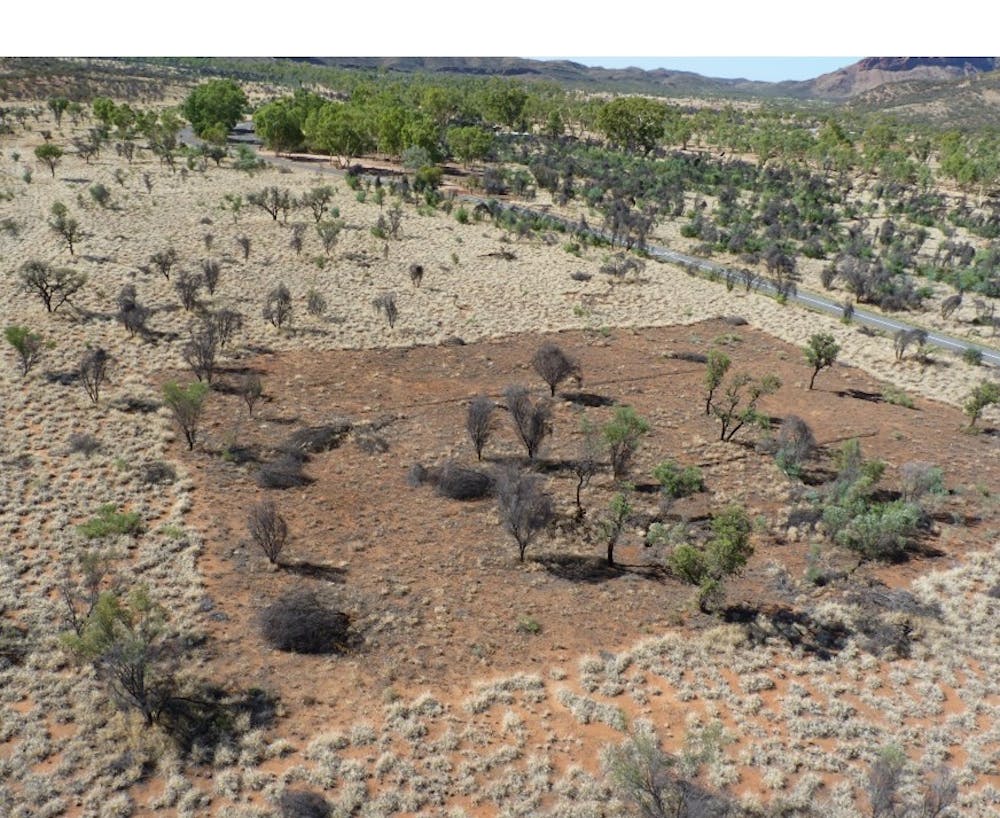 A buffel grass removal experiment, near Alice Springs.
Christine Schlesinger, Author provided
A buffel grass removal experiment, near Alice Springs.
Christine Schlesinger, Author provided
Following good rains, native plants like billy buttons and golden everlastings that had just been hanging on quickly re-established in areas where buffel was treated. And as native plant communities were restored, a range of lizards and other wildlife returned, too.
Birds such as Australian ring-neck parrots and red-tailed black-cockatoos began to selectively use the treated areas, foraging on seeds on the more open ground.
Ants also became much more abundant and diverse where buffel was removed. Ants play an important role in ecosystems, for example, by dispersing seeds. This has likely been diminished in buffel-occupied areas.
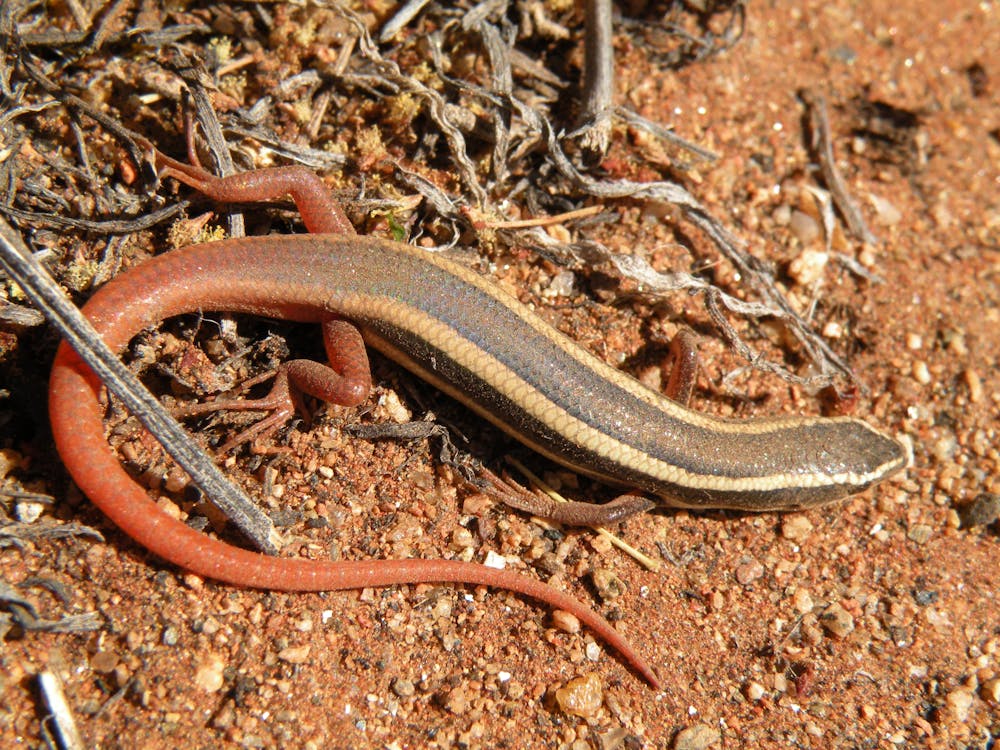 A fire-tailed skink at one of the the buffel removal sites.
Christine Schlesinger, Author provided
A fire-tailed skink at one of the the buffel removal sites.
Christine Schlesinger, Author provided
Importantly, while research demonstrates the potential for ecosystem recovery following effective control, the negative effects of buffel on fauna increased in areas where we did nothing.
Where to from here?
The findings from both our studies underline the urgent need for management on a much larger scale than what is currently possible, and prevention of further spread.
It’s clear a nationally coordinated response is required, along with policies that support positive local initiatives.
Creating and maintaining large buffel-free sanctuaries in areas not yet invaded could help to protect biodiversity in the future. But we found the cost of maintaining these could be an estimated 40–50 times more than other pest-free sanctuaries, if restricted to current methods of control.
Read more: Pulling out weeds is the best thing you can do to help nature recover from the fires
This is why Australia needs new, cost-effective, culturally appropriate and safe control options, rolled out on a broad scale. We stress the need for Aboriginal people from regions affected by buffel and prone to invasion to be central to discussions and the development of solutions.
It’s also important to note controlling buffel doesn’t require its eradication from pastoral regions where it’s valued. It does, however, require a national commitment and dedicated research, with strategic, coordinated and committed action.
Authors: Christine Schlesinger, Senior Lecturer in Environmental Science and Ecology, Charles Darwin University

















