

If border restrictions increase to combat new COVID-19 strains, what rights do returning New Zealanders have?
- Written by Kris Gledhill, Professor of Law, Auckland University of Technology
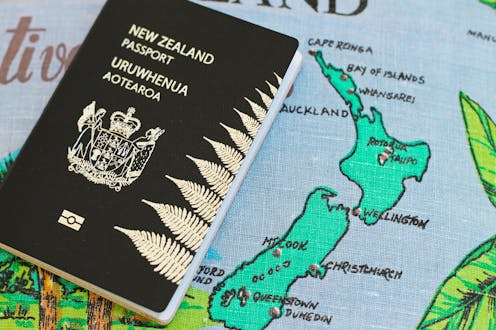
As we know, getting into New Zealand during the COVID-19 pandemic is difficult. There are practicalities, such as high airfare and managed isolation costs. And there are legal requirements, including pre-flight testing, mandatory quarantine and visa restrictions.
Even so, concern about new strains of the virus have led to calls to “turn down the tap”, particularly for those coming from places such as Britain, where spectacular political incompetence has created the conditions for these new COVID variants to evolve.
Such a move would make an already difficult process even more so. Since quarantine has to be pre-booked and there are limits on availability, there have been inevitable delays and disappointment. This has led to complaints about it being too difficult to “come home”.
Also inevitably, there has been much talk of the “right” to return. While the government has granted special visas for entertainers, sportspeople, essential workers and students, those with citizenship or residency status expect to be allowed home.
Rights aren’t always absolute
However, rights are rarely a trump card. With very few exceptions — most obviously the right not to be tortured or treated in an inhuman or degrading way — rights are not absolute.
Rather, they represent an important value that must be weighed in the balance and respected unless there are good countervailing arguments. Depending on the strength of those arguments, a right may be delayed, only partly respected, or outweighed completely.
Read more: Why the COVID-19 variants are so dangerous and how to stop them spreading
For example, there is a right to privacy, but a criminal conviction cannot be kept private from people who need to know about it. There is a right to freedom of expression, but not to the extent of defamation or inciting discrimination.
So it is with the right of New Zealanders to come into New Zealand when they have exercised another right, namely the right to leave the country.
No arbitrary denial of rights
The modern human rights regime begins with the Universal Declaration of Human Rights (1948), which New Zealand had an important role in drafting. Its article 13 sets out a right to move within state borders, to leave any country and to return to one’s home country.
But article 29 notes there are duties to the community and that rights can be limited for good reasons.
The declaration was put into a binding treaty, the 1966 International Covenant on Civil and Political Rights (ICCPR), which New Zealand ratified in 1978. Article 12 of this significant treaty refers to people not being “arbitrarily” prevented from entering their own country.
Read more: The big barriers to global vaccination: patent rights, national self-interest and the wealth gap
The ICCPR is part of the reason we have the New Zealand Bill of Rights Act 1990. Under its section 18, all citizens have the right to enter New Zealand. However, under section 5, limitations are allowed if they are clearly justified in a democratic society.
This goes to the heart of what “arbitrarily” means in practice. Basically, limits on the right to return have to be based on a competing interest. Those limits have to support the competing interest, and the balance has to make sense.
The government’s duty
There are many competing interests, most fairly obvious, starting with protecting people’s lives, particularly those most vulnerable.
COVID-19 is objectively dangerous and protecting people in New Zealand is a government’s duty. In short, we have a right to life. Protecting this is rationally connected to an effective quarantine process. In turn, this can justify all manner of conditions, including limits on numbers.
Secondly, there is the more general health of people, which will be compromised if healthcare systems are overwhelmed, as has happened in other parts of the world. This undermines the right to health.
Thirdly, there are rights that flow from having a robust economy, including the right to an adequate standard of living. The government’s approach of protecting these interests by cutting off international tourism and limiting some other sectors to protect the rest of the economy is certainly not arbitrary.
Read more: With COVID-19 mutating and surging, NZ urgently needs to tighten border controls
Whose rights should prevail?
There is another side to this, of course. All these rights also belong to New Zealanders abroad. Their right to return includes the right to be in a safer and better environment. This is not lost by being overseas when a pandemic strikes.
However, the government can give extra weight to protecting people already here, particularly as fair notice was given that significant restrictions were being imposed to eliminate COVID-19 in the community, rather than merely manage it.
As the overseas experience suggests, the latter approach would have led to more deaths, compromised health care, and might well have undermined the economy to a greater degree.
So, yes, there is a right to return — but it is a right that can be delayed to protect those already here.
Authors: Kris Gledhill, Professor of Law, Auckland University of Technology

















