

5 steps to make vaccinations easier on your kids
- Written by Therese O'Sullivan, Associate Professor, Edith Cowan University
The COVID vaccine rollout has placed the issue of vaccination firmly in the spotlight. A successful rollout will depend on a variety of factors, one of which is vaccine acceptance. One potential hurdle to vaccine acceptance is needle fear.
In a study that surveyed parents and children in Canada, 24% of parents and 63% of children reported a fear of needles. About one in 12 children and adults alike said they didn’t get all the vaccinations they needed because of their phobia.
Needle phobia generally begins from around age five, and can last through to adulthood. It can be a barrier to health-care access and treatment.
So it’s important to establish positive attitudes towards needle procedures, particularly vaccination, early in life.
An opportunity
Although there’s no one specific reason why people develop needle phobia, people who are anxious and fearful of needles can often relate their concerns back to one poorly-managed needle experience as a child. A bad experience may result from feelings of powerlessness due to being under-informed or being “tricked” into a vaccination.
In Australia, the National Immunisation Program Schedule includes vaccinations during the first 18 months, again at age four, and then in adolescence.
While it’s important to use a respectful approach at all ages, the four-year-old vaccinations present a particularly valuable opportunity for parents to help children feel comfortable with needle procedures.
Read more: Everyone can be an effective advocate for vaccination: here's how
The guide below offers a strategy to help make vaccination a positive experience for your child. It’s based on what’s called the respectful approach to child-centred health care. This focuses on the parent and health-care provider developing a cooperative relationship with the child, rather than using authority or incentives.
The aim is to help the child feel in control and reduce anxiety around needle procedures.
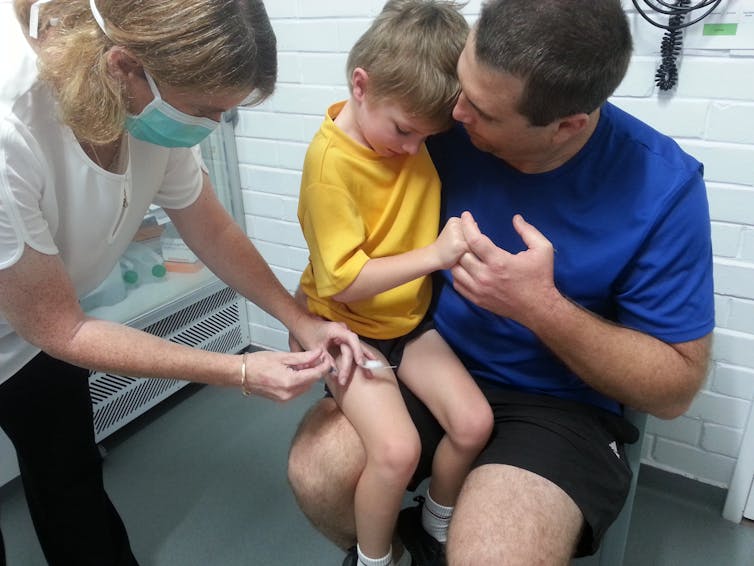 The author’s son is pictured having his four-year-old vaccinations.
Therese O'Sullivan, Author provided
The author’s son is pictured having his four-year-old vaccinations.
Therese O'Sullivan, Author provided
Five steps
1. Prepare
A few weeks beforehand, briefly introduce the topic of vaccinations and why they’re important.
Expect some resistance. This is normal — there’s no need to argue, just acknowledge your child’s feelings. Let them know adults don’t particularly like getting vaccinations either!
About a week out, mention again that they’ll be having a vaccination, and give some details, such as where they will be going. Another reminder the day before is helpful.
2. Be honest and transparent
It’s important to check if your child has any questions each time you discuss vaccination with them. Answer as honestly as possible. Yes, it will hurt. But not for long — most of the pain will be gone by the time 30 seconds is up, perhaps as long as it takes to run around the house or say the alphabet.
Read more: Children may need to be vaccinated against COVID-19 too. Here's what we need to consider
3. Give choices
Help children feel like they are actively part of the process by giving choices where possible. For example, can they have a choice of day, or morning or afternoon?
Check with your health-care provider in advance whether children can choose the location of the injection – normally the vaccines are administered on the outside of the thigh, or the upper arm.
In the lead up, the child might like to prod themselves with a toothpick to see the difference between how each site feels. They may also have a preference for the left or right side.
Sometimes it helps to yell out when you feel pain. Kids may find this fun if you give them free reign to call out anything they want (even “rude” words) when the injection goes in. Just let your health-care provider know in advance so they’re not taken by surprise.
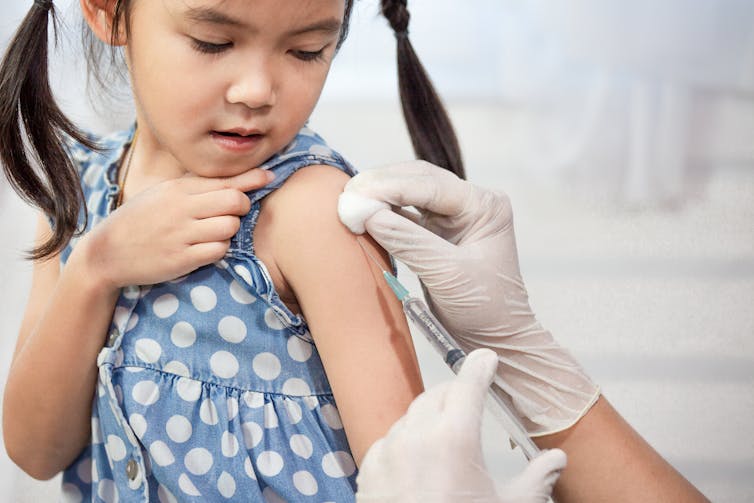 Let your child watch the injection, if they want to.
Shutterstock
Let your child watch the injection, if they want to.
Shutterstock
4. Avoid bribes and distractions
Offering a bribe can give the child the impression there’s something terrible about the procedure. As the parent, be confident (or pretend to be confident if you have needle fear yourself). Pain-related beliefs and behaviours can be learnt through observing others, and children are very perceptive.
You can always do a fun activity or have a treat afterwards, but make this a surprise at the end rather than a bribe before the vaccination.
Distractions are common, but can leave the child wondering why they were distracted. “What was going on that was so bad I wasn’t allowed to look at it?”, they might wonder. When children feel they have been deceived, this may erode trust.
Some children may like to watch so they know what’s happening — give them the option. Interestingly, in one study, adults who chose to watch the needle being inserted into their arm reported less pain compared with those who chose to look away.
5. Use mindful parenting
Think of vaccinations as an opportunity to be 100% present, one-on-one with your child. Put aside any multitasking for the morning or afternoon of the vaccination. If you can, take the time off work, turn off your phone, and arrange for any other siblings to be looked after.
Observe your child, aim to listen with your full attention, be compassionate and aware of how you and your child are feeling. All of these things can improve the quality of parent–child relationships and are important for helping children through potentially anxious times.
Read more: Fear of needles could be a hurdle to COVID-19 vaccination, but here are ways to overcome it
Authors: Therese O'Sullivan, Associate Professor, Edith Cowan University

















