

A major report excoriated Australia's environment laws. Sussan Ley's response is confused and risky
- Written by Peter Burnett, Honorary Associate Professor, ANU College of Law, Australian National University
It’s official: Australia’s natural environment and iconic places are in deep trouble. They can’t withstand current and future threats, including climate change. And the national laws protecting them are flawed and badly outdated.
You could hardly imagine a worse report on the state of Australia’s environment, and the law’s capacity to protect it, than that released yesterday. The review of the Environmental Protection and Biodiversity (EPBC) Act, by former competition watchdog chair Professor Graeme Samuel, did not mince words. Without urgent changes, most of Australia’s threatened plants, animals and ecosystems will become extinct.
Federal environment minister Sussan Ley released the report yesterday after sitting on it for three months. And she showed little sign of being spurred into action by Samuel’s scathing assessment.
Her response was confusing and contradictory. And the Morrison government seems hellbent on pushing through its preferred reforms without safeguards that Samuel says are crucial.
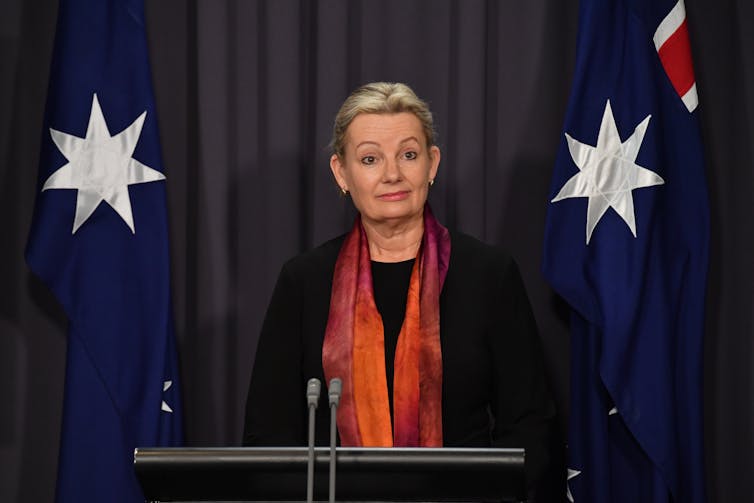 Environment Minister Sussan Ley appears hellbent on pushing through the government’s agenda.
Mick Tsikas/AAP
Environment Minister Sussan Ley appears hellbent on pushing through the government’s agenda.
Mick Tsikas/AAP
A bleak assessment
I was a federal environment official for 13 years, and from 2007 to 2012 was responsible for administering and reforming the EPBC Act. I believe Samuel’s report is a very good one.
Samuel has maintained the course laid out in his interim report last July. He found the state of Australia’s natural environment and iconic places is declining and under increasing threat.
Moreover, he says, the EPBC Act is outdated and requires fundamental reform. The current approach results in piecemeal decisions rather than holistic environmental management, which he sees as essential for success. He went on:
The resounding message that I heard throughout the review is that Australians do not trust that the EPBC Act is delivering for the environment, for business or for the community.
 Australians feel the EPBC Act is failing the environment.
Shutterstock
Australians feel the EPBC Act is failing the environment.
Shutterstock
A proposed way forward
Samuel recommended a suite of reforms, many of which were foreshadowed in his interim report. They include:
national environmental standards, legally binding on the states and others, to guide development decisions and provide the ability to measure outcomes
applying the new standards to existing Regional Forest Agreements (RFAs). Such a move could open up the forest debate in a way not seen since the 1990s
accrediting the regulatory processes and environmental policies of the states and territories, to ensure they can meet the new standards. Accredited regimes would be audited by an Environment Assurance Commissioner
a “quantum shift” in the availability of environmental information, such as accurate mapping of habitat for threatened species
an overhaul of environmental offsets, which compensate for environmental destruction by improving nature elsewhere. Offsets have become a routine development cost applied to proponents, rather than last-resort compensation invested in environmental restoration.
Under-resourcing is a major problem with the EPBC Act, and Samuel’s report reiterates this. For example, as I’ve noted previously, “bioregional plans” of land areas – intended to define the environmental values and objectives of a region – have never been funded.
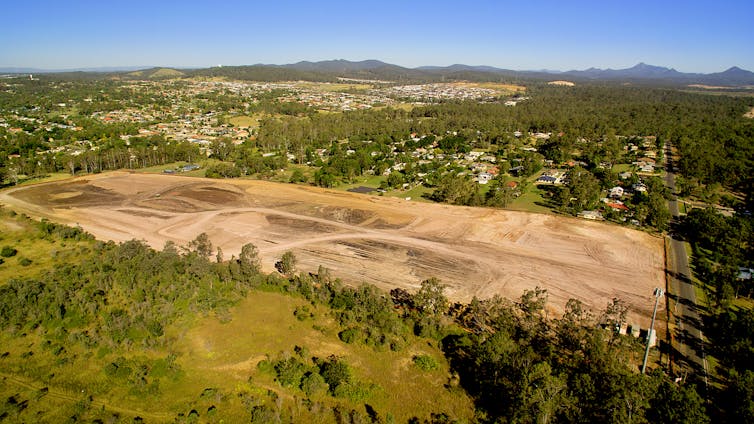 The system of environmental offsets, which compensates for damage to nature, should be overhauled.
Shutterstock
The system of environmental offsets, which compensates for damage to nature, should be overhauled.
Shutterstock
Respecting Indigenous knowledge
One long-overdue reform would require decision-makers to respectfully consider Indigenous views and knowledge. Samuel found the law was failing in this regard.
He recommended national standards for Indigenous engagement and participation in decision-making. This would be developed through an Indigenous-led process and complemented by a comprehensive review of national cultural heritage protections.
Read more: Juukan Gorge: how could they not have known? (And how can we be sure they will in future?)
The recommendations follow an international outcry last year over mining giant Rio Tinto’s destruction of 46,000-year-old caves at Juukan Gorge in Western Australia. In Samuel’s words:
National-level protection of the cultural heritage of Indigenous Australians is a long way out of step with community expectations. As a nation, we must do better.
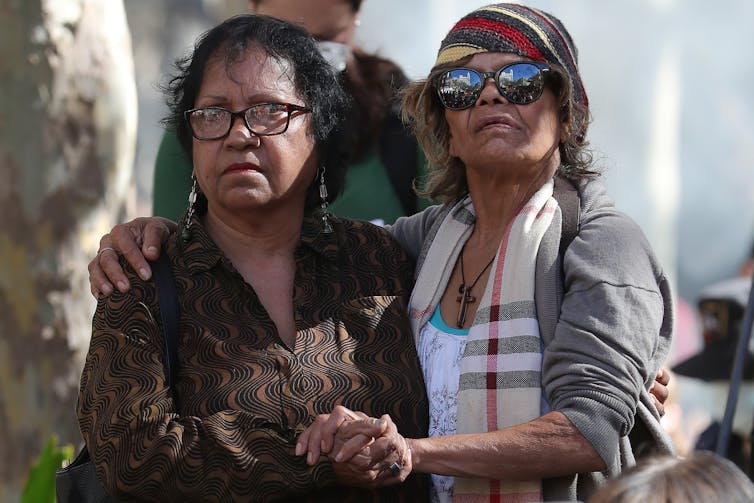 Indigenous knowledge should be heard and respected.
Richard WainwrightT/AAP
Indigenous knowledge should be heard and respected.
Richard WainwrightT/AAP
Confusing signals
The government’s position on Samuel’s reforms is confusing. Ley yesterday welcomed the review and said the government was “committed to working through the full detail of the recommendations with stakeholders”.
But she last year ruled out Samuel’s call for an independent regulator to oversee federal environment laws. And her government is still prepared to devolve federal approvals to the states before Samuel’s new national standards are in place.
In July last year, Ley seized on interim reforms proposed by Samuel that suited her government’s agenda – streamlining the environmental approvals process – and started working towards them.
In September, the government pushed the change through parliament’s lower house, denying independent MP Zali Steggall the chance to move amendments to allow national environment standards.
Ley yesterday reiterated the government’s commitment to the standards – yet indicated the government would soon seek to progress the legislation through the Senate, then develop the new standards later.
Samuel did include devolution to the states in his first of three tranches of reform – the first to start by early 2021. But his first tranche also includes important safeguards. These include the new national environmental standards, the Environment Assurance Commissioner, various statutory committees, Indigenous reforms and more.
The government’s proposed unbundling of the reforms doesn’t pass the pub test. It would tempt the states to take accreditation under the existing, discredited rules and resist later attempts to hold them to higher standards. In this, they’d be supported by developers who don’t like the prospect of a higher approvals bar.
 Australia’s iconic places and species are headed for extinction.
Shutterstock
Australia’s iconic places and species are headed for extinction.
Shutterstock
A big year ahead
Samuel noted “governments should avoid the temptation to cherry pick from a highly interconnected suite of recommendations”. But this is exactly what the Morrison government is doing.
I hope the Senate will force the government to work through the full detail of the recommendations with stakeholders, as Ley says she’d like to.
Read more: Environment laws have failed to tackle the extinction emergency. Here's the proof
But at this stage there’s little sign the government plans to embrace the reforms in full, or indeed that it has any vision for Australia’s environment.
All this plays out against still-raw memories of last summer’s bushfires, and expected pressure from the United States, under President Joe Biden, for developed economies such as Australia to lift their climate game.
With the United Nations climate change conference in Glasgow in November, it seems certain the environment will be high on Australia’s national agenda in 2021.
Authors: Peter Burnett, Honorary Associate Professor, ANU College of Law, Australian National University

















