

We analysed almost 500,000 police reports of domestic violence. Mental health was an issue
- Written by George Karystianis, Research fellow, UNSW
Rare access to almost half a million police reports of domestic violence has revealed a hidden picture of mental health issues in perpetrators and victims.
This is academics’ first attempt in the world to use computers to mine the text of so many police reports. These would otherwise have taken humans years to read and analyse.
As part of our recently published research, we discovered many more mentions of mental health issues in these police reports than expected.
We have already used those data to identify lesser-known groups vulnerable to domestic violence, including people with autism spectrum disorder and in yet-to-be-published research, people in nursing homes. But our findings could also have other implications for public health, victims, perpetrators and policing.
Here’s what we did
Police are often the first to attend domestic violence events. As well as details such as the names and ages of the people involved, police also write up a narrative description of the event, including any observable injuries, drug and alcohol information, and mental health.
The NSW Police Force told us that in 2017 alone, officers attended 123,330 domestic violence events. This gives some idea of the scale of the problem and the challenge of reading, processing and pulling together the volumes of information these reports contain.
So we developed a way of mining the text to automatically extract certain information. We analysed almost half a million (492,393) domestic violence police records in New South Wales, covering a 12-year period (2005-16).
Read more: Out of the shadows: the rise of domestic violence in Australia
To illustrate the advantage of automatic text processing, we estimate it would have taken one person around 160 years to read and process the reports. That’s based on 14 reports a day, working 220 days a year (unlike computers, humans take holidays).
Although the source records were not de-identified (it would have taken too long), we only extracted anonymised information (mentions of mental illness) to ensure privacy.
Here’s what we found
We focused on domestic violence events that mentioned a single perpetrator against a single victim (416,441). Within those, we identified more than 120 different mental illnesses for victims and perpetrators in almost 65,000 police-attended domestic violence events over those years.
These ranged from generic disorder descriptions (for example, mood disorders, self-harm) to highly specific conditions (for example, oppositional defiant disorder, dissociative personality disorder) for victims and perpetrators.
 Police gathered information on victims’ and perpetrators’ mental health from many sources, including medicines observed at the scene.
A total of 16% of domestic violence events examined had at least one mention of a mental illness for either the perpetrator or the victim. In more than three-quarters (76%) of these events, mental illness was mentioned for the perpetrator only, 17% for the victim only, and 7% for both victim and perpetrator.
Overall, mood affective disorders, which include depression or bipolar disorder, were the most common in both victims and perpetrators.
One key finding was a steady increase over time in domestic violence involving alcohol abuse in perpetrators aged 15-64 years. Another was the number of domestic violence cases with victims over 55 years said to have dementia.
While the records contained many more reports of mental health issues than we might expect, this is likely a big underestimate. This is because police do not systematically seek information on people’s mental health state when they attend domestic violence events.
We need to be careful when interpreting these results
We know police reports don’t capture all cases of domestic violence. We also need to be careful when using reports of mental health based on interviews with victims, perpetrators and third parties who are not mental health professionals (such as parents).
However, police reports draw on a range of sources, including the victims, perpetrators and witnesses. They also consider evidence at the scene (such as medications and signs of drug and alcohol use).
Due to stigma issues, people might not be comfortable or willing to share their own mental health issues with others, including police.
Read more: Media reporting on mental illness, violence and crime needs to change
What could this data be used for?
Rather than stigmatise people with mental health issues, our research can potentially dispel myths about domestic violence and mental health, and raise awareness about certain groups’ vulnerability.
For example, our research has identified vulnerable groups at risk of being victims of domestic violence, including people with autism spectrum disorders, carers, and people in specific settings (such as nursing homes).
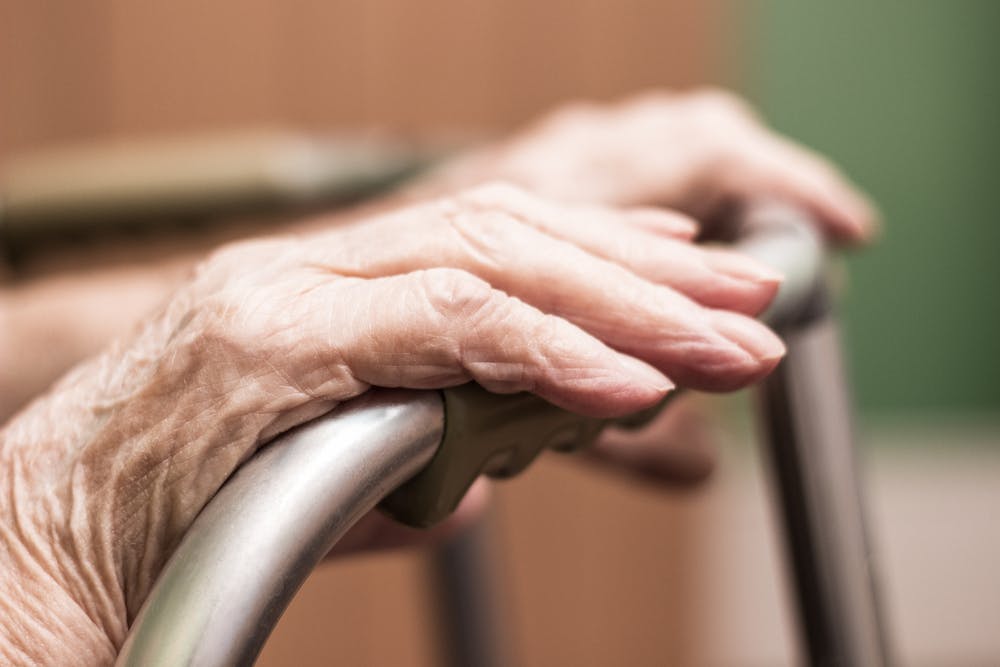 We showed people with dementia in nursing homes are another vulnerable group when it comes to domestic violence.
from www.shutterstock.com
We showed people with dementia in nursing homes are another vulnerable group when it comes to domestic violence.
from www.shutterstock.com
We showed the perpetrators of domestic violence against people with autism spectrum disorders were more likely to be their family or carers. And the most common conditions in perpetrators were developmental conditions and intellectual disability; for non-autistic perpetrators, schizophrenia and substance abuse were most common.
From a public health perspective, this rich information also gives us extra insights not captured in data sources such as emergency department presentations, which cover only the more severe cases of domestic violence that result in significant physical injury.
And our data could also help police handle domestic violence events where mental health is an issue.
We are currently using artificial intelligence methods on the data from text mining and other sources to predict future domestic violence events by individuals with particular profiles.
There are concerns
This study raises the issue of how we use “big data” and how we share information between the police and mental health services.
We argue the potential benefits outweigh the potential harms, especially as analyses like ours can potentially increase community safety, lead to better outcomes for people with mental illnesses, and inform interactions with police.
Read more: Explainer: what is big data?
We suggest the public should be consulted about their views on “big data” issues, including any privacy concerns, rather than decisions being made solely by government officials and academics. This is important given the “big data” tsunami that has engulfed us, representing a significant public asset.
If this article has raised issues for you, or if you’re concerned about someone you know, call the National Sexual Assault, Domestic Family Violence Counselling Service (1800RESPECT) on 1800 737 732 or Lifeline on 13 11 14.
Authors: George Karystianis, Research fellow, UNSW

















