

For now, the Tokyo Olympics will go ahead. But at what cost?
- Written by Lisa Gowthorp, Assistant Professor of Sport Management, Bond Business School, Bond University
With COVID-19 still running rampant in many parts of the world, the International Olympic Committee (IOC) has prepared “playbooks” for the Tokyo Olympic and Paralympic Games, set to begin in July.
There are four books, each aimed at a specific group: international federations, athletes and officials, press, and broadcasters. The aim of these playbooks is to outline the rules that will ensure a safe and successful event.
Several commentators consider the games going ahead without a guarantee of safety as “irresponsible”. However, the IOC president, Thomas Bach, responded:
Our task is to organise Olympic Games, not to cancel Olympic Games.
Supporting this view is Tokyo 2020 president Yoshiro Mori, who insists Japan will hold the Olympic and Paralympic Games regardless of the situation with the pandemic.
As a result, the IOC playbooks outline safety precautions to prevent the spread of COVID-19. Here are the main rules and processes proposed for athletes and officials attending the games.
Read more: Why are Japan's leaders clinging to their Olympic hopes? Their political fortunes depend on it
Before arriving in Japan
All athletes must take a COVID-19 test within 72 hours of departing their home country. Athletes are required to provide proof of a negative result before they depart their home country.
Prior to arriving in Japan, athletes must observe the playbook rules for 14 days (this includes, for example, minimising contact with others and practising good personal hygiene).
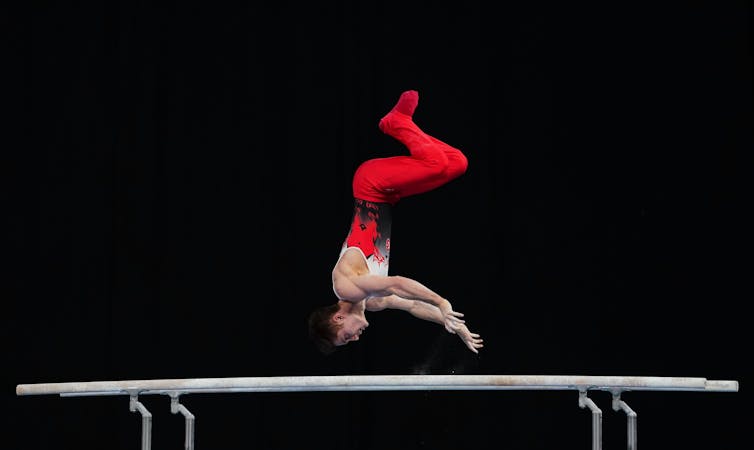 Athletes must have COVID-19 tests before entering Japan for the Olympics and during their stay in Tokyo.
Scott Barbour/AAP
Athletes must have COVID-19 tests before entering Japan for the Olympics and during their stay in Tokyo.
Scott Barbour/AAP
During the stay in Japan
Once in Tokyo, all individuals will require another COVID-19 test. Further regular COVID-19 testing and temperature checks will be done throughout their stay in Japan.
Australian athletes will arrive no earlier than five days before their event and depart a maximum of two days after their event is completed. To adhere to COVID-19 safe practices as outlined in the playbooks, the organisers will cut back on the number of athletes who attend the opening and closing ceremonies.
Athletes are asked to compile a list of all the people they expect to have close contact with during their stay in Tokyo. They must not visit games venues as a spectator nor visit tourist areas, shops, restaurants, bars or gyms.
Test, trace and isolate
Japan has created a “contact confirming app” – COCOA – for health reporting and monitoring COVID-19 test results. All athletes will have restrictions on the activities they can undertake, outlined in an activity plan. The IOC is due to publish these later. Further details are needed to ensure compliance with data protection principles, especially sensitive health information.
To minimise physical interaction, athletes and officials are reminded to: avoid hugs and handshakes; keep at least 2 metres apart from other athletes; avoid enclosed spaces; not use public transport (only use games transport); and follow their activity plan. All team members are required to wear face masks and supply enough masks for the duration of stay in Tokyo.
Athletes and officials will be screened and tested for COVID-19 at different times during their stay. Anyone with symptoms must self-isolate. Details of where and how self-isolation will work have not yet been explained.
Further, it is recommended to have insurance for costs of medical treatment in Japan and repatriation if sent home. Questions arise as to who will cover these costs, and whether such insurance cover is even available in these COVID-disrupted times.
If athletes test positive, they are to self-isolate immediately and will not be allowed to compete in the games. However, to mitigate the likelihood of false positives in testing, athletes will have to have a number of false tests before they are barred from competing, the specifics of which will be revealed in April.
Limited information is available on where those with positive tests would be quarantined and what medical support they would receive.
What about the vaccine?
There is debate about whether nations should vaccinate their athletes prior to attending the games. Several athletes, including Australian swimmer Cate Campbell, believe athletes should be prioritised for vaccinations if it saves the games from being cancelled.
However, Bach declared “we are not in favour of athletes jumping the queue”. Therefore, athletes will not be required to be vaccinated against COVID-19 to compete at the games.
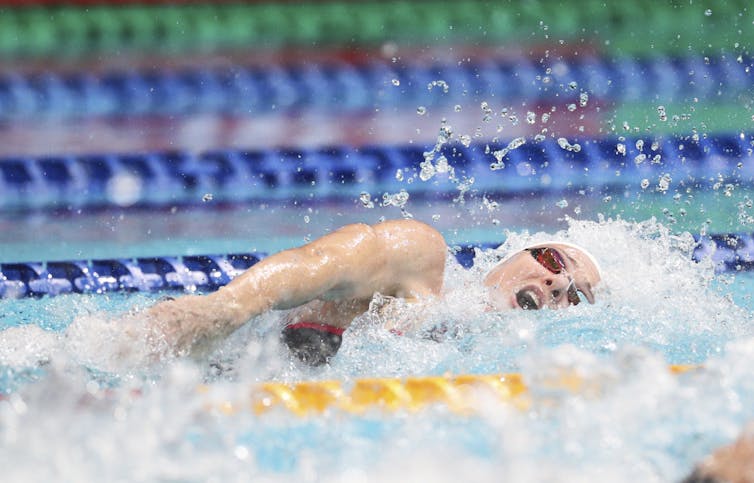 Athletes will not need to have been vaccinated against COVID-19 to compete at the Tokyo Games.
Yomiuri Shimbun/AP/AAP
Athletes will not need to have been vaccinated against COVID-19 to compete at the Tokyo Games.
Yomiuri Shimbun/AP/AAP
So will the Olympics go ahead?
The IOC acknowledges that, despite all the care taken, risks and impacts may not be eliminated and therefore athletes agree to participate in the games at their own risk. Shifting the risk to athletes is problematic as it fails to take into account the vulnerability associated with performance-driven motivations and medal aspirations.
And as for local support, you’d be struggling to find a Tokyo resident who wants the games to go ahead, especially considering Japan has had over 400,000 cases and almost 6,500 deaths from COVID-19, with the majority of cases in the greater Tokyo area.
The first iteration of the playbook lacks the specific detail that is warranted when hosting 10,000 athletes at a global sport event. As the World Players Association says:
Comprehensive COVID-19 protections – not rudimentary statements – are essential if a safe and successful Olympiad is to be possible.
Hopefully, the publication of further details in April will ease concerns. In the meantime, if the games are to go on, we all have to wonder at what cost.
Authors: Lisa Gowthorp, Assistant Professor of Sport Management, Bond Business School, Bond University
Read more https://theconversation.com/for-now-the-tokyo-olympics-will-go-ahead-but-at-what-cost-154851

















