

Our national water policy is outdated, unfair and not fit for climate challenges: major new report
- Written by Quentin Grafton, Director of the Centre for Water Economics, Environment and Policy, Crawford School of Public Policy, Australian National University
Most Australians know all too well how precious water is. Sydney just experienced a severe drought, while towns across New South Wales and Queensland ran out of drinking water. Under climate change, the situation will become more dire, and more common.
It wasn’t meant to be this way. In 2004, federal, state and territory governments signed up to the National Water Initiative. It was meant to secure Australia’s water supplies through better governance and plans for sustainable use across industry, environment and the community.
But a report by the Productivity Commission released today says the policy must be updated. It found the National Water Initiative is not fit for the challenges of climate change, a growing population and our changing perceptions of how we value water.
The report’s findings matter to all Australians, whether you live in a city or a drought-ravaged town. If governments don’t manage water better, on our behalf, then entire communities may disappear. Agriculture will suffer and nature will continue to degrade. It’s time for a change.
A big job ahead
The report acknowledges progress in national water reform, and says Australia’s allocation of water resources has improved. But the commission makes clear there’s still much to be done, including:
making water infrastructure projects a critical part of the National Water Initiative
explicitly recognising how climate change threatens water-sharing agreement between states, users, towns, agriculture and the environment
more meaningful recognition of Indigenous rights to water
delivering adequate drinking water quality to all Australians, including those in regional and remote communities, especially during drought
all states committing to drought management plans.
Busting water illusions
The commission’s proposal to make water infrastructure developments a much larger part of the National Water Initiative is a critical way to keep governments honest.
For years, state and federal governments have used taxpayers’ dollars to pay for farming water infrastructure that largely benefits the big end of town — large, corporate irrigators.
For example, the federal government last year announced an additional A$2 billion for its “Building 21 Century Water infrastructure” project. This type of funding represents a return to schemes like the discredited Bradfield scheme, a plan to redirect floodwater from Queensland’s north to the south, including to South Australia.
Read more: Australia’s inland rivers are the pulse of the outback. By 2070, they’ll be unrecognisable
Such megaprojects, even when relabelled or reconceived, perpetuate simplistic myths of the early 20th Century that Australia – the driest inhabited continent on Earth – can be “drought-proofed”.
As the report highlights, when governments in 2004 signed up to the National Water Initiative, they agreed to ensure investments in water infrastructure would be both economically viable and ecologically sustainable. But many proposed water infrastructure projects appear to be neither.
This includes the construction of Dungowan Dam in NSW. For this dam, the commission notes, “any infrastructure that improves reliability for one user will affect water availability for others” and the “prospect of ‘new’ water is illusory”.
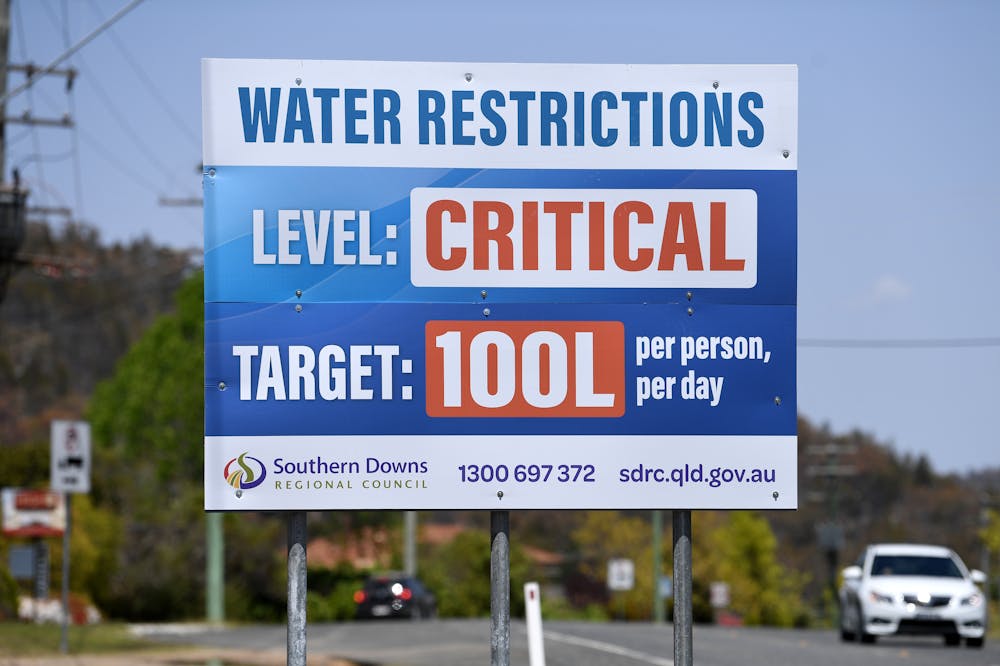 A water restrictions sign in Stanthorpe, Queensland, in October 2019 when dam water levels were at just 25%.
AAP Image/Dan Peled
A water restrictions sign in Stanthorpe, Queensland, in October 2019 when dam water levels were at just 25%.
AAP Image/Dan Peled
The commission warned projects that are not economically viable or ecologically sustainable can “burden taxpayers with ongoing costs, discourage efficient water use and result in long-lived impacts on communities and the environment”.
Equally disturbing is that billions of dollars for water infrastructure are currently targeted primarily for primary industry (such as agriculture and mining) while communities in desperate need of drinking water that meets water quality guidelines miss out. Thousands of Australians in more remote communities still lack access to drinking water most Australians take for granted.
Water scarcity under climate change
Water availability under climate change features prominently in the report. The commission says droughts will likely become more intense and frequent and in many places, water will become scarce.
Read more: To help drought-affected farmers, we need to support them in good times as well as bad
The report says planning provisions were inadequate to deal with both the Millennium Drought and the recent drought in Eastern Australia.
The commission also said more work is needed to rebalance water use in response to climate change. One need only look to the 2012 Murray-Darling Basin Plan — one of the key outcomes of the National Water Initiative — which didn’t account for climate change when determining how much water to take from streams and rivers.
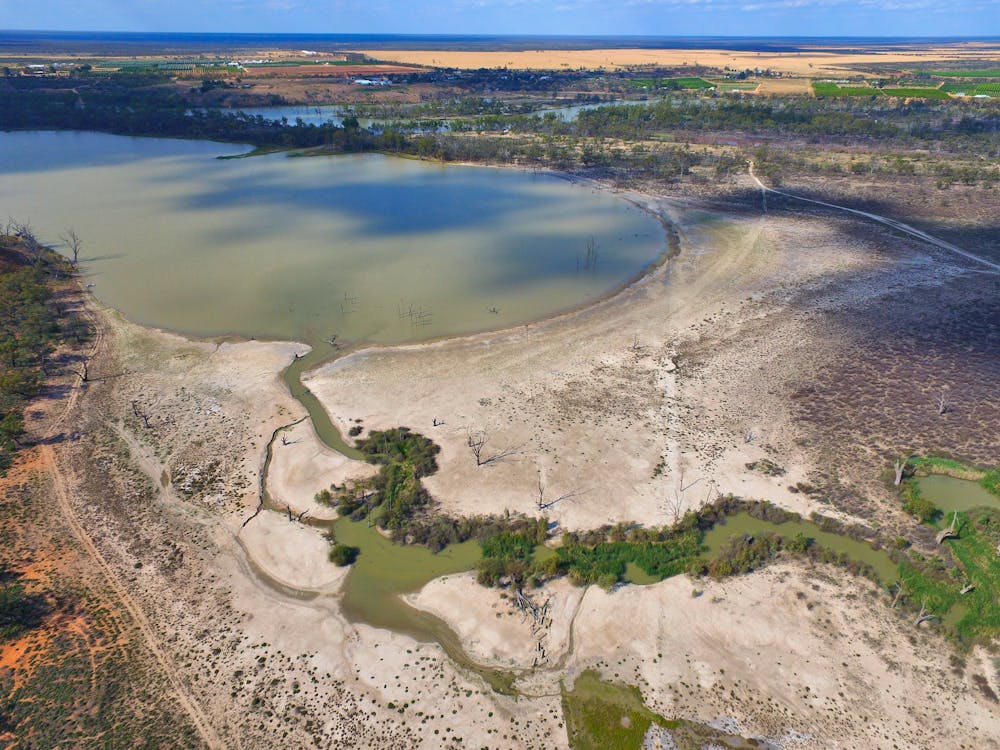 Thousands of Australians lack access to drinking water.
Shutterstock
Thousands of Australians lack access to drinking water.
Shutterstock
Overcoming past failures
As the commission report notes, one key policy failure since the 2004 National Water Initiative was signed was the federal government’s dismantling of the National Water Commission in 2015. It meant Australia no longer had a resourced, well-informed agency to “mark the homework” and make sure the reforms were being implemented as agreed.
The report offers ways to overcome a range of past policy water failures, including strengthening governance architecture for the National Water Initiative.
Importantly, the report also called for better recognition of the rights Aboriginal and Torres Strait Islander people hold over water.
Aboriginal communities and corporations own just 0.1% of the more than A$26 billion of water entitlements in the Murray-Darling Basin. Clearly, such gross inequities must be overcome.
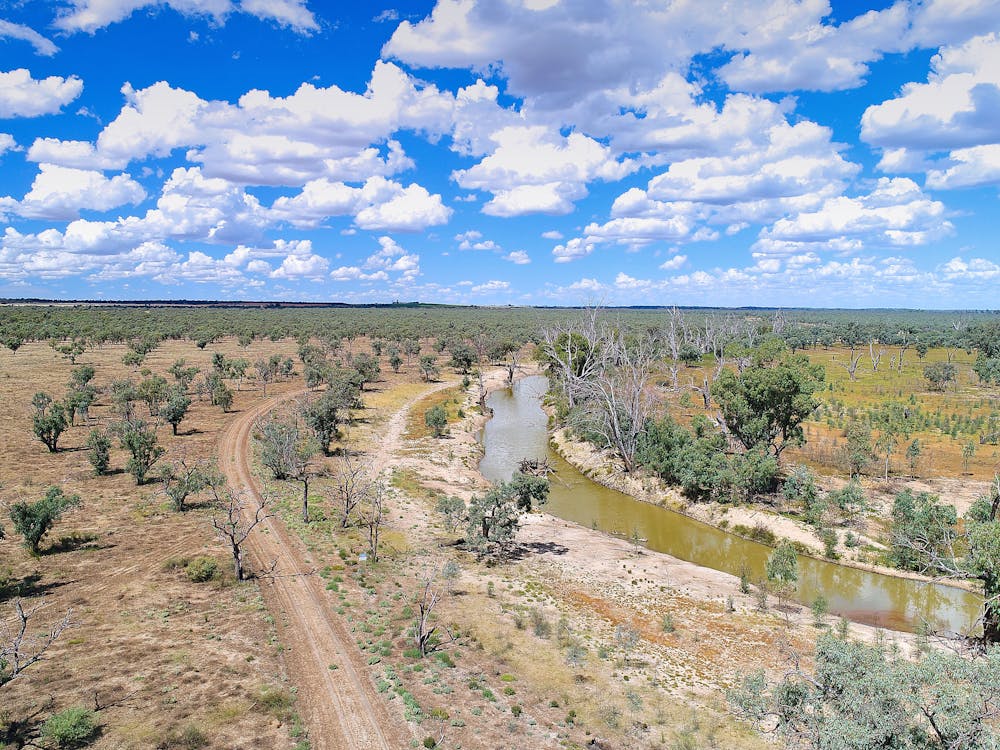 The report calls for more meaningful recognition of Indigenous rights to water.
Shutterstock
The report calls for more meaningful recognition of Indigenous rights to water.
Shutterstock
What happens in the Murray-Darling Basin is key to national water reform. There is overwhelming evidence the basin plan needs fixing.
To start, subsidies for irrigation-related water infrastructure should be halted until a comprehensive audit is conducted to determine who gets water, when and how. And an independent, properly funded expert agency should be established to monitor, advise and implement the law for managing the Basin’s water resources.
The 800-page report of the 2019 South Australia Murray-Darling Royal Commission proposes many ways forward. Yet unfortunately, that substantial body of work is not mentioned in the Productivity Commission’s report.
Read more: Australia has an ugly legacy of denying water rights to Aboriginal people. Not much has changed
We’re still waiting for change
In 2007, the worst year of the Millennium Drought, Prime Minister John Howard said the current trajectory of water use and management in Australia was not sustainable. He said:
In a protracted drought, and with the prospect of long-term climate change, we need radical and permanent change.
We are still waiting for that change. If Australia is to be prosperous and liveable into the future, governments must urgently implement water reform – including adopting recommendations from the Productivity Commission’s report.
If it fails to act, our landscapes will degrade, agriculture will become unsustainable, communities will disintegrate and First Peoples will continue to suffer water injustice.
Authors: Quentin Grafton, Director of the Centre for Water Economics, Environment and Policy, Crawford School of Public Policy, Australian National University

















