

COVID forced Australian fathers to do more at home, but at the same cost mothers have long endured
- Written by Leah Ruppanner, Associate Professor in Sociology and Co-Director of The Policy Lab, University of Melbourne
The COVID-19 pandemic was heralded as an opportunity to restart gender expectations at home. Our research shows Australian fathers have stepped into more participatory roles, but the question remains: will it last?
At the height of the first lockdown, the global economy closed and with it schools, childcare centres and employment shut. For many parents, the work associated with maintaining a job, homeschooling, round-the-clock caregiving and keeping a household afloat fell squarely on their shoulders. Some argued this would be a critical moment for men to step up as more egalitarian partners and help equalise gender norms in the home.
Our new study indicates Australian fathers took on more domestic work than their US counterparts but at the same cost women have suffered in trying to reconcile their work and family commitments: a rise in sleeplessness and anxiety.
COVID reshaped parents’ paid and unpaid work
We surveyed 1,375 Australian and US parents using the YouGov panels in May and September 2020. In May, the global economy had largely shut down in response to the virus. By September, US children were starting a new school year, while Australia was facing a second spike and a severe lockdown in Victoria.
We asked parents about how their employment, housework and childcare had changed during these COVID-affected times.
We found roughly one in three Australian mothers and fathers in our sample lost or reduced work under COVID in May, which continued into September. Of course, these patterns varied by state, with Victorians bearing the brunt of employment disruption.
One in three US parents reported employment disruptions in May. By September, employment disruptions had declined, but still remained at high levels.
Read more: COVID-19 is a disaster for mothers' employment. And no, working from home is not the solution
What happened on the home front? We found Australian and US mothers both reported picking up more housework during the pandemic. For fathers, an interesting pattern emerged.
Australian fathers increased their contributions to housework. We first observed this in May 2020, then again four months later.
US fathers, in contrast, picked up more housework in May, but this was short-lived. As the pandemic endured, US mothers have filled the housework and childcare voids while US fathers pulled back their contributions to domestic work and caregiving.
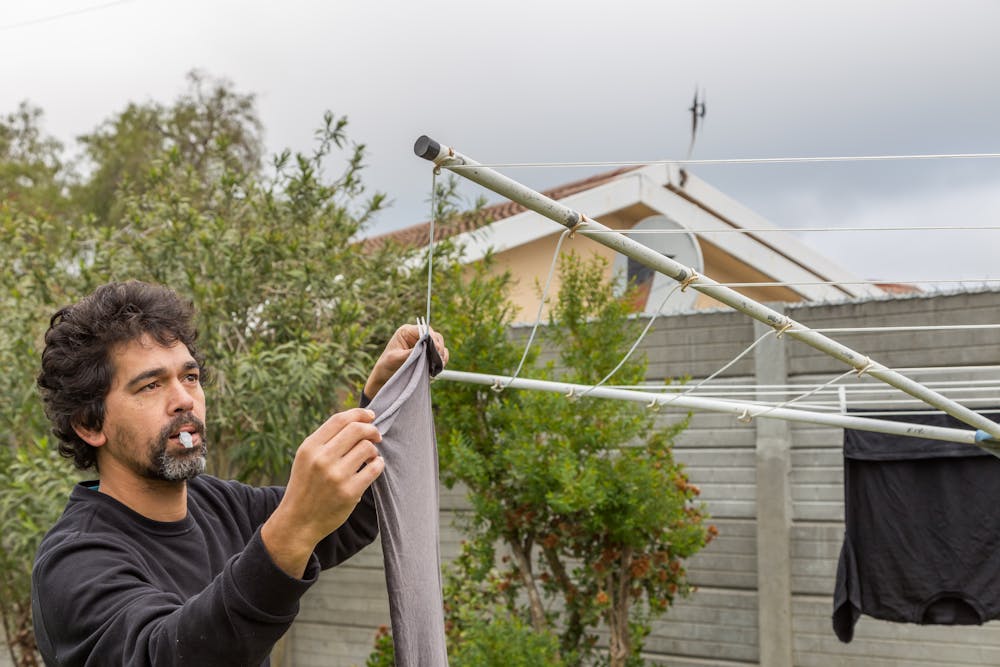 There was one silver lining of the pandemic, at least in the case of Australia: fathers stepped up to do more childcare and housework.
Shutterstock
There was one silver lining of the pandemic, at least in the case of Australia: fathers stepped up to do more childcare and housework.
Shutterstock
Increased domestic load harms health and well-being
We know the stress of managing work and family can cause people’s health to deteriorate, and lead many mothers to leave the labor force. Add to that the uncertainty and fear around a global pandemic, and the affect on parents’ mental health is profound.
Our research showed Australian fathers experienced stress due to economic disruptions. Still, they stepped up their domestic game during the pandemic. And, with it, they felt the same stressors that mothers conventionally experience. The increased childcare and household demands during the pandemic came with greater anxiety and worse sleep among both Australian fathers and mothers.
The pandemic has been extremely difficult, but in Australia it is fathers and mothers carrying this burden.
For US fathers, only job disruption is associated with worse anxiety and poor sleep. Importantly, their stress was unaffected by caregiving demands — perhaps because, as our data show, they did not consistently increase their contributions to housework and childcare during the pandemic.
For US mothers, both job loss and greater housework demands increased their sleeplessness and anxiety. US fathers reduced their childcare contributions from May to September, and contributed less to the running of the house across that time.
In this respect, US fathers appear to have doubled down on their roles as breadwinners. As a result, their mental wellness is mostly based on their economic standing, leaving US mothers alone to carry the burden of growing housework and childcare demands during the pandemic.
Silver linings?
The COVID-19 pandemic has placed unparalleled pressures on US and Australian families, leaving devastation in its wake. Our results indicate this movement towards gender equality among Australian parents came at a cost to their health, through greater anxiety and poorer sleep.
But existing research shows mothers in both countries have carried these dual burdens for a long time, with detrimental impacts on their lives, livelihoods and health. Australian fathers, for the first time ever, may have felt the intensity of these competing pressures, and perhaps their larger share of domestic work may stick.
We found one silver lining of the pandemic, at least in the case of Australia: Australian fathers stepped up to do more childcare and housework. Let’s hope this lasts.
Read more: Why coronavirus may forever change the way we care within families
Authors: Leah Ruppanner, Associate Professor in Sociology and Co-Director of The Policy Lab, University of Melbourne

















