

how the false consensus effect drives environmental damage
- Written by Brock Bergseth, Postdoctoral research fellow, James Cook University
There’s a useful concept from psychology that helps explain why good people do things that harm the environment: the false consensus effect. That’s where we overestimate how acceptable and prevalent our own behaviour is in society.
Put simply, if you’re doing something (even if you secretly know you probably shouldn’t), you’re more likely to think plenty of other people do it too. What’s more, you likely overestimate how much other people think that behaviour is broadly OK.
This bias allows people to justify socially unacceptable or illegal behaviours.
Researchers have observed the false consensus effect in drug use, how well nurses follow certain procedures at work, and illegal hunting in Africa.
More recently, conservationists and environmental researchers are beginning to reveal how the false consensus effect contributes to environmental damage.
Read more: The majority of people who see poaching in marine parks say nothing
From illegal fishing to climate change
In previous research, my colleagues and I showed how the false consensus effect supports ongoing poaching (meaning fishing in no-take zones) by recreational fishers on the Great Barrier Reef.
In particular, we found people who admitted to poaching thought it was much more prevalent in society than it really was, and had higher estimates than fishers who complied with the law.
The poachers also believed others viewed poaching as socially acceptable; however, in reality, more than 90% of fishers viewed poaching as both socially and personally unacceptable.
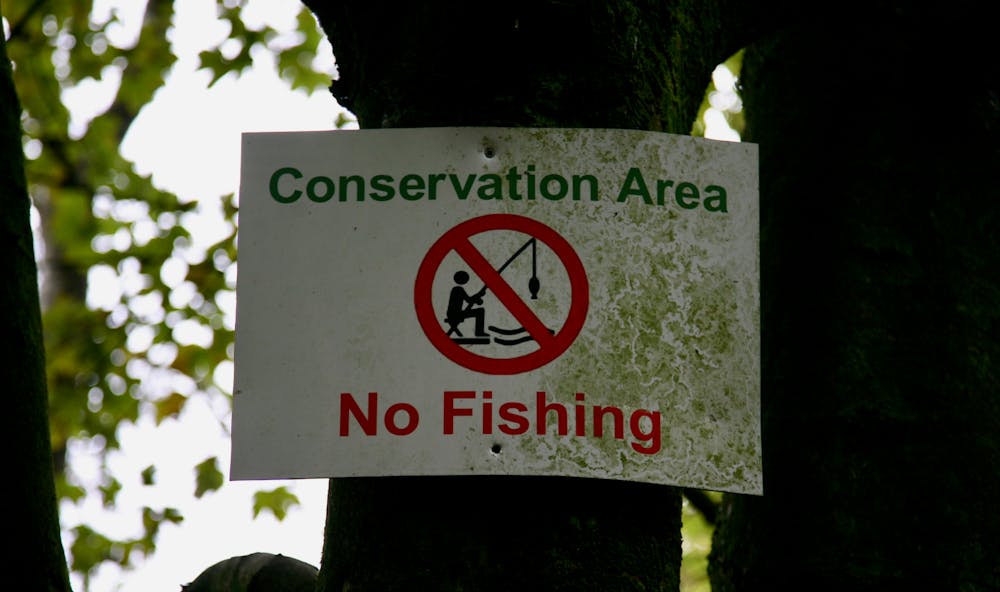 People who admitted to fishing in no-take zones thought it was much more prevalent in society than it really was.
Shutterstock
People who admitted to fishing in no-take zones thought it was much more prevalent in society than it really was.
Shutterstock
Beyond poaching, the false consensus effect can help explain other behaviours.
One study examined students living on campus who were told not to shower while an emergency water ban was in place. It found those who showered in breach of the rules vastly overestimated how many other students were doing the same thing.
In a different study, researchers surveyed Australians about climate change and asked them what opinions they thought most other people held about the topic. The researchers found:
…opinions about climate change are subject to strong false consensus effects, that people grossly overestimate the numbers of people who reject the existence of climate change in the broader community.
The false consensus effect has also shown up in studies examining support for nuclear energy and offshore wind farms.
Using psychology to understand and address environmental damage
As a growing body of research has shown, humans are shockingly bad at making accurate social judgements about the actual attitudes of others.
This gets even more problematic when we unwittingly project our own internal attitudes and beliefs onto others in an attempt to seek confirmation and reassurance.
Just as concepts from psychology can help explain some forms of environmental damage, so too can psychological concepts help address it. For example, research shows people are more likely to litter in areas where there’s already a lot of trash strewn around; so making sure the ground around a bin is not covered in rubbish may help.
But interventions that work in one culture to encourage environmentally friendly behaviour may not work in a different culture.
In Germany, for example, a campaign aimed at increasing consumption of sustainable seafood actually led to a decline in sustainable choices compared to baseline levels, likely because the messages were seen as manipulative and ended up driving shoppers away from choosing sustainable options.
 A campaign aimed at increasing consumption of sustainable seafood in Germany actually led to a decline in sustainable choices.
Shutterstock
A campaign aimed at increasing consumption of sustainable seafood in Germany actually led to a decline in sustainable choices.
Shutterstock
Campaigns to reduce consumption of shark fin soup, buying pangolin meat or scales, and single-use plastic water bottles aim to counter the idea that these environmentally damaging behaviours are widespread and socially acceptable.
Factual information on how other people think and behave can be very powerful. Energy companies have substantially reduced energy consumption simply by showing people how their electricity use compares to their neighbors and conscientious consumers.
Encouragingly, activating people’s inherent desire for status has also been successful in getting people to “go green to be seen”, or to publicly buy eco-friendly products.
As the research evidence shows, social norms can be a powerful force in encouraging and popularising environmentally friendly behaviours. Perhaps you can do your bit by sharing this article!
 Social norms can be a powerful force in encouraging and popularising environmentally friendly behaviours.
Shutterstock
Social norms can be a powerful force in encouraging and popularising environmentally friendly behaviours.
Shutterstock
Read more: How to deal with the Craig Kelly in your life: a guide to tackling coronavirus contrarians
Authors: Brock Bergseth, Postdoctoral research fellow, James Cook University

















