

How the Pfizer COVID vaccine gets from the freezer into your arm
- Written by Nicholas Wood, Associate Professor, Discipline of Childhood and Adolescent Health, University of Sydney
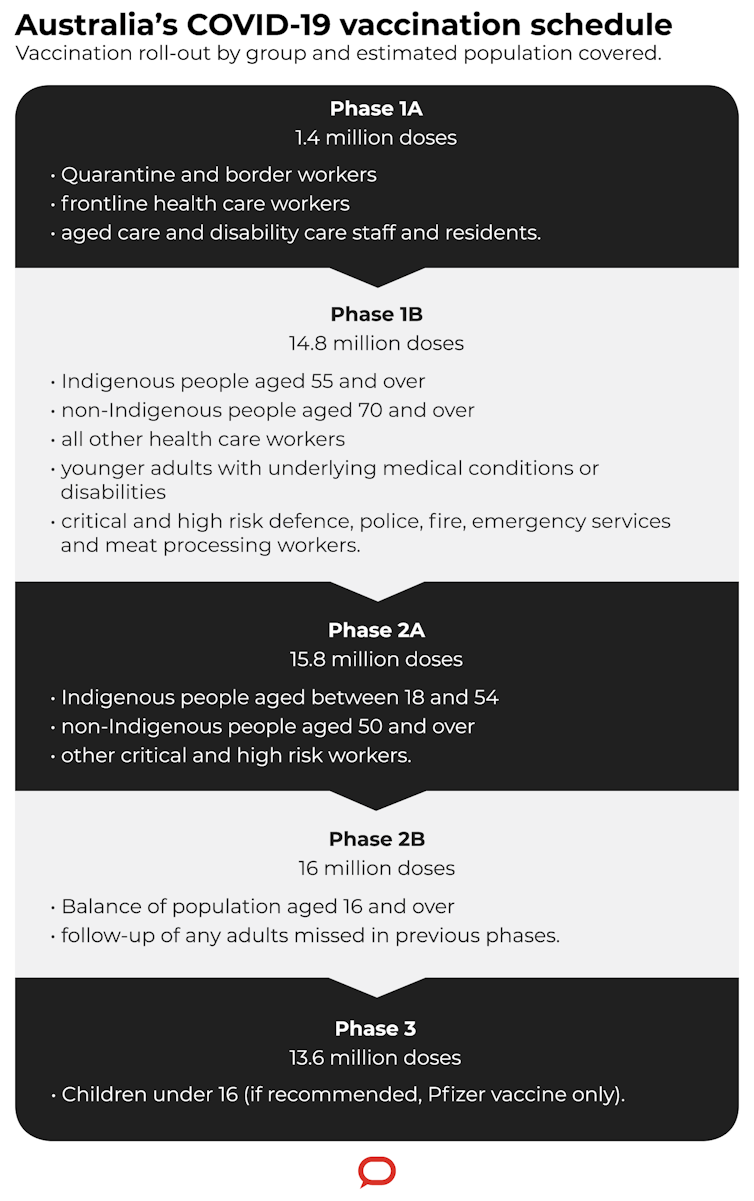
From Monday, people at high risk of COVID-19 will be lining up to receive the Pfizer vaccine, marking the start of Australia’s long-awaited COVID vaccination program.
We’ve heard about the need to store the vaccine frozen at about -70℃ — a temperature well below freezing and unusually cold, even for Antarctica. The vaccine also comes in a multi-dose vial, meaning the vaccine will have to be diluted then individual doses taken from the vial.
These two aspects make the Pfizer vaccine rollout one of the most complex vaccine programs ever delivered. So all nurses and doctors set to give the Pfizer vaccine in Australia need to have gone through special training in how to store, handle and administer the vaccine.
If you’re one of the high-risk groups set to receive the Pfizer vaccine from next week — because of your occupation or you are in aged- or disability care — here’s what goes on behind the scenes to get the vaccine from the freezer into your arm.
 The Conversation, CC BY-ND
Once the vaccine leaves the freezer, the clock starts ticking
Once the vaccine is removed from the “deep freezer” there is no turning back; we don’t want to waste any of these precious vaccine doses.
As you would expect, the vaccine needs to be thawed before it can be injected. Once this happens, it cannot be re-frozen; it must be used.
Read more:
How mRNA vaccines from Pfizer and Moderna work, why they're a breakthrough and why they need to be kept so cold
The thawing process has rules. Frozen vials are transferred from the freezer to a fridge set at 2-8℃ to thaw. A pack of 195 vials, containing about 975 doses, may take three hours. But it can sit in the fridge for up to five days, if needed. To speed things up, it is possible to thaw the frozen vials for 30 minutes at temperatures up to 30℃. But then, the vaccine needs to be used within two hours.
Either way, people must be lined up ready to be vaccinated to avoid wastage.
Once thawed, the vaccine needs to be mixed gently. So the vaccinator needs to turn each vial up and down (invert it) ten times. They cannot shake the vial as the vaccine is fragile.
Then each vial is split into individual doses
One of the challenges with the Pfizer vaccine is that it comes in multi-dose vials, containing enough vaccine for five or six doses.
Nearly all current vaccines in our national immunisation program are single-use. Many come already prepackaged in the needle and syringe. So for many vaccinators,
“drawing up” and giving a vaccine from a multi-dose vial will be new. This too has rules.
The vaccinator first needs to clean the top of the vial with an antiseptic swab. This is important to ensure the vials remain free from contamination.
Then the vaccinator injects a set amount of sterile saline into the vial, through the top, to dilute the vaccine. Care must be taken not to introduce contaminants during this part of the process.
The Conversation, CC BY-ND
Once the vaccine leaves the freezer, the clock starts ticking
Once the vaccine is removed from the “deep freezer” there is no turning back; we don’t want to waste any of these precious vaccine doses.
As you would expect, the vaccine needs to be thawed before it can be injected. Once this happens, it cannot be re-frozen; it must be used.
Read more:
How mRNA vaccines from Pfizer and Moderna work, why they're a breakthrough and why they need to be kept so cold
The thawing process has rules. Frozen vials are transferred from the freezer to a fridge set at 2-8℃ to thaw. A pack of 195 vials, containing about 975 doses, may take three hours. But it can sit in the fridge for up to five days, if needed. To speed things up, it is possible to thaw the frozen vials for 30 minutes at temperatures up to 30℃. But then, the vaccine needs to be used within two hours.
Either way, people must be lined up ready to be vaccinated to avoid wastage.
Once thawed, the vaccine needs to be mixed gently. So the vaccinator needs to turn each vial up and down (invert it) ten times. They cannot shake the vial as the vaccine is fragile.
Then each vial is split into individual doses
One of the challenges with the Pfizer vaccine is that it comes in multi-dose vials, containing enough vaccine for five or six doses.
Nearly all current vaccines in our national immunisation program are single-use. Many come already prepackaged in the needle and syringe. So for many vaccinators,
“drawing up” and giving a vaccine from a multi-dose vial will be new. This too has rules.
The vaccinator first needs to clean the top of the vial with an antiseptic swab. This is important to ensure the vials remain free from contamination.
Then the vaccinator injects a set amount of sterile saline into the vial, through the top, to dilute the vaccine. Care must be taken not to introduce contaminants during this part of the process.
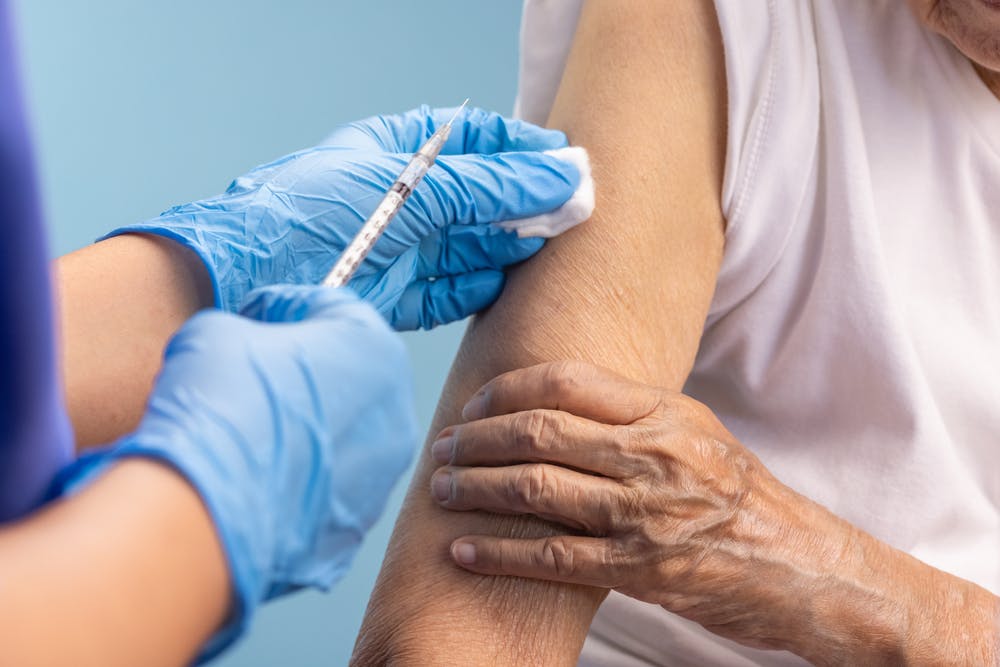 Vaccinators have several steps to go through before giving the Pfizer vaccine.
www.shutterstock.com
The vial then needs to be turned up and down ten times to make sure the saline mixes with the vaccine. Again, the clock is ticking. Once the vaccinator injects the saline into the vial and mixes it, the vaccine must be used within six hours. After that, any unused vaccine must be discarded.
The vaccinator must then take a new needle and syringe, clean the top of the vial again and “draw” up 0.3 millilitres of vaccine from the vial. This is a new volume for our vaccinators to get used to as most vaccines given as part of our current immunisation program are 0.5 millilitres.
Once the 0.3 millilitres is in the syringe, it is ready to be injected into the upper arm.
The vaccinator must use a new needle and syringe to “draw” up the next dose. This is repeated until five or six doses have been removed from the vial.
Read more:
Should I get a COVID vaccine while I'm pregnant or breastfeeding? Is it safe for me and my baby?
Ready, set, go
Next, the injection itself. In most cases, the person will be sitting down and have their upper arm exposed so the vaccinator can see the deltoid muscle. This is the large fleshy part of muscle on the outer edge of your upper arm.
There is usually no need to clean the upper arm unless it is visibly dirty. The needle is then inserted at 90⁰ to the arm and the vaccine injected slowly over a few seconds.
Read more:
Not sure about the Pfizer vaccine, now it's been approved in Australia? You can scratch these 4 concerns straight off your list
That’s not all
Once you have been given the vaccine you will be asked to stay in the clinic for at least 15 minutes to make sure you don’t have any reactions. In some cases, especially if there’s a history of severe allergic reactions, people will be asked to wait for 30 minutes.
Your vaccine details will be added to the Australian Immunisation Register. This is now mandatory. That’s because it is very important we know exactly which vaccine you were given and will be checked when you return for the second dose, 21 days later.
Read more:
The COVID vaccine is here. When and to whom will we need to prove we've had it?
Vaccinators have several steps to go through before giving the Pfizer vaccine.
www.shutterstock.com
The vial then needs to be turned up and down ten times to make sure the saline mixes with the vaccine. Again, the clock is ticking. Once the vaccinator injects the saline into the vial and mixes it, the vaccine must be used within six hours. After that, any unused vaccine must be discarded.
The vaccinator must then take a new needle and syringe, clean the top of the vial again and “draw” up 0.3 millilitres of vaccine from the vial. This is a new volume for our vaccinators to get used to as most vaccines given as part of our current immunisation program are 0.5 millilitres.
Once the 0.3 millilitres is in the syringe, it is ready to be injected into the upper arm.
The vaccinator must use a new needle and syringe to “draw” up the next dose. This is repeated until five or six doses have been removed from the vial.
Read more:
Should I get a COVID vaccine while I'm pregnant or breastfeeding? Is it safe for me and my baby?
Ready, set, go
Next, the injection itself. In most cases, the person will be sitting down and have their upper arm exposed so the vaccinator can see the deltoid muscle. This is the large fleshy part of muscle on the outer edge of your upper arm.
There is usually no need to clean the upper arm unless it is visibly dirty. The needle is then inserted at 90⁰ to the arm and the vaccine injected slowly over a few seconds.
Read more:
Not sure about the Pfizer vaccine, now it's been approved in Australia? You can scratch these 4 concerns straight off your list
That’s not all
Once you have been given the vaccine you will be asked to stay in the clinic for at least 15 minutes to make sure you don’t have any reactions. In some cases, especially if there’s a history of severe allergic reactions, people will be asked to wait for 30 minutes.
Your vaccine details will be added to the Australian Immunisation Register. This is now mandatory. That’s because it is very important we know exactly which vaccine you were given and will be checked when you return for the second dose, 21 days later.
Read more:
The COVID vaccine is here. When and to whom will we need to prove we've had it?
Authors: Nicholas Wood, Associate Professor, Discipline of Childhood and Adolescent Health, University of Sydney
Read more https://theconversation.com/how-the-pfizer-covid-vaccine-gets-from-the-freezer-into-your-arm-155453

















