

Indigenous expertise is reducing bushfires in northern Australia. It's time to consider similar approaches for other disasters
- Written by Kamaljit K Sangha, Senior Ecological Economist, Charles Darwin University
Northern Australia is by far the most fire-prone region of Australia, with enormous bushfires occurring annually across thousands of square kilometres. Many of these vast, flammable landscapes have precious few barriers to slow down a fire. Infrastructure and resources are limited, and people are widely dispersed across the region.
Fire risk reduction in the recent past included very local prescribed burning operations. The overall effect was small, with huge greenhouse gas emissions from out-of-control savanna wildfires.
So, what might a better approach look like?
Our team at the Charles Darwin University’s Darwin Centre for Bushfire Research has been working with Indigenous land managers, conservation, research and government organisations in northern Australia for the last 25 years to find more effective ways to manage wildfires.
These collaborations have led to a new approach, blending modern scientific knowledge with traditional Indigenous land management practices to reduce bushfire risk.
How? By reducing fuel load through a patchy mosaic of small, low intensity, burns early in the fire season that cut the risk of late dry season fires when greenhouse gas emissions are much greater.
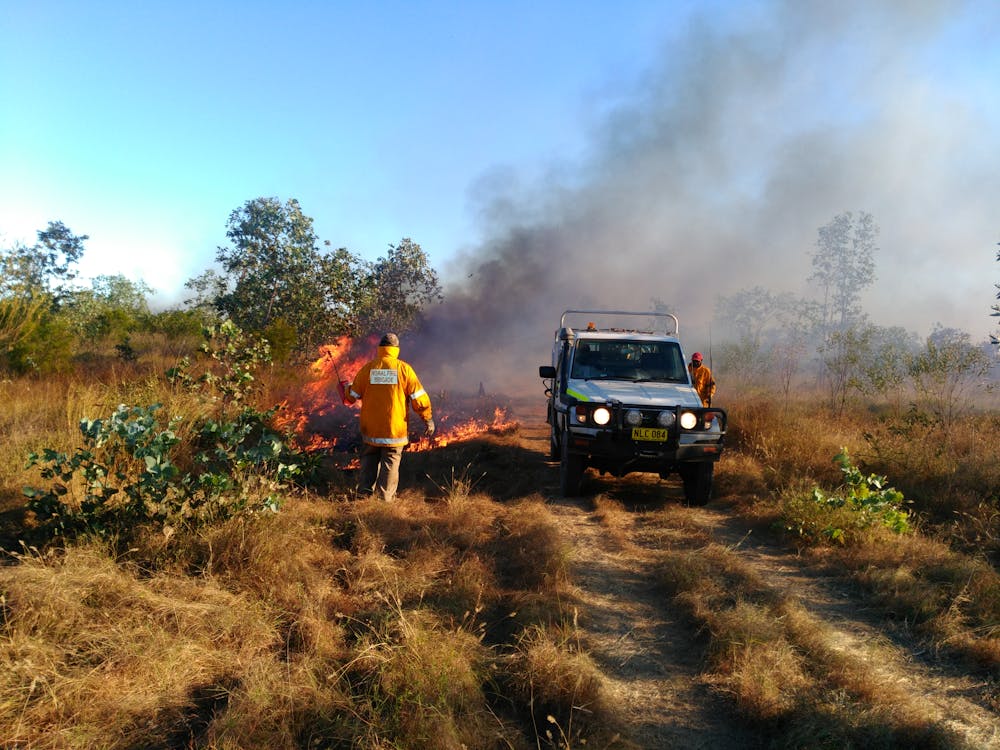 Reducing fuel load through a patchy mosaic of small, low intensity, burns early in the fire season cuts the risk of late dry season fires when greenhouse gas emissions are much greater.
Waanyi Garawa Rangers (Jimmy Morrison), Author provided
Reducing fuel load through a patchy mosaic of small, low intensity, burns early in the fire season cuts the risk of late dry season fires when greenhouse gas emissions are much greater.
Waanyi Garawa Rangers (Jimmy Morrison), Author provided
By collaborating with Indigenous ranger groups, this experience shows Australia can develop economically sustainable long-term solutions to manage bushfire risks — and shows what might be possible for other natural hazards such as cyclones and floods.
Such collaborations deliver benefits such as:
When done well, a collaborative approach to emergency management can create opportunities on country, enhance cultural and learning opportunities for Indigenous peoples and deliver environmental benefits for everyone.
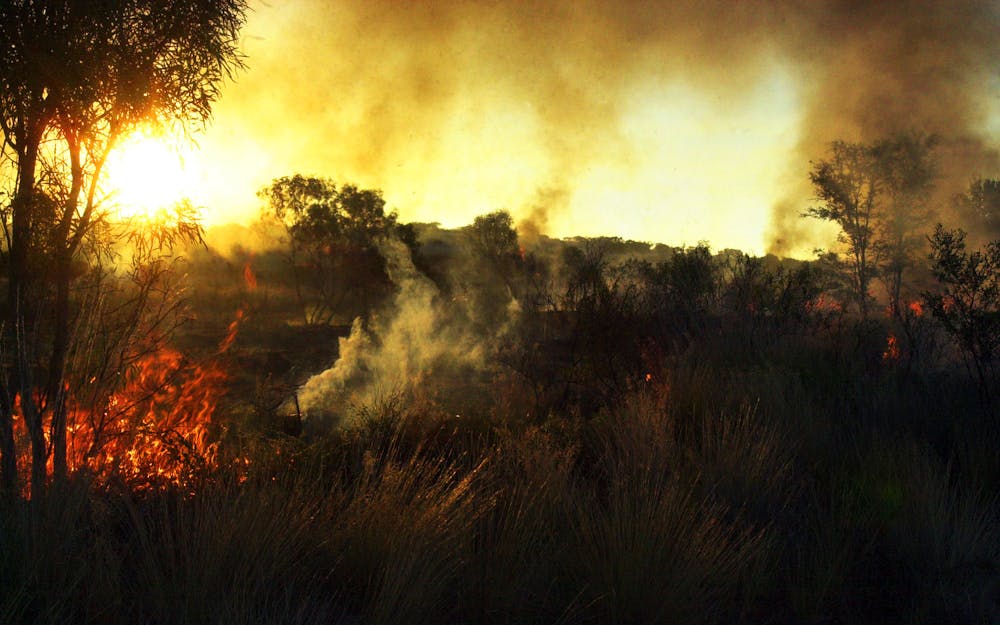 Northern Australia is by far the most fire-prone region of Australia, with enormous bushfires occurring annually in some places.
AAP Image/Dave Hunt
Northern Australia is by far the most fire-prone region of Australia, with enormous bushfires occurring annually in some places.
AAP Image/Dave Hunt
Making fire management economically sustainable: a case study
Indigenous fire management skills and traditions have long been practised in Australia but part of the challenge, as one study put it, is “finding the economic means to reinstate this type of prescribed strategic management.” In other words, how do we pay for it?
After Australia ratified the Kyoto Protocol in 2007, there was renewed focus on reducing wildfires in Australia’s tropical savannas due to their significant role in creating greenhouse gas emissions.
In collaboration with Indigenous land managers and others, our collective efforts helped to develop what’s known as the savanna burning methodology. This system incentivises management of fire in the north.
Under this method, Indigenous land managers in tropical savannas can earn income for managing fire on their land to reduce greenhouse gas emissions. This is done through a tightly controlled system in which their emissions savings are measured in terms of carbon credit units.
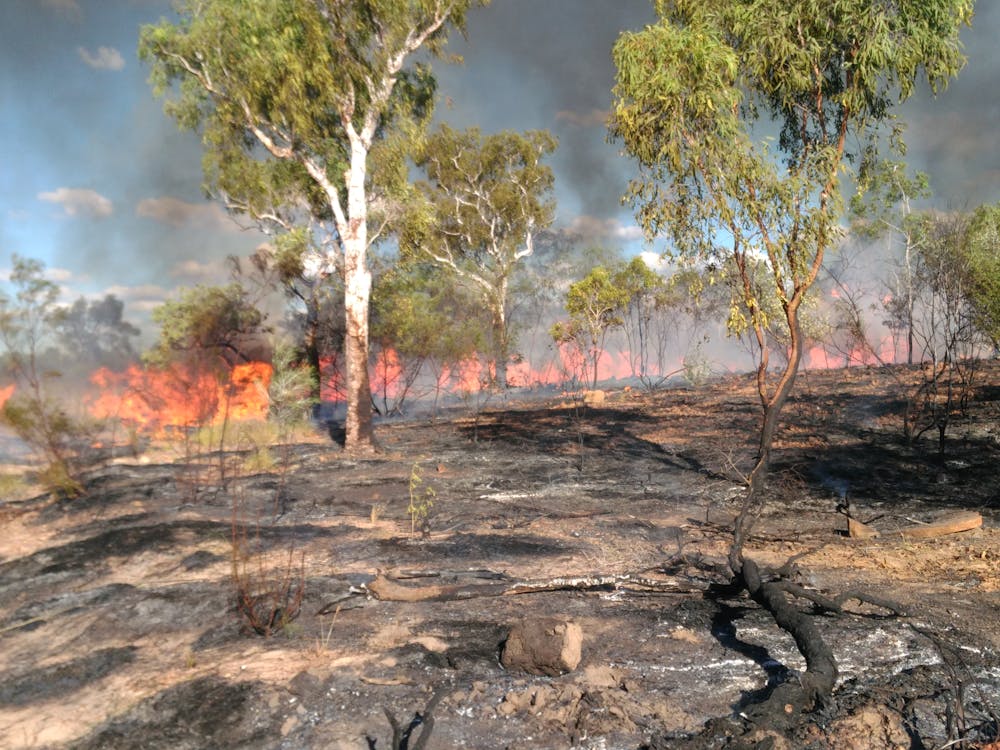 Self-acquired funds from the system go far to support Indigenous rangers to develop and improve skills so they can continue improving fire management across the north.
Waanyi Garawa Rangers (Jimmy Morrison), Author provided
Self-acquired funds from the system go far to support Indigenous rangers to develop and improve skills so they can continue improving fire management across the north.
Waanyi Garawa Rangers (Jimmy Morrison), Author provided
Global and local benefits
This approach has allowed a new carbon economy to bloom in remote northern Australia. As one study put it:
Since the development of the first savanna-burning methodology determination in 2012, 25% of the entire 1.2 million km2 eligible northern savannas region is now under formally registered savanna-burning projects, currently generating [more than] A$30m per year.
These self-acquired funds go far to support Indigenous rangers to develop and improve skills so they can continue improving fire management across the north.
As Dean Yibarbuk, fire ecologist and senior traditional owner in West Arnhem Land has said:
This fire management program has been successful on so many levels: culturally, economically and environmentally. Through reinstating traditional burning practices, new generations of landowners have been trained in traditional and western fire management, hundreds of thousands of tonnes of greenhouse gas have been abated, and the landscape is being managed in the right way.
A consistent and reliable flow of funds from carbon contracts, as well as other government and philanthropic sources, further offers many other socio-economic benefits. It has been instrumental in allowing art centres, weed and feral animal control businesses, rock art conservation projects, and bi-cultural schools to flourish.
Investing money to save money
This system shows what’s possible with the right engagement and policy levers. Perhaps one day a similar approach could help reduce risk from other kinds of natural disasters, all while building community resilience.
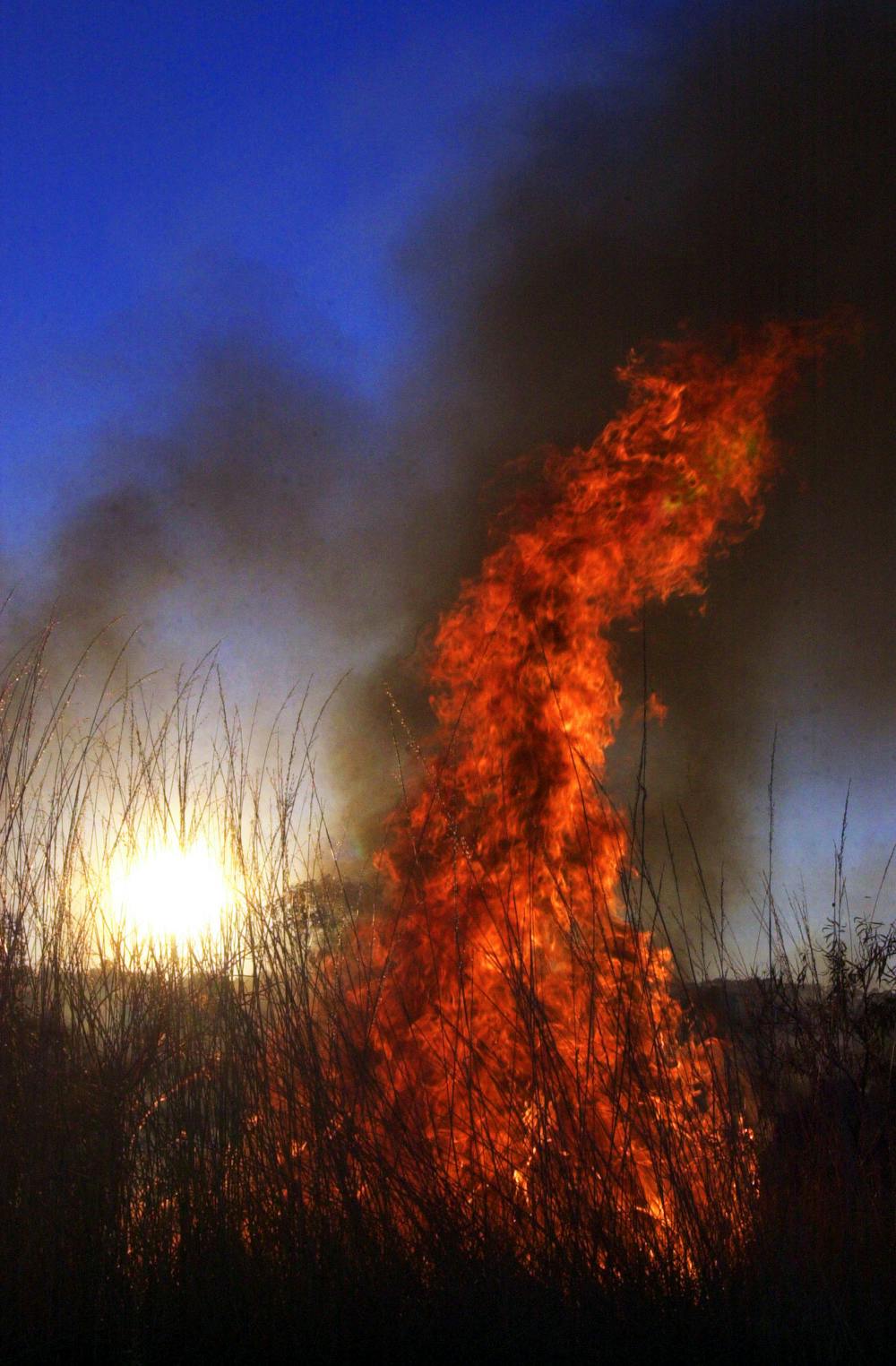 Indigenous land managers in certain areas can earn income for managing fire on their land to reduce greenhouse gas emissions.
AAP Image/Dave Hunt
Indigenous land managers in certain areas can earn income for managing fire on their land to reduce greenhouse gas emissions.
AAP Image/Dave Hunt
In the future, could we have similar systems where flood mitigation projects or cyclone risk reduction projects are made economically viable for local communities?
This would reduce reliance on emergency services. It also makes it less likely cultural protocols are breached when non-local emergency personnel are sent in. For example, tree removal is a common cyclone risk reduction practice but it’s important to know which trees are culturally significant in a community, and why you need to leave them alone.
For these approaches to work, genuine and ongoing engagement with Indigenous peoples and dispersed remote communities is essential.
As a start to this engagement, we brought together Indigenous leaders, government representatives, and emergency management agency personnel from across the north for a meeting at Charles Darwin University late last year, supported by the Bushfire and Natural Hazards Cooperative Research Centre.
Many of the key personnel in these groups were meeting for the very first time, despite having worked for years on trying to address the same problems.
With appropriate funding, we could make such gatherings regular events so it’s easier for these stakeholders to work together. Long term collaborations can reduce disaster risk for northern Australian communities who live there permanently, build their resilience, and cut significant costs for Australian governments.
Resources to cover training, transport, and logistics are crucial to implement such an integrated approach.
Long term solutions cost money. But by drawing on local Indigenous knowledge and expertise on disaster risk reduction, we can make huge savings in the long term.
This story is part of a series The Conversation is running on the nexus between disaster, disadvantage and resilience. You can read the rest of the stories here.
Authors: Kamaljit K Sangha, Senior Ecological Economist, Charles Darwin University

















