

COVID vaccines won't be compulsory for the Tokyo Olympics. But if offered, here's what athletes need to know
- Written by Kate Edwards, Associate Professor, Sydney School of Health Sciences, University of Sydney
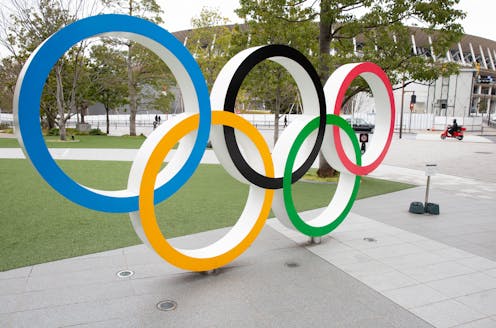
Brisbane has just been confirmed as the preferred host for the 2032 Olympics. But Olympic organisers have more immediate concerns in mind — how to safely run the postponed Tokyo Olympics, due to start in July.
That’s why the International Olympic Committee (IOC) has released its “playbooks”, a set of rules to help ensure the safety and health of athletes and officials, as well as the wider community, during the pandemic.
Requirements for athletes include COVID-19 testing and using a contact-tracing app, but COVID-19 vaccination is not mandatory. It is, however, recommended when available in athletes’ home countries.
So what do athletes need to think about if offered a COVID-19 vaccine?
Will athletes be vaccinated before July?
Most COVID-19 vaccine programs around the world, including Australia’s, are prioritising high-risk people such as those in aged care and front-line workers. And the IOC is not recommending athletes “jump the queue” to get priority vaccination. So, under most national vaccination programs, most Olympic athletes will not have been offered vaccines by July.
But some athletes may be offered vaccinations before then, and future international sporting events may include similar vaccination recommendations.
Guidelines for vaccinating athletes, including Australia’s, before the Olympics have not been publicly released. But discussion on details of “vaccination passports” is growing. It is likely that recommendations would include all doses being completed (usually one or two doses) before travel. Injections would need to be three to 12 weeks apart, depending on the vaccine. But if it’s a single-dose vaccine, there may be a recommendation for allowing about a month for protection to build up before travel.
So, for any vaccine, preparation and planning will be important.
Read more: For now, the Tokyo Olympics will go ahead. But at what cost?
How about side-effects?
For most of us, planning to receive a COVID-19 vaccine might include thinking about travel and work schedules, and the possibility a vaccine reaction could mean a day off work, but likely little more.
For an elite athlete with detailed training and recovery plans, with potentially restricted access to training locations, and the possibility of a vaccine reaction, it gets a little more complicated.
Reassuringly, rates of severe or serious adverse events after COVID-19 vaccines are very low — at less than 1% of those vaccinated.
But the rates of mild or moderate vaccine reactions are higher. And unlike other vaccines, reactions to various COVID vaccines tend to be more common in younger adults (18-55 years old) than older adults.
Some vaccines (such as the Oxford/AstraZeneca vaccine) tend to have more systemic reactions such as headache and fever after the first dose; others (such as the Pfizer/BioNTech) after the second.
Read more: COVID vaccines have been developed in record time. But how will we know they're safe?
For people receiving the Pfizer/BioNTech vaccine, about 89% reported local reactions (mostly vaccine site pain, with 51% reporting mild pain with no impact on daily activity). About 83% reported systemic reactions (mainly headache or fatigue, mostly mild).
For the Oxford/AstraZeneca vaccine, 88% reported local reactions and 86% reported a systemic reaction.
For both vaccines, the reactions were mostly mild, not impacting activities, were reported in the first one or two days after vaccination, and resolved within a few days.
These reactions might have little impact on most of our daily lives but could stop an athlete training for a day or so.
Read more: Weekly Dose: paracetamol may be our favourite mild painkiller, but it doesn't work for everything
Some researchers who conducted these vaccine studies are considering whether taking paracetamol before vaccination might help reduce reactions. For instance, reactions to the Oxford/AstraZeneca vaccine were reduced for people who took paracetamol, without compromising the immune response.
But not all doctors agree this is a good idea, as studies with the influenza vaccine showed less effective responses when people tool paracetamol beforehand.
What does that mean for athletes? We know athletes lose training time when suffering from common cold symptoms. We also know vaccine reaction rates are higher in younger adults. So athletes may need to consider the possibility of a mild reaction. And it would be wise to plan for rest and recovery in the few days after their injection.
Does exercising help?
Fortunately, exercise appears to be a friend of vaccination. Athletes show stronger responses to the influenza vaccine than healthy adults of similar age. So athletes’ immune response after a COVID vaccine might be particularly strong. However, there have been no studies to test this specifically.
What we do know is that exercise causes immediate and long-term changes in our immune systems. A single bout of exercise causes release of signalling molecules and increases the number of immune cells circulating in the blood. Researchers believe that if exercise is timed immediately before or after a vaccination, these changes help our immune systems react to the vaccination.
Exercise close to the vaccination itself might also help reduce common COVID-19 vaccine reactions.
Exercise immediately before receiving a vaccine reduced rates of local and systemic reactions, although this was after two different vaccines, influenza and HPV (human papillomavirus). We don’t know for sure whether this will be the same for the COVID-19 vaccines because no one has actually tested it yet.
In a nutshell
So, athletes need to plan ahead. They might train before the injection, and take paracetamol in advance, if their doctor advises them to. They might need to plan for a reduced training load in the days after vaccination. They might also make sure they start the doses far enough ahead to complete all doses before travelling.
Authors: Kate Edwards, Associate Professor, Sydney School of Health Sciences, University of Sydney

















