How can the dead send us emails? The ethical dilemma of digital souls
- Written by Patrick Stokes, Associate Professor of Philosophy, Deakin University
Tim Hart was sitting on his couch one evening in November 2011 when he got an email with the subject line: “I’m watching”. The message that followed was short and to the point …
Did you hear me? I’m at your house. Clean your fucking attic!!! — Jack Froese
Jack Froese had been a close friend of Hart’s since their teens. A few months earlier Froese and Hart had been up in Hart’s attic at his home in Dunmore, Pennsylvania. Jack had teased him then about how messy it was; now, it seemed, he was doing it again.
Except Jack was dead.
That June, Froese had died suddenly of a heart arrhythmia, at the obscenely young age of 32. Months later, he started emailing people. Those who replied to these emails never got a response, and the messages stopped as abruptly as they began.
Not long after Froese’s death, a group of philosophers gathered in a seminar room on the other side of the Atlantic to hear David Oderberg, Professor of Philosophy at the University of Reading, offer a curious thought experiment: what if you received an anonymous email, containing information that you and you alone were privy to?
In Oderberg’s example, the email might say, “I know you felt like killing Mr Watson for failing you on your A-level English exam,” — something you’d never told anyone at all — “but you deserved to fail”.
Who could this message come from: God? Your future self? A spambot whose random message just happened, by mind-boggling coincidence, to describe your early life? The late Mr Watson, now posthumously aware of how you felt that day and eager to set the record straight?
 Bloomsbury Academic
For the specific purpose of the interaction, says Oderberg, it doesn’t really matter, just as when a soldier receives an order on the battlefield it doesn’t matter whether the order comes from the colonel or the general.
Both options have what Oderberg dubs “telic possibility”. Something is telically possible if it might as well have been true. The purpose of the order is to command an action. It might as well have come from the colonel as from the general: an order’s an order.
Not infrequently, according to Oderberg, electronic communication is just like this. If all you want is to know how to drive to the nearest supermarket, GPS navigation with synthesised speech is just as effective as a human sitting next to you with a roadmap.
Someone under the misapprehension there is a flesh-and-blood person on the other end of the SatNav reading out driving instructions to them in real time will get to their destination just as quickly as someone who understands they’re listening to a computer. The voice might as well be a person as a piece of software.
Read more:
Struggling with the uncertainty of life under coronavirus? How Kierkegaard's philosophy can help
Planned or spammed?
There are other plausible, earthly explanations for Jack’s emails, though not all of them check out. You can send an email after you die, if you’ve done a bit of planning. There are online services specifically designed to send pre-prepared messages on your behalf after your death.
Some rely on a next of kin contacting the service to let them know the user has died. Others require the user to log in at set intervals or reply to periodic emails, and will assume the user has died if they don’t respond. (So if you’re keen to use such a service to tell people how much you secretly hated, cheated on, or lusted after them, just make sure you don’t fall into a long coma and then wake up. Things could get awkward.)
That would be a very neat explanation for Froese’s emails — except that an email his cousin received mentions an injury that happened long after Froese had died.
But what’s really interesting here is not how the emails came about, but the responses of the people who got them. Hart’s attitude was that, even if someone other than Jack wrote the emails, it ultimately didn’t matter:
… we spoke to his mother, and she told us, you know, ‘Think what you want about it, or just accept it as a gift’.
In other words, to use Oderberg’s language, Froese’s friends and family treated it as telically possible that the emails were from Jack. For the purpose of the communication, it didn’t really matter. They had the emails, and felt comforted by a sense of Jack’s persistence, whatever their origin.
Bloomsbury Academic
For the specific purpose of the interaction, says Oderberg, it doesn’t really matter, just as when a soldier receives an order on the battlefield it doesn’t matter whether the order comes from the colonel or the general.
Both options have what Oderberg dubs “telic possibility”. Something is telically possible if it might as well have been true. The purpose of the order is to command an action. It might as well have come from the colonel as from the general: an order’s an order.
Not infrequently, according to Oderberg, electronic communication is just like this. If all you want is to know how to drive to the nearest supermarket, GPS navigation with synthesised speech is just as effective as a human sitting next to you with a roadmap.
Someone under the misapprehension there is a flesh-and-blood person on the other end of the SatNav reading out driving instructions to them in real time will get to their destination just as quickly as someone who understands they’re listening to a computer. The voice might as well be a person as a piece of software.
Read more:
Struggling with the uncertainty of life under coronavirus? How Kierkegaard's philosophy can help
Planned or spammed?
There are other plausible, earthly explanations for Jack’s emails, though not all of them check out. You can send an email after you die, if you’ve done a bit of planning. There are online services specifically designed to send pre-prepared messages on your behalf after your death.
Some rely on a next of kin contacting the service to let them know the user has died. Others require the user to log in at set intervals or reply to periodic emails, and will assume the user has died if they don’t respond. (So if you’re keen to use such a service to tell people how much you secretly hated, cheated on, or lusted after them, just make sure you don’t fall into a long coma and then wake up. Things could get awkward.)
That would be a very neat explanation for Froese’s emails — except that an email his cousin received mentions an injury that happened long after Froese had died.
But what’s really interesting here is not how the emails came about, but the responses of the people who got them. Hart’s attitude was that, even if someone other than Jack wrote the emails, it ultimately didn’t matter:
… we spoke to his mother, and she told us, you know, ‘Think what you want about it, or just accept it as a gift’.
In other words, to use Oderberg’s language, Froese’s friends and family treated it as telically possible that the emails were from Jack. For the purpose of the communication, it didn’t really matter. They had the emails, and felt comforted by a sense of Jack’s persistence, whatever their origin.
 Jack’s mother told his friends they could accept each posthumous email as ‘a gift’.
Unsplash/Florian Krumm, CC BY
Ghosts in the machines
The dead persist everywhere and nowhere, from the solidity of corpses to wispy traces in dreams, writing, building, and even in the faces of their descendants.
From the ancestor mask processions of the Romans through to the death masks of the royal and famous that began to be produced during the late Middle Ages, from the earliest portraiture to photography and video, humans have found ways to preserve the phenomenality of the dead, the distinctive way they appear and sound.
New technologies allow the dead to persist among us in enhanced ways, yet risk turning the dead into mere fodder for the living. Danger lies in the very thing that makes electronic communication so powerful: the transparency of the medium, the frictionless ease with which others appear to us, unburdened by distance and delay.
Jack’s mother told his friends they could accept each posthumous email as ‘a gift’.
Unsplash/Florian Krumm, CC BY
Ghosts in the machines
The dead persist everywhere and nowhere, from the solidity of corpses to wispy traces in dreams, writing, building, and even in the faces of their descendants.
From the ancestor mask processions of the Romans through to the death masks of the royal and famous that began to be produced during the late Middle Ages, from the earliest portraiture to photography and video, humans have found ways to preserve the phenomenality of the dead, the distinctive way they appear and sound.
New technologies allow the dead to persist among us in enhanced ways, yet risk turning the dead into mere fodder for the living. Danger lies in the very thing that makes electronic communication so powerful: the transparency of the medium, the frictionless ease with which others appear to us, unburdened by distance and delay.
 And we will always love her. A hologram of late US singer Whitney Houston performs in Spain, 30 October 2020.
EPA/FERNANDO VILLAR
As the internet folds itself into the sinews of our everyday existence, as our flesh becomes increasingly digitised, the gap between electronic and face-to-face communication is closing. That makes it far easier for the dead to remain among the living. But it can also change our relationship to the dead in ethically troubling ways.
With every day that passes, the internet fills up more and more with dead people, while our ability to reanimate them becomes ever more powerful.
The dead are both more robust and more vulnerable — and we’re not ready for any of this. We need, urgently, to understand what the internet era means for our relationship to the dead, and what new demands this makes of us.
Read more:
Everything dies and it's best we learn to live with that
Talking to Edison
It’s easy to lose sight of the fact that electric communication is now in its third century, reckoning from Francis Ronalds’ first working telegraph of 1816, two decades before Samuel Morse. What’s perhaps even more remarkable is that, as the cultural historian Jeffrey Sconce demonstrates in his book Haunted Media, the idea of communicating with the dead became conceptually entangled with electric communication right from the start.
Commercial telegraph services began to appear at roughly the same moment as the table-turning craze, which began with the rapping “spirits” that plagued the Fox Sisters in Hydesville, New York in 1848. The uncanny new technology of communication-at-a-distance provided a helpful structuring metaphor: the electric telegraph allowed the living to speak to each other across vast distances, while the “spiritual telegraph” of the séance room bridged the gulf between the living and the dead.
That association of the dead with electric communication, as Sconce notes, lingered right throughout the 20th century. Near the end of his life, Thomas Edison was speculating to reporters about the possibility of building a machine so sensitive it could communicate with the dead. Both Edison and Alexander Graham Bell, inventor of the telephone, experimented with telepathy by winding wires around people’s heads. (It didn’t work.)
And we will always love her. A hologram of late US singer Whitney Houston performs in Spain, 30 October 2020.
EPA/FERNANDO VILLAR
As the internet folds itself into the sinews of our everyday existence, as our flesh becomes increasingly digitised, the gap between electronic and face-to-face communication is closing. That makes it far easier for the dead to remain among the living. But it can also change our relationship to the dead in ethically troubling ways.
With every day that passes, the internet fills up more and more with dead people, while our ability to reanimate them becomes ever more powerful.
The dead are both more robust and more vulnerable — and we’re not ready for any of this. We need, urgently, to understand what the internet era means for our relationship to the dead, and what new demands this makes of us.
Read more:
Everything dies and it's best we learn to live with that
Talking to Edison
It’s easy to lose sight of the fact that electric communication is now in its third century, reckoning from Francis Ronalds’ first working telegraph of 1816, two decades before Samuel Morse. What’s perhaps even more remarkable is that, as the cultural historian Jeffrey Sconce demonstrates in his book Haunted Media, the idea of communicating with the dead became conceptually entangled with electric communication right from the start.
Commercial telegraph services began to appear at roughly the same moment as the table-turning craze, which began with the rapping “spirits” that plagued the Fox Sisters in Hydesville, New York in 1848. The uncanny new technology of communication-at-a-distance provided a helpful structuring metaphor: the electric telegraph allowed the living to speak to each other across vast distances, while the “spiritual telegraph” of the séance room bridged the gulf between the living and the dead.
That association of the dead with electric communication, as Sconce notes, lingered right throughout the 20th century. Near the end of his life, Thomas Edison was speculating to reporters about the possibility of building a machine so sensitive it could communicate with the dead. Both Edison and Alexander Graham Bell, inventor of the telephone, experimented with telepathy by winding wires around people’s heads. (It didn’t work.)
 ‘Oh, oh, telephone line, give me some time, I’m living in twilight.’ ELO (1976)
Levan Badzgaradze/Unsplash, CC BY
Many people found the telephone unsettling and even creepy the first time they heard it, reminiscent of the mysterious disembodied voices of the séance room. In particular, the entirely new phenomenon of white noise unnerved early telephone users; some came to interpret sounds within the phone line static as somehow connected to or even communications from the afterlife.
Electronic media collapses time and space, removes the tyranny of distance and absence; understandable, then, that overcoming the ultimate distance and the final absence, the chasm that separates us from the dead, would come to figure in the cultural imagination of the first generations of humans to live with this new technology.
But the dead do not just appear to us in terrifying visions or mysterious ciphers, but in the very real material and mental traces they leave behind.
Haunting is an everyday event, not an anomalous one. And with the digital age, the dead have found new ways to haunt us more comprehensively than ever before.
Read more:
A month at sea with no technology taught me how to steal my life back from my phone
Digital grief
Ancient questions about the metaphysical and ethical status of the dead collide with new ones about our relationship to our information and our ownership of digital property.
Anxieties about whether public grief is “real” and who has the right to grieve are amplified when mourning is instantaneous and global. Crucially, this is not just an academic concern, but an urgent practical one. How are we to meet the conceptual and ethical challenges of the world that is coming into view? Can people really survive death online? Should we let them?
‘Oh, oh, telephone line, give me some time, I’m living in twilight.’ ELO (1976)
Levan Badzgaradze/Unsplash, CC BY
Many people found the telephone unsettling and even creepy the first time they heard it, reminiscent of the mysterious disembodied voices of the séance room. In particular, the entirely new phenomenon of white noise unnerved early telephone users; some came to interpret sounds within the phone line static as somehow connected to or even communications from the afterlife.
Electronic media collapses time and space, removes the tyranny of distance and absence; understandable, then, that overcoming the ultimate distance and the final absence, the chasm that separates us from the dead, would come to figure in the cultural imagination of the first generations of humans to live with this new technology.
But the dead do not just appear to us in terrifying visions or mysterious ciphers, but in the very real material and mental traces they leave behind.
Haunting is an everyday event, not an anomalous one. And with the digital age, the dead have found new ways to haunt us more comprehensively than ever before.
Read more:
A month at sea with no technology taught me how to steal my life back from my phone
Digital grief
Ancient questions about the metaphysical and ethical status of the dead collide with new ones about our relationship to our information and our ownership of digital property.
Anxieties about whether public grief is “real” and who has the right to grieve are amplified when mourning is instantaneous and global. Crucially, this is not just an academic concern, but an urgent practical one. How are we to meet the conceptual and ethical challenges of the world that is coming into view? Can people really survive death online? Should we let them?
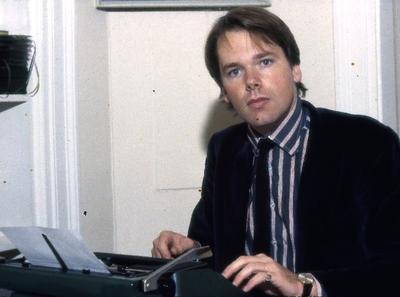
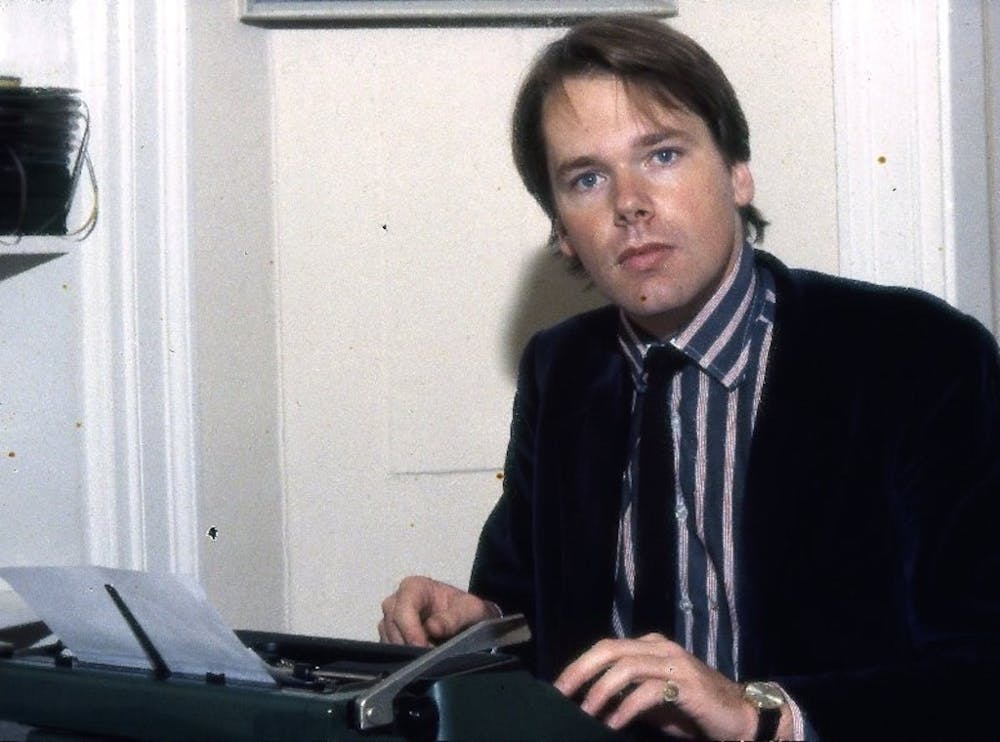 Though he began his working life on a manual typewriter, journalist Mark Colvin was an avid Twitter user — even posting after his death.
ABC/AAP
In 2017, Australian journalist Mark Colvin died, aged 65. A universally admired broadcaster and author, Colvin was also an avid and highly responsive Twitter user. The news broke around 11:40am, and Twitter was immediately flooded with tributes. Then, at 1:18pm, Colvin’s account posted a single tweet:
It’s all been bloody marvellous.
Had it been sent by a family member on his behalf? Had he, knowing the end was near, scheduled the tweet? Was the ghost of Mark Colvin somehow using his iPhone?
Nobody, it seemed, felt like asking. They all just wanted to say goodbye and explain what Colvin meant to them. It was what it was. “Think what you want about it, or just accept it as a gift”.
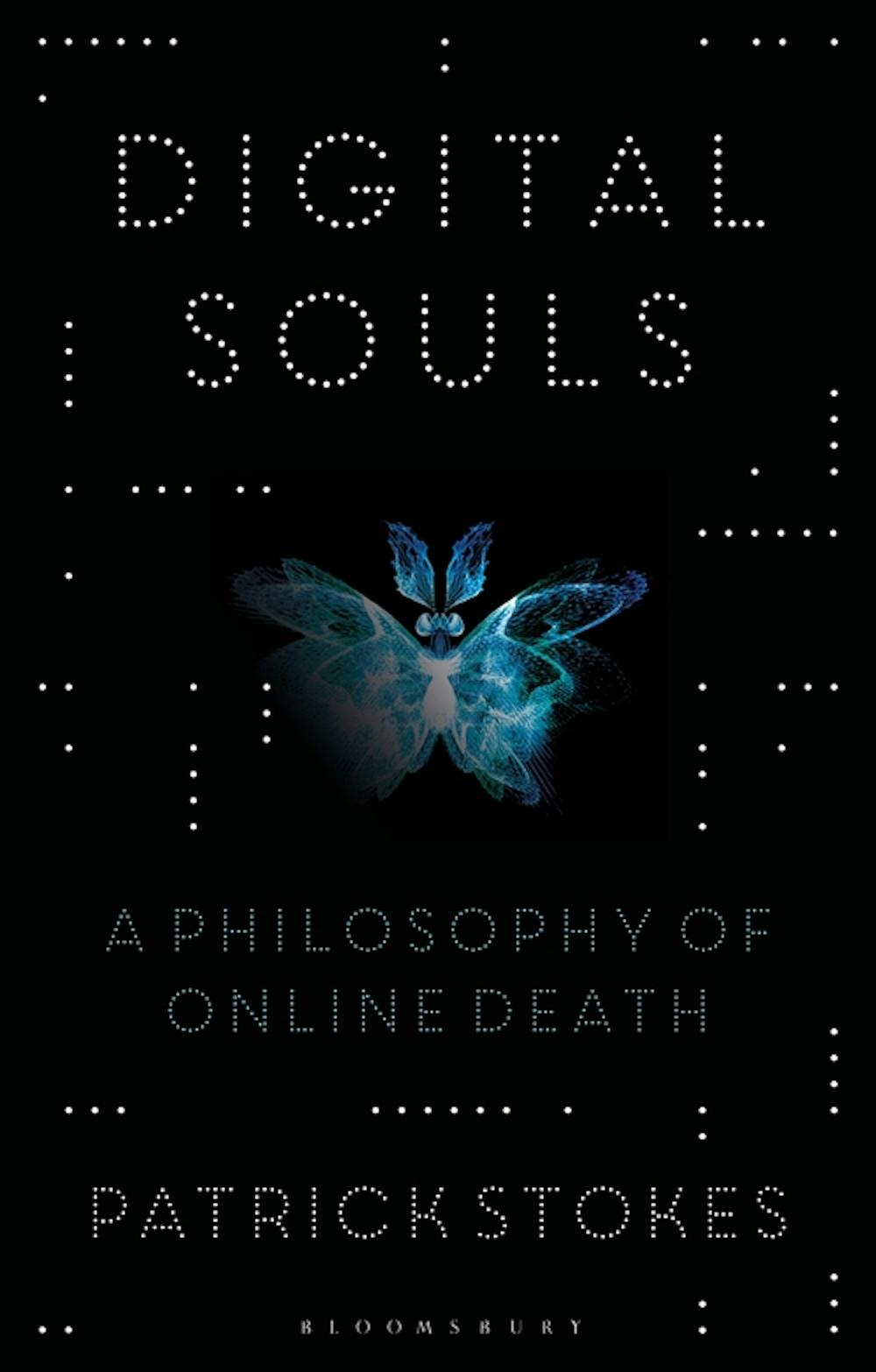
This is an edited extract from Digital Souls: A Philosophy of Online Death, by Patrick Stokes (Bloomsbury).
Though he began his working life on a manual typewriter, journalist Mark Colvin was an avid Twitter user — even posting after his death.
ABC/AAP
In 2017, Australian journalist Mark Colvin died, aged 65. A universally admired broadcaster and author, Colvin was also an avid and highly responsive Twitter user. The news broke around 11:40am, and Twitter was immediately flooded with tributes. Then, at 1:18pm, Colvin’s account posted a single tweet:
It’s all been bloody marvellous.
Had it been sent by a family member on his behalf? Had he, knowing the end was near, scheduled the tweet? Was the ghost of Mark Colvin somehow using his iPhone?
Nobody, it seemed, felt like asking. They all just wanted to say goodbye and explain what Colvin meant to them. It was what it was. “Think what you want about it, or just accept it as a gift”.
This is an edited extract from Digital Souls: A Philosophy of Online Death, by Patrick Stokes (Bloomsbury).
Authors: Patrick Stokes, Associate Professor of Philosophy, Deakin University