

see the 19 Australian ecosystems already collapsing
- Written by Dana M Bergstrom, Principal Research Scientist, University of Wollongong
In 1992, 1,700 scientists warned that human beings and the natural world were “on a collision course”. Seventeen years later, scientists described planetary boundaries within which humans and other life could have a “safe space to operate”. These are environmental thresholds, such as the amount of carbon dioxide in the atmosphere and changes in land use.
Crossing such boundaries was considered a risk that would cause environmental changes so profound, they genuinely posed an existential threat to humanity.
This grave reality is what our major research paper, published today, confronts.
In what may be the most comprehensive evaluation of the environmental state of play in Australia, we show major and iconic ecosystems are collapsing across the continent and into Antarctica. These systems sustain life, and evidence of their demise shows we’re exceeding planetary boundaries.
We found 19 Australian ecosystems met our criteria to be classified as “collapsing”. This includes the arid interior, savannas and mangroves of northern Australia, the Great Barrier Reef, Shark Bay, southern Australia’s kelp and alpine ash forests, tundra on Macquarie Island, and moss beds in Antarctica.
We define collapse as the state where ecosystems have changed in a substantial, negative way from their original state – such as species or habitat loss, or reduced vegetation or coral cover – and are unlikely to recover.
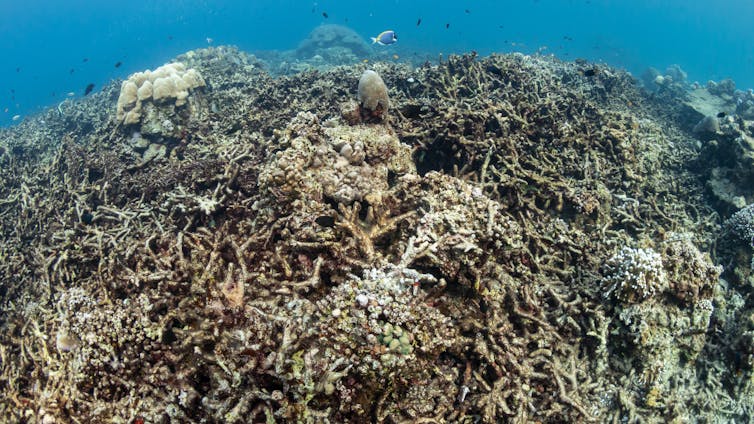 The Great Barrier Reef has suffered consecutive mass bleaching events, causing swathes of coral to die.
Shutterstock
The Great Barrier Reef has suffered consecutive mass bleaching events, causing swathes of coral to die.
Shutterstock
The good and bad news
Ecosystems consist of living and non-living components, and their interactions. They work like a super-complex engine: when some components are removed or stop working, knock-on consequences can lead to system failure.
Our study is based on measured data and observations, not modelling or predictions for the future. Encouragingly, not all ecosystems we examined have collapsed across their entire range. We still have, for instance, some intact reefs on the Great Barrier Reef, especially in deeper waters. And northern Australia has some of the most intact and least-modified stretches of savanna woodlands on Earth.
Read more: Worried about Earth's future? Well, the outlook is worse than even scientists can grasp
Still, collapses are happening, including in regions critical for growing food. This includes the Murray-Darling Basin, which covers around 14% of Australia’s landmass. Its rivers and other freshwater systems support more than 30% of Australia’s food production.
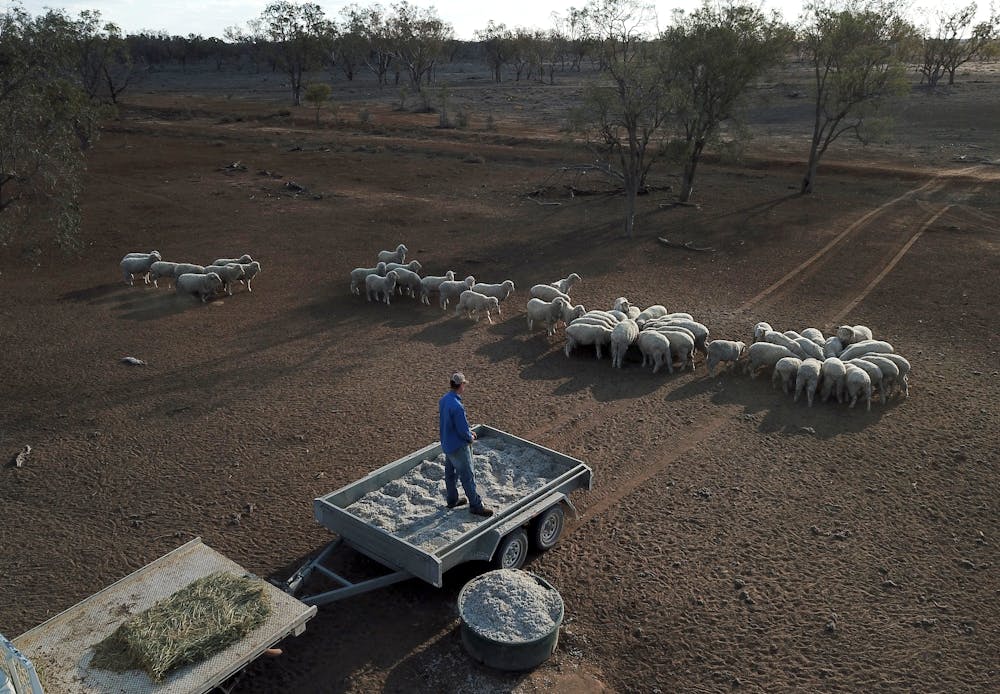 The effects of floods, fires, heatwaves and storms are felt equally in agricultural areas as in natural ecosystems.
AAP Image/Dan Peled
The effects of floods, fires, heatwaves and storms are felt equally in agricultural areas as in natural ecosystems.
AAP Image/Dan Peled
The effects of floods, fires, heatwaves and storms do not stop at farm gates; they’re felt equally in agricultural areas and natural ecosystems. We shouldn’t forget how towns ran out of drinking water during the recent drought.
Read more: Logging must stop in Melbourne's biggest water supply catchment
Drinking water is also at risk when ecosystems collapse in our water catchments. In Victoria, for example, the degradation of giant Mountain Ash forests greatly reduces the amount of water flowing through the Thompson catchment, threatening nearly five million people’s drinking water in Melbourne.
This is a dire wake-up call — not just a warning. Put bluntly, current changes across the continent, and their potential outcomes, pose an existential threat to our survival, and other life we share environments with.
 A burnt pencil pine, one of the world’s oldest species. These ‘living fossils’ in Tasmania’s World Heritage Area are unlikely to recover after fire.
Aimee Bliss, Author provided
A burnt pencil pine, one of the world’s oldest species. These ‘living fossils’ in Tasmania’s World Heritage Area are unlikely to recover after fire.
Aimee Bliss, Author provided
In investigating patterns of collapse, we found most ecosystems experience multiple, concurrent pressures from both global climate change and regional human impacts (such as land clearing). Pressures are often additive and extreme.
Take the last 11 years in Western Australia as an example.
In the summer of 2010 and 2011, a heatwave spanning more than 300,000 square kilometres ravaged both marine and land ecosystems. The extreme heat devastated forests and woodlands, kelp forests, seagrass meadows and coral reefs. This catastrophe was followed by two cyclones.
A record-breaking, marine heatwave in late 2019 dealt a further blow. And another marine heatwave is predicted for this April.
These 19 ecosystems are collapsing: read about each
What to do about it?
Our brains trust comprises 38 experts from 21 universities, CSIRO and the federal Department of Agriculture Water and Environment. Beyond quantifying and reporting more doom and gloom, we asked the question: what can be done?
We devised a simple but tractable scheme called the 3As:
Awareness of what is important
Anticipation of what is coming down the line
Action to stop the pressures or deal with impacts.
In our paper, we identify positive actions to help protect or restore ecosystems. Many are already happening. In some cases, ecosystems might be better left to recover by themselves, such as coral after a cyclone.
In other cases, active human intervention will be required – for example, placing artificial nesting boxes for Carnaby’s black cockatoos in areas where old trees have been removed.
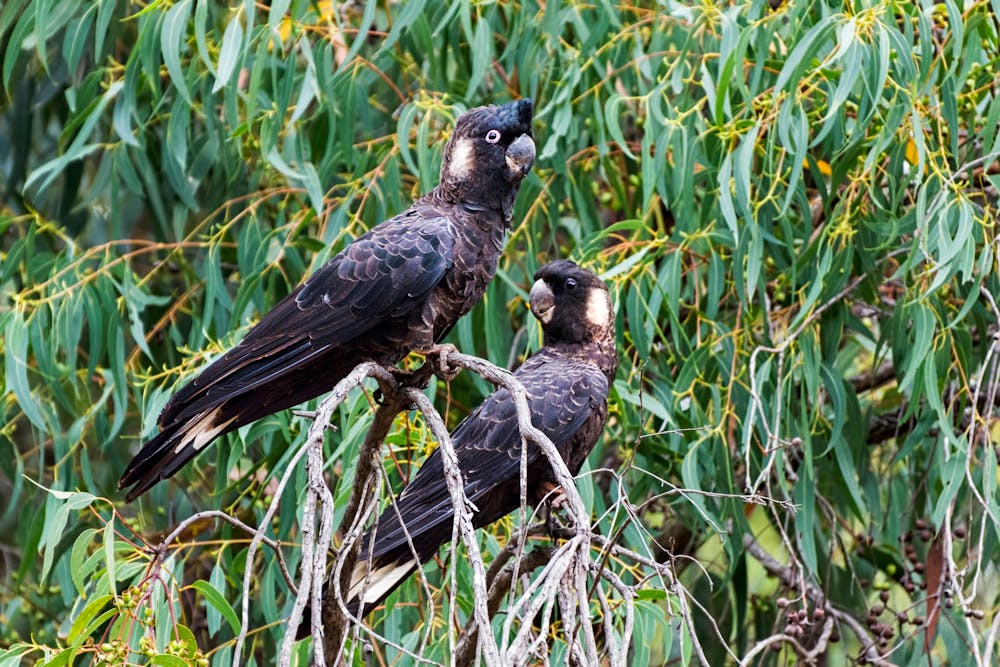 Artificial nesting boxes for birds such as the Carnaby’s black cockatoo are important interventions.
Shutterstock
Artificial nesting boxes for birds such as the Carnaby’s black cockatoo are important interventions.
Shutterstock
“Future-ready” actions are also vital. This includes reinstating cultural burning practices, which have multiple values and benefits for Aboriginal communities and can help minimise the risk and strength of bushfires.
It might also include replanting banks along the Murray River with species better suited to warmer conditions.
Some actions may be small and localised, but have substantial positive benefits.
For example, billions of migrating Bogong moths, the main summer food for critically endangered mountain pygmy possums, have not arrived in their typical numbers in Australian alpine regions in recent years. This was further exacerbated by the 2019-20 fires. Brilliantly, Zoos Victoria anticipated this pressure and developed supplementary food — Bogong bikkies.
Other more challenging, global or large-scale actions must address the root cause of environmental threats, such as human population growth and per-capita consumption of environmental resources.
We must rapidly reduce greenhouse gas emissions to net-zero, remove or suppress invasive species such as feral cats and buffel grass, and stop widespread land clearing and other forms of habitat destruction.
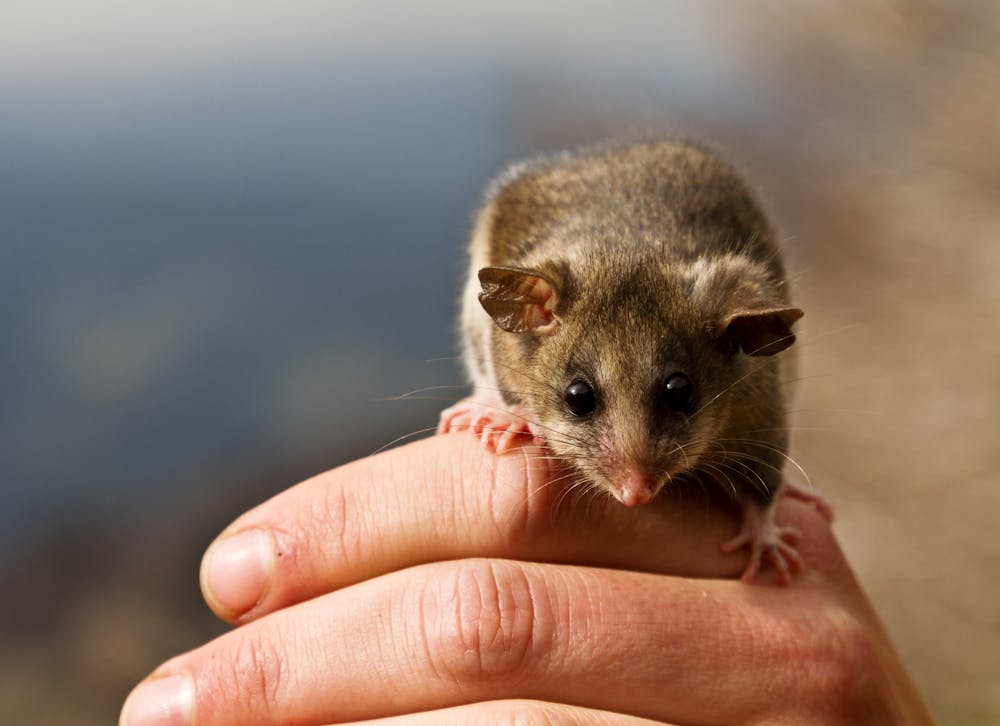 Mountain pygmy possums were saved from potential catastrophe after Zoos Victoria developed alternative food for them.
AAP Image/Department of Sustainability and Environment /Tim Arch
Mountain pygmy possums were saved from potential catastrophe after Zoos Victoria developed alternative food for them.
AAP Image/Department of Sustainability and Environment /Tim Arch
Our lives depend on it
The multiple ecosystem collapses we have documented in Australia are a harbinger for environments globally.
The simplicity of the 3As is to show people can do something positive, either at the local level of a landcare group, or at the level of government departments and conservation agencies.
Our lives and those of our children, as well as our economies, societies and cultures, depend on it.
We simply cannot afford any further delay.
Read more: Australia, you have unfinished business. It's time to let our 'fire people' care for this land
Authors: Dana M Bergstrom, Principal Research Scientist, University of Wollongong

















