

This is how we create the age-friendly smart city
- Written by Sonja Pedell, Associate Professor and Director, Future Self and Design Living Lab, Swinburne University of Technology
Senior citizens need help and encouragement to remain active as they age in their own communities. Given the choice, that’s what most would prefer. The smart city can provide the digital infrastructure for them to find and tailor the local neighbourhood information they need to achieve this.
Australia has a growing population of older adults, the majority living in cities. The challenge, then, is to ensure city environments meet their needs and personal goals.
Our research shows senior citizens want to pursue active ageing as a positive experience. This depends on them being able to stay healthy, participate in their community and feel secure.
Read more: 'Ageing in neighbourhood': what seniors want instead of retirement villages and how to achieve it
Most city planning efforts to encourage active ageing are siloed and fragmented. Older people are too often shut away in retirement villages or nursing homes rather than living in the community. Current approaches are often based on traditional deficit models of focusing on older people’s declining health.
Another issue is that senior citizens are treated as receivers of solutions instead of creators. To achieve real benefits it’s essential to involve them in developing the solutions.
Working towards age-friendly cities
To counter a rise in urban ageism, the World Health Organisation (WHO) has been promoting age-friendly cities for nearly 15 years. Its age-friendly framework includes these goals:
Cities and towns around the world, including local councils in Australia, have begun working towards this.
We need to recognise the diverse demands of living in cities, where most seniors live, particularly as we age.
Read more: Retire the retirement village – the wall and what’s behind it is so 2020
Smart city approaches can make urban neighbourhoods more age-friendly. One way technology and better design do this is to improve access to the sort of information older Australians need – on the walkability of neighbourhoods, for example.
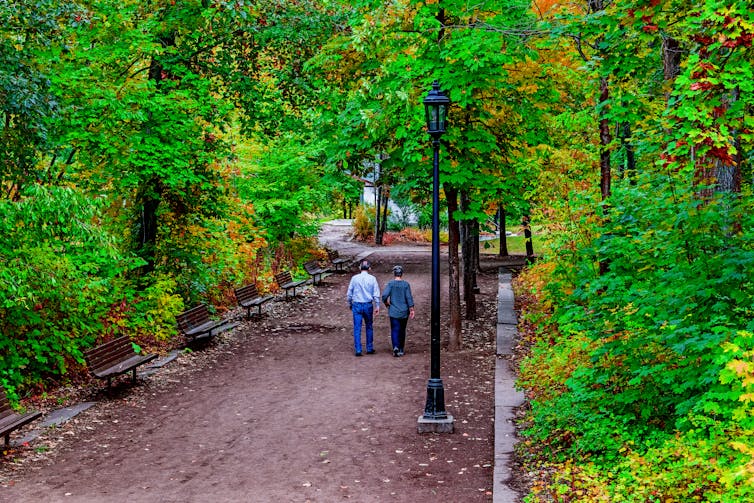 It’s useful for older people to be able to find out which walking routes have shade and places to stop and rest.
Shutterstock
It’s useful for older people to be able to find out which walking routes have shade and places to stop and rest.
Shutterstock
Our research has considered three factors in ensuring smart city solutions involve older Australians and work for them.
Replace ageism with agency
Government efforts have focused on increasing life expectancy rather than improving quality of life and independence. Ignoring quality of life leads to the perception of an ageing population as a burden to be looked after.
It would be better to bring about changes that improve older people’s health so they can participate in neighbourhood activities. Social interaction is a source of meaning and identity.
Read more: For Australians to have the choice of growing old at home, here is what needs to change
Active participation by older adults using digital devices can give them agency in their lives and reduce the risk of isolation. Bloomberg reports older adults have become empowered using technology to overcome social isolation during the COVID-19 pandemic.
Connect to smart city data
Cities are about infrastructure. Senior citizens need to have access to information about this infrastructure to be motivated to spend time in their neighbourhood and reduce their risk of isolation.
Growing numbers of active ageing seniors are “connected” every day using mobile phones to interact with smart city services. Many have wearable devices like smart watches that help monitor and manage their health and physical activity.
These personal devices can also be used to better connect older adults to public data about urban environments. For example, imagine an age-friendly smart city “layer” linked to a smart watch, to highlight facilities such as public toilets, water fountains and shaded rest stops along exercise routes.
Access Map Seattle is an example of an age-friendly, interactive, smart city map that shows the steepness of pedestrian footpaths and raised kerbs. The National Public Toilet Map, created by the Australian Department of Health and Ageing, and Barcelona’s smartappcity are among other mobile apps integrating city services and urban plans.
The rise of “urban observatories” has increased the gathering and analysing of complex city-related data. These data make it possible to build a digital city layer.
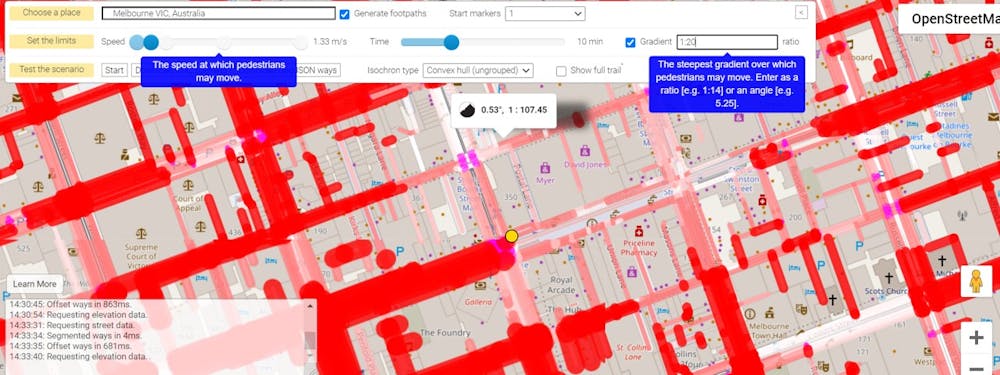 PedCatch is an app that combines animated pedestrian accessibility modelling, topographical mapping and crowd-sourced geospatial data.
Marcus White, Swinburne University, Author provided
PedCatch is an app that combines animated pedestrian accessibility modelling, topographical mapping and crowd-sourced geospatial data.
Marcus White, Swinburne University, Author provided
This information then helps us understand and improve the liveability of neighbourhoods for older adults. The data can be used for more proactive policy and city planning.
Read more: Aged care isn't working, but we can create neighbourhoods to support healthy ageing in place
Include co-design in planning
Co-design processes that involve older adults, giving them agency in smart city planning, lead to greater participation and inclusion.
We need to start asking senior citizens questions like “How would you like to access this data?” and “What would you like the digital layer to tell you?” Their goals and needs must drive the information provided.
It’s not just a matter of deciding what specific data older adults want to get via their devices. They should also be able to contribute directly to the data. For example, using a mobile app they could audit their neighbourhood to identify features that help or hinder walkability.
Read more: Contested spaces: we need to see public space through older eyes too
To create truly age-friendly smart cities, it is important for older people to be co-designers of the digital layer. The co-design includes deciding both the types of data available and how the data can be usefully presented. We also need to understand what mobile apps could use the data.
If we know what information within the digital city layer motivates older adults to participate more actively in their neighbourhoods, we can plan more age-friendly cities.
Through connecting infrastructures and citizen-led approaches, we can achieve social participation and inclusion of citizens regardless of their age and recognising diversity and equity. We will create places where they feel capable and safe across a range of activities. Redesigning age-friendly and smart communities directly and collaboratively with those affected can enable them to achieve the quality of life they desire.
Authors: Sonja Pedell, Associate Professor and Director, Future Self and Design Living Lab, Swinburne University of Technology
Read more https://theconversation.com/this-is-how-we-create-the-age-friendly-smart-city-152973

















