

When 1 in 3 users are tourists, that changes the bike-share equation for cities
- Written by Richard Buning, Lecturer in Tourism, School of Business, The University of Queensland
Bike-share programs have in the past been designed and operated with residents as the main focus. These shared bikes have mainly been regarded as a way to solve the “last mile problem” – the distance between the final destination and the closest public transport stop that’s seen as too far to walk and too close to drive.
My new research published in the Journal of Sustainable Tourism challenges this position. The study findings from the Pacers Bikeshare program in the US city of Indianapolis demonstrate the incredible demand tourists can provide for bike-share programs. In turn, the community gains extra value from tourism and the overall enriched visitor experience. Visitors incurred more than twice the user fees of residents.
This all adds up to substantial revenue for the program and an economic benefit for the city. It changes the calculations about the viability and value of bike-share schemes, which provide wide economic benefits to cities.
Read more: Billions are pouring into mobility technology – will the transport revolution live up to the hype?
A COVID-driven bike boom
Share bikes and other forms of micromobility such electric scooters (e-scooters) and e-bikes have emerged as an ideal means of transport and outdoor recreation for both residents and visitors in a COVID (and post-COVID) world.
Read more: Why e-bikes can succeed where earlier bike-share schemes failed
People are working from home, travelling less and have pandemic-related safety concerns. Public transport patronage has generally declined as a result.
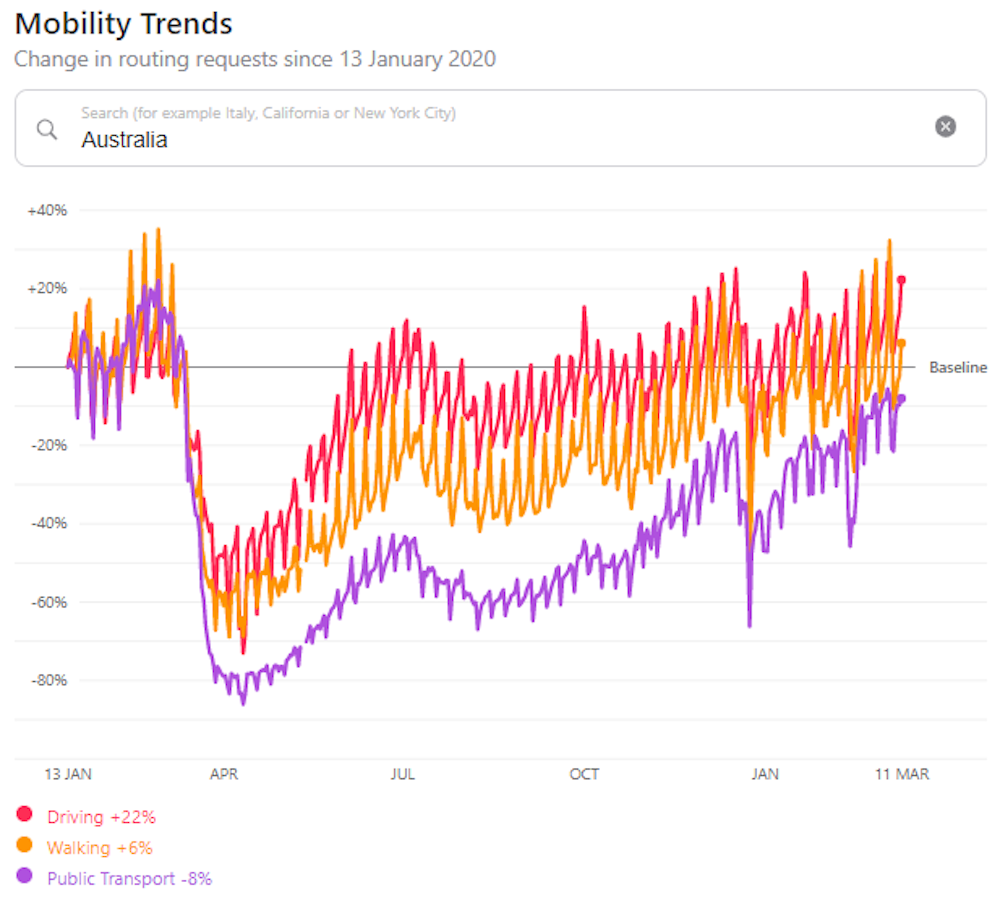 Public transport use (purple line) remains below pre-pandemic levels across Australia.
Apple Mobility Trends, CC BY
Public transport use (purple line) remains below pre-pandemic levels across Australia.
Apple Mobility Trends, CC BY
Amid COVID-19 lockdowns and outbreaks, communities across Australia and overseas are experiencing a cycling boom. Bike shops everywhere are overwhelmed and used bikes are hard to find. Bike-share use has risen as people look for affordable alternatives to public transport and ways to be active outdoors safely.
Bike-share programs have their time to shine, not just as transport for residents but for tourism purposes too.
Read more: Coronavirus recovery: public transport is key to avoid repeating old and unsustainable mistakes
Tourists are an important user group
This major shift in transport patterns includes tourists. We found they are a major and lucrative user group. In our study, tourists accounted for more than a third of all users of the bike-share system over more than four years.
Bike-share allows for freedom in exploring a city. Tourists use these programs to explore urban destinations in a leisurely way. They stop frequently at popular tourist attractions and at local retail outlets, restaurants and bars along the way.
This means the economic and social benefits of tourism activity can be distributed more widely throughout a community – into neighbourhoods and away from city centres and tourism hot spots – compared to cars and mass transit systems.
Further, when visitors use bike-share schemes, they get a more local, authentic and environmentally sustainable experience. The bikes allow for better access to local neighbourhoods, cultural areas, tourist sites and businesses than tour buses, ride-share operators and public transport can provide.
Read more: To bolster our fragile road and rail system we need to add a 'micro-mobility' network
Ensuring a COVID-safe ride
Share bikes provide a relatively contact-free and socially distanced alternative to buses, trains and ride-share cars.
Bike-share operators everywhere are responding to the increased concerns about the need for safe alternative transport. The range of strategies to ensure COVID safety include:
- increased cleaning and disinfection
- distribution of bikes at docking stations to allow for social distancing
- contact-free transactions
- promotion of public health guidelines such as wearing masks and social distancing
- even anti-viral handlebars.
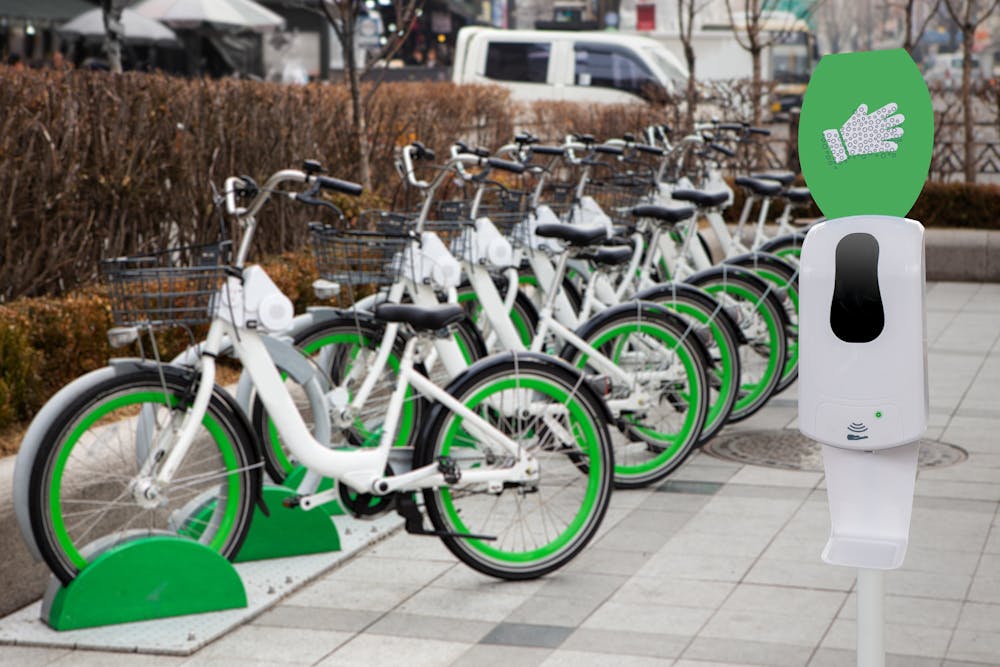 Bike-share operators have had to respond to public concerns about being COVID-safe.
Shutterstock
Bike-share operators have had to respond to public concerns about being COVID-safe.
Shutterstock
Some programs have actually adapted to the shift from public tranport to bike sharing by offering essential workers and healthcare workers free or discounted memberships. In New York, as subway use has dropped, the city has constructed bike-share stations near hospitals.
The future of micromobility
Bike-share schemes offer diverse community-wide benefits for city residents throughout the world. They are a flexible, convenient, cheap, active and sustainable transport option for both residents and visitors. These schemes help cut travel times, reduce carbon emissions, increase physical activity and connect people to their community.
Micromobility options including bike-share programs will continue to gain popularity well into the future as communities look to improve urban mobility in a sustainable and active manner. The rise of e-scooters and dockless bike programs marks a transition from government-based bike-share initiatives to entrepreneurial ventures. It has fuelled rapid growth in the industry worldwide.
Read more: Limes not lemons: lessons from Australia’s first e-scooter sharing trial
The challenge now is for cities to keep up with this upward trend by developing the necessary physical infrastructure such as bike lanes, bike paths and so on.
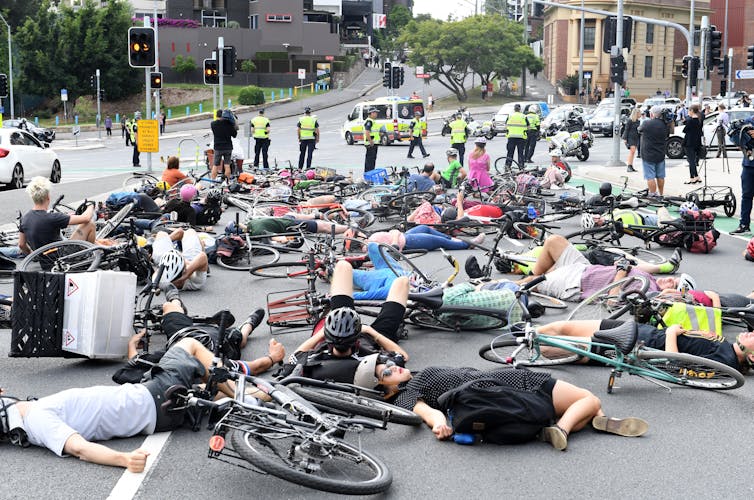 Cyclists have long called for more bike lanes and paths, with this ‘die-in’ protest being held in Brisbane in May 2018.
Dave Hunt/AAP
Cyclists have long called for more bike lanes and paths, with this ‘die-in’ protest being held in Brisbane in May 2018.
Dave Hunt/AAP
Reaping the full benefits of bike-share programs and tourism depends on encouraging visitors to use these bikes. Ways to do this include developing aids to increase ease of use, such as digital cycling guides, maps, apps and companion programs with local businesses.
Authors: Richard Buning, Lecturer in Tourism, School of Business, The University of Queensland

















