

What is Mycoplasma genitalium, the common STI you've probably never heard of
- Written by Catriona Bradshaw, Professor, Head of Research Translation and Head of the Genital Mycoplasma and Microbiota Group, Monash University
Mycoplasma genitalium (MG) is a sexually transmitted infection (STI) with many of the hallmarks of its better-known counterpart, chlamydia.
You can have MG without knowing it, or have symptoms; it can affect men and women, and it can be treated with antibiotics.
However, unlike chlamydia, we only have a limited number of antibiotics to treat it, due to a quirk in its cellular structure and the growing threat of antibiotic resistance. The antibiotics we need to use with resistant MG can also, uncommonly, have serious side-effects.
Here’s what you need to know about this common STI.
What is it? How do I get it? How common is it?
MG can affect both men and women, and is passed from person to person via their body fluids when they have sex. That can be via penile-vaginal sex or via penile-anal sex. Transmission via oral sex isn’t thought to be a big factor.
Several studies tell us MG is common, perhaps as common as chlamydia.
UK and US data show 1-2% of the adult population have it (making it about as common as chlamydia), and it is as common in men as in women.
In research yet to be published, when we tested women who walked through the door of our sexual health service in Melbourne, 6% had MG, which was as common as chlamydia (7%) in women in the same study. Of women with MG, roughly the same number had symptoms compared to no symptoms. When we tested gay men without symptoms who attended our service, 10% had MG.
However, we’re not entirely sure how many people are infected with MG throughout Australia. That’s because Australia has yet to set up a formal surveillance network (we’re in the middle of setting that up at the moment). MG is also not a notifiable disease yet. That means doctors or laboratories don’t have to tell health authorities when they have a case.
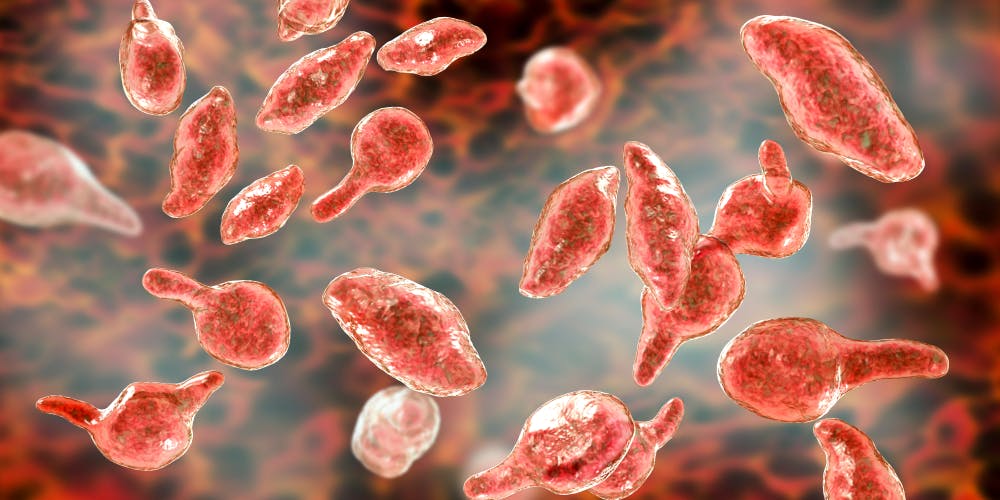 Mycoplasma genitalium is a sexually transmitted infection that affects men and women.
from www.shutterstock.com
Mycoplasma genitalium is a sexually transmitted infection that affects men and women.
from www.shutterstock.com
How do I know if I have it?
If you do have symptoms, these can resemble those of chlamydia. So the best thing is to go to your GP or sexual health clinic for a checkup, as the treatments are different.
If you’re a man with symptoms, they can vary from mild to moderate and include:
mild irritation, an itch, or a burning sensation when urinating
a penile discharge, which may be clear or more like pus.
For women, symptoms may include:
For men or women who have anal sex, symptoms may include:
- an itch or pain inside the anus, anal discharge and sometimes anal bleeding.
Your doctor will take a urine sample for men and a vaginal swab for women. For men or women who have anal sex, they will take a rectal swab, or you will be instructed how to take it yourself. Samples will then be sent for laboratory testing.
How is it treated?
Once diagnosed, you’ll be treated with a course of oral antibiotics for about two weeks. Unfortunately, you may need several courses to cure the infection due to increasing antibiotic resistance. And some of these antibiotics can have side-effects. Occasional, but serious, side-effects include an abnormal heart rhythm, rupture of tendons and nerve damage.
Read more: Health Check: I’m taking antibiotics – when will they start working?
What happens if I leave it untreated?
If the infection is left untreated in women, it can cause similar complications to chlamydia. Some women go on to develop pelvic inflammatory disease, although less commonly than with chlamydia. Pelvic inflammatory disease could, in turn, lead to infertility. If you’re pregnant, it can, uncommonly, lead to premature birth or miscarriage.
If left untreated in men there are no apparent complications but the main risk is men can infect new partners and reinfect treated partners. And for gay men, there’s some data to suggest a link between MG and HIV, although further studies are needed.
Read more: How to make your next sexual health check less, erm ... awkward
Can I still be tested even if I don’t have symptoms?
Current guidelines both in Australia and internationally recommend testing people with symptoms, or sexual contacts of known cases. They don’t recommend doctors screen people without symptoms.
When you screen, you have to be confident you have access to highly effective treatments, the treatments do not cause more harm than the condition itself and you have a good understanding of how often the condition progresses to cause complications.
For MG that balance is against screening currently. That’s because there are often no symptoms and we don’t yet fully understand how often the infection progresses to cause harm, although it seems to do so less often than chlamydia. The microorganism has also rapidly become so resistant to antibiotics we are having to use stronger and stronger ones, and multiple courses, to cure. This contrasts to chlamydia, which is easy to cure.
Not only do many antibiotics have side-effects, they affect the bacteria in people’s gut. These bacteria are important to keep us healthy, and if we bombard them with antibiotics it can affect our health and also lead to antibiotic resistance in a whole range of other bacteria, not just MG.
Read more: We know _why_ bacteria become resistant to antibiotics, but _how_ does this actually happen?
Authors: Catriona Bradshaw, Professor, Head of Research Translation and Head of the Genital Mycoplasma and Microbiota Group, Monash University

















