

Thinking of switching to homeschooling permanently after lockdown? Here are 5 things to consider
- Written by Nicholas Gamble, Lecturer, Monash University
Homeschooling registrations for children in Victoria in 2020 were almost four times the number of the previous year, recent reports show.
Some families who had children learning from home during lockdown discovered they enjoyed spending more time together and some children found they learnt better at home. Parents may have recognised academic or social challenges for their child at school and decided to continue with homeschooling.
But even before COVID-19, homeschooling was on the rise. If you’re considering homeschooling because your child seems to do better at home, but are unsure if it’s the right thing to do, here are five things to take into account.
1. Homeschooling is different to remote learning
Homeschooling is different from remote learning. Remote learning is the experience of teachers delivering the school curriculum to children at home, as was done during the recent school closures. This is more like distance education, which some families do if they live remotely, for instance.
In homeschooling, parents have elected to meet their child’s educational needs themselves, rather than using government or other school options.
Homeschooling is legal in all states and territories in Australia but there are differing registration and monitoring requirements.
2. It takes a lot of time and effort
Some parents put together a school structure at home with lesson plans and routine break times. They may employ a tutor to help with their child’s education or do this themselves.
Others choose to use an unstructured or “unschooling” learning method. This is an informal way of learning that advocates student-chosen activities rather than teacher-directed lessons.
Read more: Don't want to send the kids back to school? Why not try unschooling at home?
The process of developing a homeschooling routine takes time, effort and patience. Parents may be required to submit a plan to their state education department, which, in most cases, should show an alignment between their child’s learning and the national curriculum.
Parents may have to develop or implement a full school curriculum at home without the resources available in schools.
Even if parents decide to teach children in an informal way, they will need to put in significant time and effort. For example, a parent may use a trip to the shops to cover geography (the child navigating), mathematics (the child calculating the cost of items), or economics (supply and demand factors), but this may add hours to a routine shop.
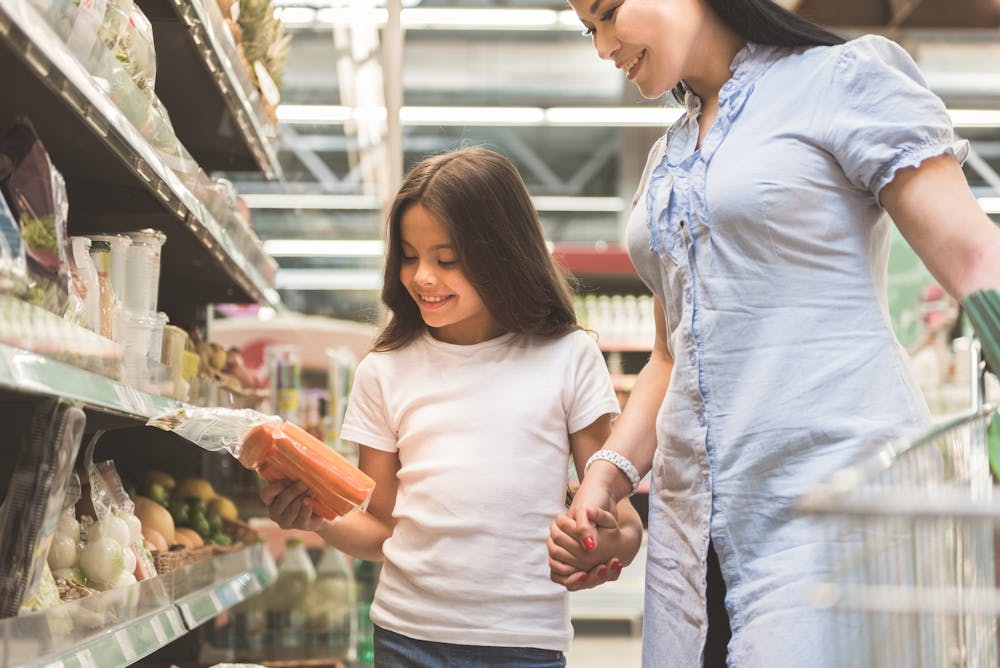 A trip to the shops can be a learning experience.
Shutterstock
A trip to the shops can be a learning experience.
Shutterstock
So, parents will need to consider their ability and desire to take on this leading role in their child’s education. For some parents it can also take an emotional toll and feel isolating if there isn’t a plan or enough support.
3. Consider social and other difficulties at school
Some families homeschool on religious or ideological grounds; others are motivated by practical limitations to school access — such as if the school is too far from home or their child has a disability.
Many individual children can face difficulties going to school, such as the separation of leaving their carer or parent. Other children may be bullied at school.
Read more: Is your child anxious about starting school for the first time? Here's how you can help
There is very little research into the effects on children who are experiencing difficulties at traditional schools and change to homeschooling.
But parents should know schools have a legal obligation to provide a safe environment for children. They must address bullying behaviour and provide support for both the victim and the perpetrator. When there are difficult interactions parents, teachers, the school and children (where appropriate) should collaborate to improve the situation.
Children often need support from teachers and parents to navigate exposure to bullying. But if the behaviour is allowed to continue with options exhausted, students will be more likely to experience negative psychological health from ongoing bullying.
Data from 2016 show around 70% of children aged 12–13 experienced at least one bullying-like behaviour within a year. All forms of bullying have the potential to create long-term and disastrous psychological as well as physical effects. Some young people who have died by suicide were found to have done so after persistent bullying.
Evidence suggests bullying constitutes a traumatic experience for students who are bullied. How teachers and schools respond to bullying and the frequency of bullying can also result in mental distress for students.
 Bullying can have long-lasting psychological consequences.
Shutterstock
Bullying can have long-lasting psychological consequences.
Shutterstock
Not all schools can and do adequately manage bullying and other unsafe situations children may be in. In these instances, parents may decide to remove their child from school and homeschool their child.
Read more: School is not always a safe place for students with disability – this has to change
Parents can consider whether their child is showing ongoing signs of psychological distress such as changes in behaviour, withdrawal from others, irritability or problems concentrating.
Specialist support from a psychologist may help parents and students to understand the benefits and limitations of changing schools and homeschooling. If there are underlying social or separation anxieties involved, these issues should be addressed as they are likely to linger at home too.
4. Children can thrive academically
Children’s academic outcomes need to be considered in the context of the parents’ motivation for choosing homeschooling. For example, if a parent’s primary concern is religious education their focus may not be on their child gaining the highest year 12 results possible.
Research shows academic results of children who are home educated are mixed. This is partly because there are diverse parental motivations which may or may not prioritise academic pursuits.
Read more: Homeschooling is on the rise in Australia. Who is doing it and why?
In Australia, some studies have focused on NAPLAN results. These suggest home-educated students score higher than state averages across every measure. The effect continues even if the child returns to school.
Children who are homeschooled may be doing well because they receive one-on-one attention. Or it could be because the child’s learning is personalised and the child has agency over their learning.
5. Children can be socialised in both environments
Socialisation is again influenced by parental motivations and the education methods employed.
Homeschooled young people can have a diverse range of social interactions with people of different ages, including adults.
An Australian survey of homeschooling families showed nearly 50% of children participated in at least one club activity. This included 24 different sports — from AFL to aerial silks and yoga — and clubs including lego and chess. Around 40% attended at least one regular learning group. Classes included new languages, gardening, Shakespeare and archaeology.
The majority of research participants regularly had “play dates” with homeschooling and/or non-homeschooling families. Children actively participated in their community through the arts, including community theatre, bands, choirs, dance and visual arts classes.
Read more: Homeschooled children are far more socially engaged than you might think
Parents should consider the reasons behind their choice to homeschool and seek advice to ensure the best outcomes for their child socially, emotionally and academically.
Authors: Nicholas Gamble, Lecturer, Monash University

















