

Pictures of COVID injections can scare the pants off people with needle phobias. Use these instead
- Written by Holly Seale, Associate professor, UNSW
This year is shaping up as the year of the COVID-19 vaccination photo, with the pandemic providing seemingly endless photo opportunities. We’ve seen stock photos of people getting vaccinated in news reports, images of the prime minister receiving his shot and health workers posting #vaxxies on social media.
But evidence shows the wrong images can make some people reluctant to get vaccinated. So our well-meaning efforts to use images to help demystify the vaccination process or share our pride in getting a COVID-19 vaccine can backfire.
Here’s what we can all do to choose and share vaccination images responsibly.
Read more: Posting COVID-19 vaccine selfies on social media can cause anger, frustration
Images are powerful
Communicating public health strategies like vaccination can be challenging. There can be complex and unfamiliar technical terms and health concepts, and not everyone can understand them. So pictures play an essential role.
Pictures can draw attention to the message, help people relate to and remember what is being said, and may nudge people to act on a health recommendation. People also rate brochures with pictures more positively than ones with just text.
Pictures not only provide meaning, they have an emotional impact. Images we see on social media can also shape our perception of social norms (what we believe others are thinking or doing) and our behaviour.
Read more: Friday essay: COVID in ten photos
But what happens when the picture is a giant needle, or a needle poked into someone’s arm? We have all seen these images to illustrate media articles about COVID-19 vaccination.
In addition to being a bit gruesome, stock photos commonly used in stories about vaccination are often inaccurate. The needle might be in the wrong position, the health worker may be wearing gloves when they are not needed or the liquid inside the needle seems coloured rather then clear.
Do vaccination images really matter?
Yes, vaccination images matter. A study looking at vaccine-related news coverage found nearly one in eight images contained something negative, such as the classic “crying baby”.
This may lead new parents, who have yet to really experience the vaccination process, to become anxious. And this negative photo may override any positive vaccination messages accompanying it.
This issue is especially important because when a photo is of someone’s face, it can trigger an emotional response, making it easier for someone to have a strong reaction to that communication.
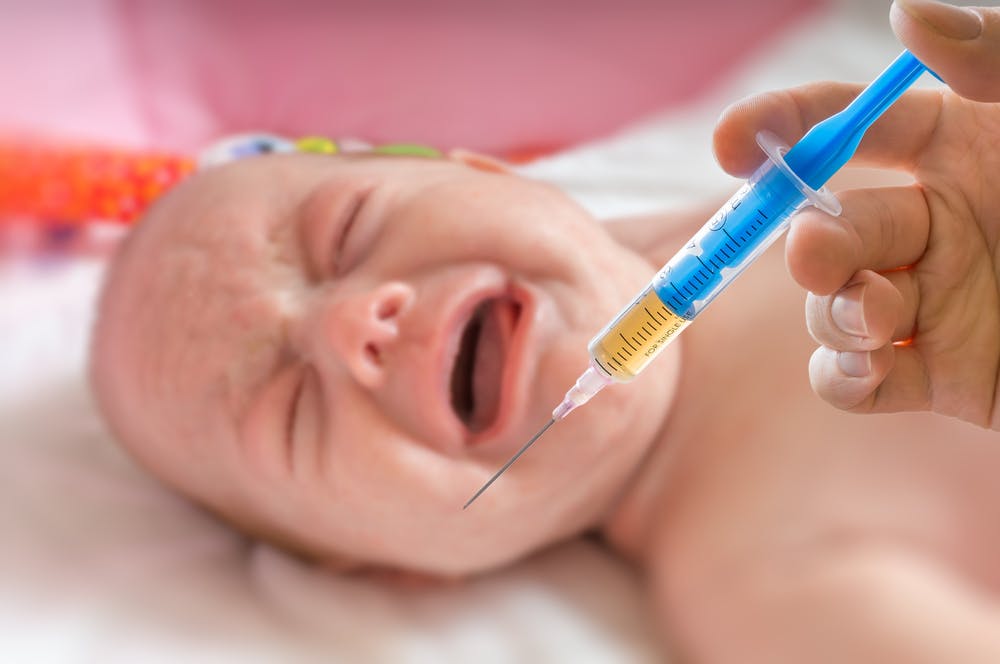 We can still illustrate vaccination without using scary images like this of a crying baby and an oversized needle.
from www.shutterstock.com
We can still illustrate vaccination without using scary images like this of a crying baby and an oversized needle.
from www.shutterstock.com
We know images can help people remember health messages. But if we use an inappropriate photo, such as the wrong needle size or someone looking anxious, this is the image that can stick with us, not the public health messages or statistics we intended to convey.
For some people, photos of needles are so scary this might put them off vaccination. While we don’t know precisely which types of needle imagery could stimulate such a response, we know needle phobia is a real issue. In fact, one survey found 23% of adults have avoided influenza vaccines due to fear of needles. And we don’t want to risk this happening with COVID-19 vaccines.
Read more: Fear of needles could be a hurdle to COVID-19 vaccination, but here are ways to overcome it
What can we do about it?
Whether we are choosing images for news articles or for our personal social media, it is important we consider the potential impact of the photos we use. Here are some tips for choosing the right image:
focus on positive outcomes. Consider showing a smiling person with a plaster on their arm or someone holding a vaccination card or sticker. Flickr provides free photos that reflect the reality of immunisation and are medically accurate
humanise the process. People develop, deliver and receive vaccines. Show these people where possible, instead of disembodied needles
depict diversity. Ensure images of vaccination show diversity of ethnicity, gender, age and disability
imply rather than illustrate vaccination. Why do we need the needle in the photo? We do not illustrate articles about urinary tract infections in children with photos of urine samples or invasive medical treatments. An image of a health worker speaking to someone with their sleeve rolled up is enough to evoke a mental image of the vaccination process, particularly when it accompanies a story about vaccines
highlight the vial not the needle. For stories about vaccine production or rollout with no personal or emotive element, showing the vaccine vial is a neutral option
avoid inaccurate images. The emoji of a needle full of blood? Not a great choice to tell your friends and family you have been vaccinated. The plaster emoji is a good alternative. Publications should check any vaccine images with medical professionals for accuracy.
Authors: Holly Seale, Associate professor, UNSW

















