

Despite major conservation efforts, populations of New Zealand's iconic kiwi are more vulnerable than people realise
- Written by Isabel Castro, Associate Professor in Ecology and Zoology, Massey University
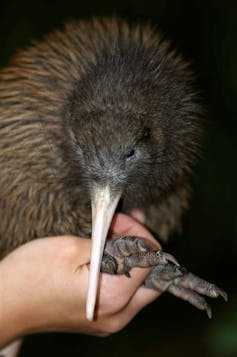 Kiwi are moved between populations to lower the risk of inbreeding.
Maungatautari Ecological Island Trust, CC BY-SA
Kiwi are moved between populations to lower the risk of inbreeding.
Maungatautari Ecological Island Trust, CC BY-SA
Like many endangered species, Aotearoa’s flightless and nocturnal kiwi survive only in small, fragmented and isolated populations. This leads to inbreeding and, eventually, inbreeding depression — reduced survival and fertility of offspring.
Mixing kiwi from different populations seems a good idea to prevent such a fate. But translocating kiwi in an effort to mate birds that are not closely related can come with the opposite risk of outbreeding. This happens when genetically distant birds breed but produce chicks with lower fitness than either parent.
Translocations have been part of the kiwi conservation effort for decades. We also have many genetic studies of the five species of kiwi in New Zealand.
But our research, which synthesised available genetic studies, shows we don’t yet have enough genetic information to predict translocation outcomes and manage genetic diversity to achieve safe and sustainable conservation practices.
Kiwi are cherished by all cultures in New Zealand as a symbol of a unique natural heritage. For Māori, kiwi are a taonga (treasure) and of vital importance to hapū (sub-tribal groups) and iwi (tribes) across Aotearoa.
Our research is the culmination of more than two decades of close collaboration and inclusion of mātauranga Māori (traditional knowledge) to improve conservation outcomes — for mana tangata (people with authority over land), for kiwi and for other species across the globe.
Read more: 'Revolutionary change' needed to stop unprecedented global extinction crisis
Kiwi whakapapa under threat
Before humans arrived in Aotearoa, kiwi populations numbered around 12 million. They were dispersed across most of the country.
In the early 20th century, there were still millions of kiwi roaming the bush. But Pākehā settlers accelerated the destruction of New Zealand’s forests and introduced invasive predators, including stoats and ship rats, which are now a major threat, particularly to kiwi chicks.
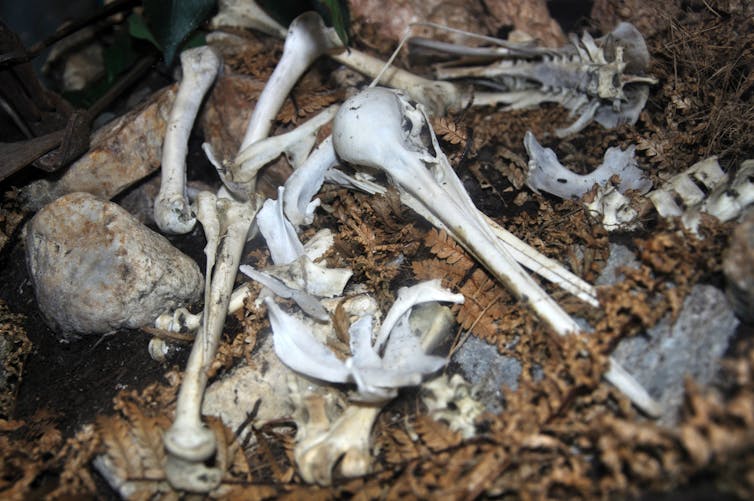 Introduced predators, including stoats and rats, are a major threat to kiwi.
Shutterstock/Lakeview Images
Introduced predators, including stoats and rats, are a major threat to kiwi.
Shutterstock/Lakeview Images
Today there are fewer than 70,000 kiwi in the wild, and populations are declining in areas without predator control. The forests, wetlands and pastures where kiwi once lived have been milled, drained and ravaged by introduced browsers such as goats and deer.
Kiwi are also not immune to climate change, with worrying mortality events during recent severe droughts. In these new and changing conditions, kiwi face many challenges: new predators, new diseases, new seasonal events, new foods.
Read more: Forensics and ship logs solve a 200-year mystery about where the first kiwi specimen was collected
Genetic diversity provides a buffer against such challenges and better chances of survival for a species. One way to maintain genetic diversity is through mating between individuals that are not closely related.
But most kiwi live in groups of fewer than 100 birds. We have confined them to pockets of favourable habitat. As a result of well-meant conservation management to protect the birds from mammalian predators, we have moved them to safe havens on offshore islands or patches of remnant forests that effectively function as “mainland islands”, cut off from other habitat.
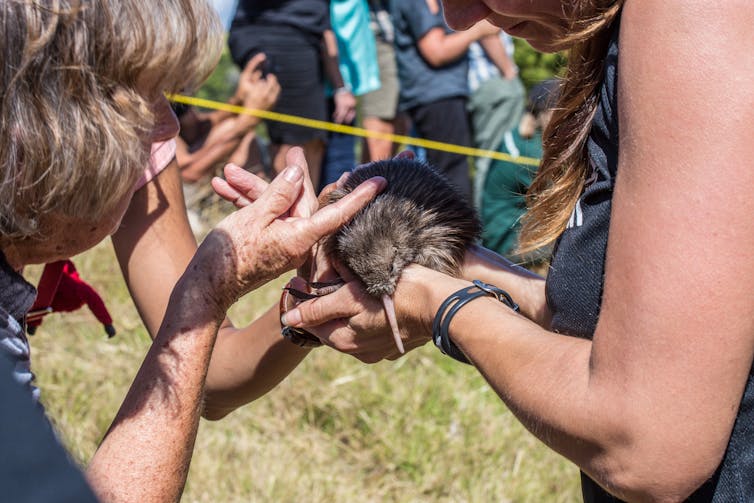 Kiwi being released on an offshore island sanctuary.
Shutterstock/Naska Raspopina
Kiwi being released on an offshore island sanctuary.
Shutterstock/Naska Raspopina
Call for more genetic research
One way to avoid inbreeding depression is to mix individuals from distant populations that have different genes and could provide the basis for genetic rescue. But some are opposed to such mixing because it raises the risk of outbreeding depression, which is particularly high if the parental populations differ in their adaptations to their respective environments.
Kiwi populations have evolved to adapt to local conditions on timescales of tens of thousands of years. This means one population of the same species may have adapted in different ways to another. For example, populations of North Island brown kiwi (Apteryx mantelli) are found from the warm lowlands of Te Tai Tokerau/Northland to the sub-apline volcanic plateau near Mount Ruapehu.
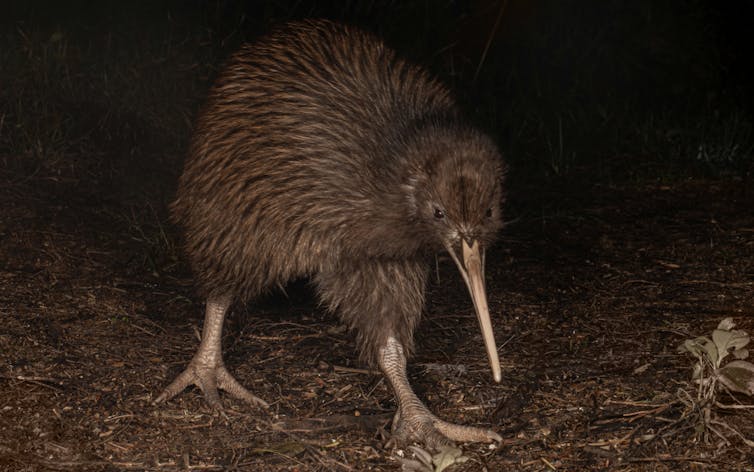 kiwi Shaun lee.
Flickr/Shaun Lee, CC BY-SA
kiwi Shaun lee.
Flickr/Shaun Lee, CC BY-SA
For decades the Department of Conservation (DOC) and community groups have been translocating kiwi all over Aotearoa. We need more gene sequencing research of such populations to investigate the effects of inbreeding and outbreeding.
Decision making in the absence of sufficient genetic information risks leading to management strategies that are inadequate or even harmful for future population sustainability.
Working with Māori
Māori, the Indigenous people of Aotearoa, are kaitiaki (guardians) of the kiwi. Whakapapa, a key concept of relatedness in te ao Māori (Māori world view), means Māori culture has a deep understanding of ideas described in western science as genetic diversity, inbreeding and hybridisation.
But hapū and iwi are not always consulted about conservation interventions, even though their role as co-managers of taonga species is well established in Te Tiriti o Waitangi.
In 2013, my research group teamed up with two hapū (Te Patukeha and Ngāti Kuta) to develop a management plan for the North Island brown kiwi in their area. A century of well-intentioned but somewhat random mixing of different North Island brown kiwi populations during translocations has effectively produced both “randomised experimental” and “control” groups.
Our team is now comparing the precise genetics of mixed-background birds currently thriving on Ponui Island in the Hauraki Gulf with the control populations in Te Tai Tokerau and Taranaki, from which the Ponui Island kiwi have been drawn.
We have also recruited support from other hapū and iwi in Tai Tokerau and have now started to analyse genetic information from several sites, using the latest techniques to investigate the genetic make-up of the birds. This research will shed new light on the effects of years of breeding in populations that started with kiwi from a single source versus those that started with mix-provenance birds.
We need to save North Island brown kiwi, but we need to do it properly. And when conservation efforts succeed, it would be far better if we knew why they worked. If we do this research right, the conservation management of other species will benefit, across Aotearoa and the world, at a time of an accelerating extinction crisis.
Authors: Isabel Castro, Associate Professor in Ecology and Zoology, Massey University

















