Seabirds are today's canaries in the coal mine – and they're sending us an urgent message
- Written by: David Schoeman, Professor of Global-Change Ecology, University of the Sunshine Coast
Just as caged canaries once warned coal miners of the risk of carbon monoxide poisoning, free-flying seabirds are now warning humanity about the deteriorating health of our oceans.
Seabirds journey vast distances across Earth’s seascapes to find food and to breed. This exposes them to changes in ocean conditions, climate and food webs. This means their biology, particularly their breeding successes, can reveal these changes to us on a rare, planet-wide scale.
We collated and analysed the world’s largest database on seabird breeding. Our findings reveal a key message: urgency in the Northern Hemisphere and opportunity in the south.
The Northern Hemisphere ocean systems are degraded and urgently need better management and restoration. Damage to Southern Hemisphere oceans from threats such as climate change and industrial fishing is accelerating, but opportunities remain there to avoid the worst.
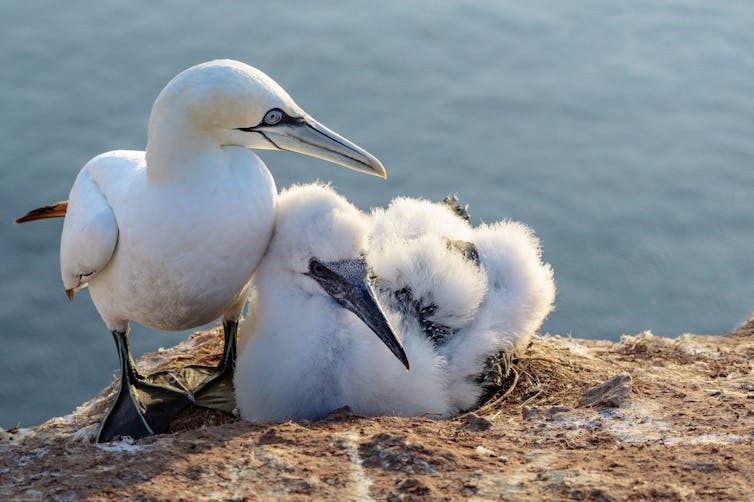 Seabird breeding success is a good indicator of ocean health.
Shutterstock
Seabird breeding success is a good indicator of ocean health.
Shutterstock
Oceans at a crossroads
Seabirds often travel far across the planet. For example, many sooty shearwaters breed in New Zealand, yet travel each year to the productive waters of the northeast Pacific. Arctic terns migrate even further, travelling each year between the Arctic and Antarctic.
Scientists often use satellite-derived data sets to determine, for example, how the oceans’ surfaces are warming or how ocean food webs are changing. Few such data sets span the globe, however, and this is where seabirds come in.
Over its long journey, a seabird eats fish and plankton. In doing so, it absorbs signals about ocean conditions, including the effects of pollution, marine heatwaves, ocean warming and other ecological changes.
Seabird breeding productivity (the number of chicks produced per female per year) depends on the food resources available. In this way, seabirds are sentinels of change in marine ecosystems. They can tell us which parts of oceans are healthy enough to support their breeding and which parts may be in trouble.
Read more: It might be the world's biggest ocean, but the mighty Pacific is in peril
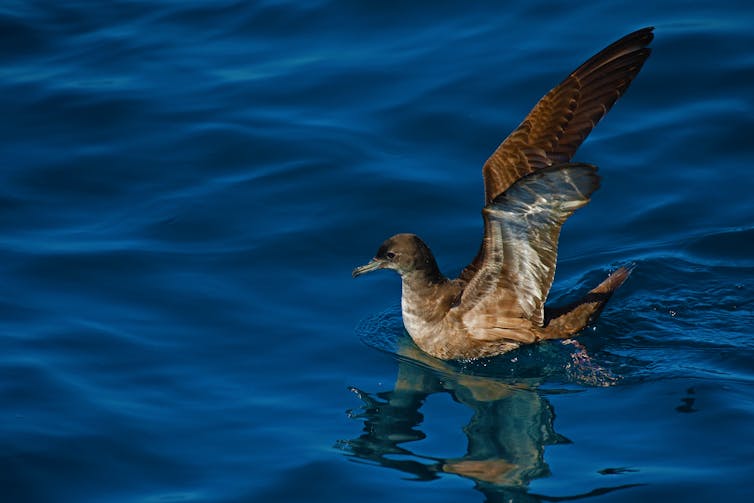 Many sooty shearwaters breed in New Zealand then migrate to the northeast Pacific.
Shutterstock
Many sooty shearwaters breed in New Zealand then migrate to the northeast Pacific.
Shutterstock
Deciphering seabird messages
In some cases, seabirds tell us directly about major distress in the oceans. This was the case in 2015-16, when around a million emaciated common murres died, many washing up on beaches from California to Alaska. The seabirds experienced severe food shortages caused by an acute marine heatwave.
In other cases, seabird health can hint at longer-term and more subtle disruption of ocean ecosystems, and we are left to decipher these messages.
In this task, seabird breeding provides important clues about marine food webs that are otherwise difficult or impossible to measure directly, especially at global scales. Thankfully, seabird scientists around the world have consistently measured breeding productivity over decades.
Our research team included 36 of these scientists. We collated a database of breeding productivity for 66 seabird species from 46 sites around the world, from 1964 to 2018. We used the data to determine whether seabirds were producing relatively more or fewer chicks over the past 50 years, and whether the risk of breeding failure was increasing or decreasing.
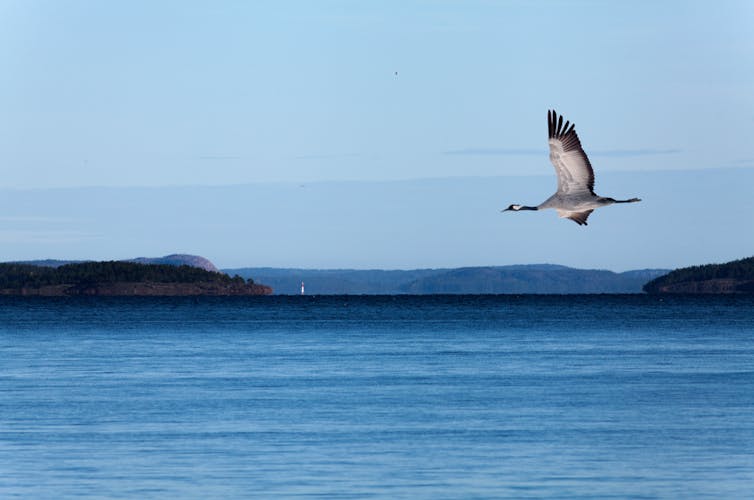 In the Southern Hemisphere, there’s still time to reverse the oceans’ plight.
Shutterstock
In the Southern Hemisphere, there’s still time to reverse the oceans’ plight.
Shutterstock
Striking findings
In the Northern Hemisphere, breeding productivity of plankton-eating birds such as storm petrels and auklets increased strongly over 50 years, but breeding productivity of fish-eating birds declined sharply.
In the Southern Hemisphere, by contrast, breeding productivity of plankton-eating seabirds declined weakly, but increased strongly for fish eaters.
In short, fish-eating seabirds in the north are in trouble. Decreasing breeding productivity leads to population declines, and the low breeding rate of seabirds (many species only have one chick per year) means populations recover slowly.
More worrying, though, were our findings on the risk of breeding failure.
In the Southern Hemisphere, the probability of breeding failure was low throughout the study period. The same was true for Northern Hemisphere plankton feeders. But fish eaters in the north showed dramatically increasing risk of breeding failure, most acutely in the years since 2000.
Importantly, increasing risk of breeding failure was also much higher for seabirds that feed at the ocean’s surface, such as black-legged kittiwakes, compared with those that feed at greater depths, such as puffins.
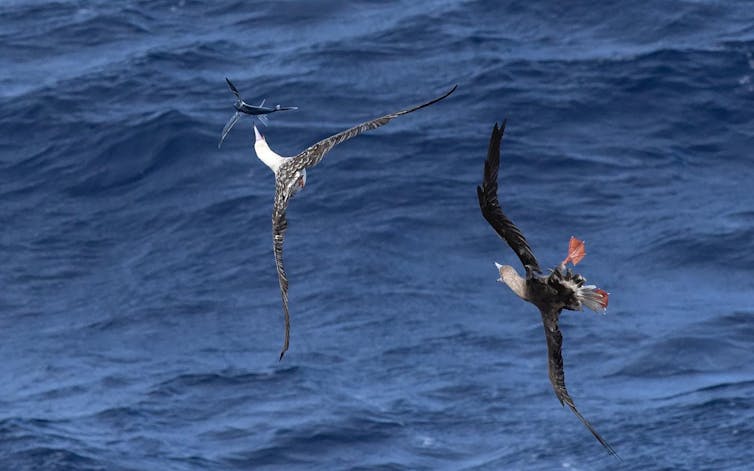 Risk of breeding failure was higher for seabirds that feed at the ocean’s surface.
©Eric J Woehler
Risk of breeding failure was higher for seabirds that feed at the ocean’s surface.
©Eric J Woehler
What this tells us
Unfortunately, these results match what we know about human-caused damage to the ocean.
First, many pollutants such as plastics collect close to the ocean surface. They are often eaten by surface-feeding seabirds, potentially hampering their ability to produce chicks.
Similarly, the rate of ocean warming has been more than three times faster, and the change in number of marine heatwave days twice as large, on average, in the Northern than Southern Hemisphere over the past 50 years.
Likewise, northern oceans have sustained industrial fisheries for far longer than those in the south. This has likely reduced food supplies to Northern Hemisphere fish-eating seabirds over longer periods, causing chronic disruptions in their breeding success.
But human impacts in the Southern Hemisphere are accelerating. Ocean warming and marine heatwaves are becoming more intense, and industrial fisheries and plastic pollution are ever-more pervasive.
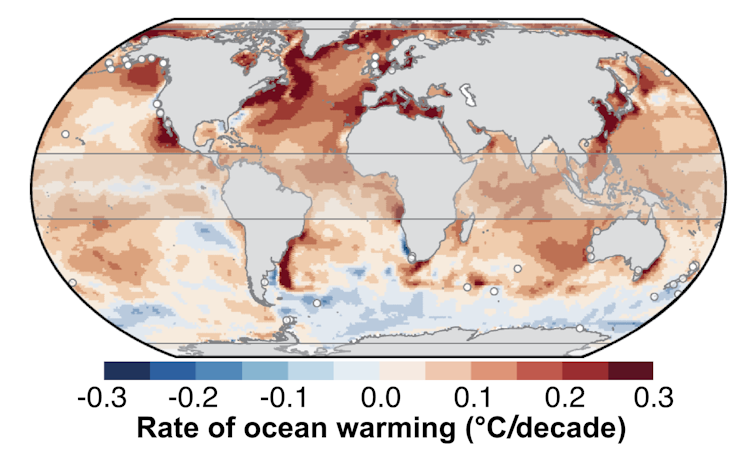 Rate of warming of the surface ocean over the past 50 years.
We must heed the warnings from our seabird “canaries”. With careful planning and marine reserves that take account of projected climate change, the Southern Hemisphere might avoid the worst consequences of human activity. But without action, some seabird species may be lost and ocean food webs damaged.
In the Northern Hemisphere, there is no time to waste. Innovative management and restoration plans are urgently needed to avoid further deterioration in ocean health.
 This story is part of Oceans 21
Watch for new articles ahead of the COP26 climate conference in Glasgow in November. Brought to you by The Conversation’s international network.
This story is part of Oceans 21
Watch for new articles ahead of the COP26 climate conference in Glasgow in November. Brought to you by The Conversation’s international network.
Authors: David Schoeman, Professor of Global-Change Ecology, University of the Sunshine Coast