

The proposed new maths curriculum doesn't dumb down content. It actually demands more of students
- Written by: Penelope Baker, Professor, Mathematics Education, University of New England
In recent days, dozens of maths professors and teachers wrote an open letter airing concerns about a new draft national maths curriculum. Their concerns include dropping “mastery” of times tables and a “faddish” emphasis on student-led learning.
A proposed curriculum for foundation to year 10 Australian students was released for consultation at the end of April. For maths, it is actually an improvement on the one we have and demands more of students.
Read more: A 'crowded curriculum'? Sure, it may be complex, but so is the world kids must engage with
If applied in the proposed form, the new curriculum would result in a deeper understanding of key concepts. It expects students to be able to explain their maths reasoning rather than present their answer without justification. And talking about maths is important. Students learn better when they’re able to articulate what they are thinking and explain this to another person.
It helps students overcome hurdles
The proposed curriculum is based on research that demonstrates the importance of building an understanding of concepts, such as multiplication, rather than just teaching kids to memorise times tables.
With every new concept, students experience a hurdle as they need to completely shift the way they previously perceived the concept. For instance, a child will need to move from seeing a triangle as a pointy shape to focusing on the relationship between the length of sides and angles, as well as its properties (such as symmetry).
The proposed curriculum design acknowledges these kinds of learning hurdles. It provides teaching sequences in key areas such as algebra, measurement and numbers, to help teachers make informed decisions about where to target their teaching.
Say a student reaches the hurdle of needing to focus on the relationships among properties of triangles, which is necessary before they can solve geometric proofs. Here, the proposed curriculum prompts teachers to consider a range of real-word examples. It also provides student-centred activities to support the kids in getting over the hurdle.
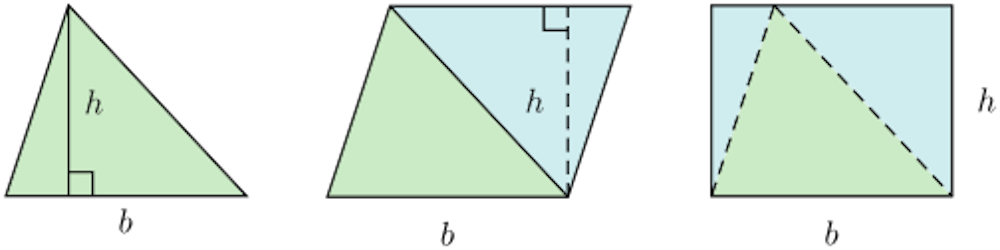 Younger students need to completely shift the way they perceive a triangle if they want to learn about the relationship between the length of its sides and angles.
Wikimedia Commons
Younger students need to completely shift the way they perceive a triangle if they want to learn about the relationship between the length of its sides and angles.
Wikimedia Commons
Another criticism is that the new curriculum apparently delays linear equations — such as x + 3 = 11 (find the value of x) — from year 7 to year 8.
But the proposed curriculum expects year 7 students to use “algebraic expressions to model situations and represent formulas. Students substitute values into these formulas to determine unknown values and interpret these in the context.”
So, rather than confining students to solving simple linear equations, the new curriculum wants students to consider more complex relationships between numbers. It expects them to understand these, rather than showing them the trivial act of solving simple equations first.
It helps students build their understanding
Three content strands in the current curriculum (number and algebra, measurement and geometry, and statistics and probability) have become six (number, algebra, measurement, geometry, statistics, and probability).
Each of these strands appears in all grades, allowing students to build their understanding gradually.
In year 1, students build algebraic understanding by exploring number patters.
The current year 1 curriculum requires students to:
Investigate and describe number patterns formed by skip-counting and patterns with objects.
Skip-counting is counting forward by numbers other than one. For example 2, 4, 6, 8, 10 and so on.
The proposed curriculum adds more detail, requiring students to:
recognise, describe, continue and create growing number patterns formed by skip-counting, initially by twos, fives and tens starting from zero.
Growing patterns this way is a building block for times tables. In this case, the two-times table.
By year 4, students have progressed to dealing with more complex patterns and numbers, including those in multiplication tables. They are developing increasingly efficient mental strategies such as doubling and halving. Research shows these are effective approaches for everyday computations.
Read more: Jump, split or make to the next 10: strategies to teach maths have changed since you were at school
Research also shows it is important to build a solid foundation from the early school years, while building students’ confidence and success from grade to grade.
The new curriculum sets higher standards
The new maths curriculum actually sets higher standards for students. For example, compare the achievement standards for year 2 geometry:
The current achievement standards are that:
students compare and order different shapes and objects using informal units (for example, measuring the length of a table using handspans or paperclips)
they use calendars to identify dates and seasons
they draw two-dimensional shapes and describe one-step transformations (such as rotating a shape or image or flipping it along a line).
 Patterns in number sequences are the building blocks of learning times tables.
Shutterstock
Patterns in number sequences are the building blocks of learning times tables.
Shutterstock
Proposed achievement standards are that:
students use consistent informal units repeatedly to compare different measurements of shapes and objects (that is, students need to use a single repeated unit, such as a paper clip, rather than mixing units, which children commonly do when learning to measure)
explain the effects of one-step transformations and compare shapes and objects describing features and properties using spatial terms (such as sides, angles, symmetry, location and direction)
identify relative positions, locate things on two-dimensional representations (flat shapes) and move within a space by giving and following directions and pathways (using slides, turns and flips).
Opportunities for students to explain their reasoning using more complex language helps them to build connections between maths ideas and lays the foundations for deeper understanding. Listening to students provides guidance for teachers in planning their lessons.
More training for teachers
Neither the current nor proposed curriculum prescribes a particular approach to teaching. Teaching is not a one-size-fits-all activity. Teachers remain free to approach teaching maths in ways that suit their students, using a wide range of activities and resources.
In Australia, many schools struggle to attract qualified secondary maths teachers. Many teachers for whom maths is not a specialisation may fall back on the way they were taught. For instance, they could show students a few worked examples, followed by asking them to complete every second exercise.
Research shows schools successful in maths focus on helping students develop a deep understanding of concepts, using a variety of teaching approaches.
Despite the adoption of a well-structured curriculum, Australia needs to develop a targeted strategy for increasing the number of qualified secondary mathematics teachers in our schools.
The implementation of the new curriculum will also require professional learning for teachers to understand the teaching implications of how students develop maths concepts. Research shows professional learning that is relevant to teachers, and requires teachers to develop their teaching, results in improved maths outcomes.
The proposed maths curriculum has the potential to provide a bridge between teaching, learning and assessment that should, in time, lead to improved maths outcomes.
Authors: Penelope Baker, Professor, Mathematics Education, University of New England



















