

Victoria's COVID lockdown reminds us how many rely on food charity. Here's how we plan for the next inevitable crisis
- Written by: Fiona McKay, Senior Lecturer in Public Health, Deakin University
Melbourne’s latest lockdown and increased demand for emergency food aid reminds us how many people don’t have enough food for themselves and their family. We’ve also seen this in past lockdowns.
However, our research shows many Australians rely on emergency and community food relief for years, not just for short periods.
So how do we make emergency food aid available whether or not there’s a lockdown or other crisis?
Read more: Too many Australians have to choose between heating or eating this winter
Why are people turning to food aid?
Australian cities have some of the highest costs of living in the world. Housing costs are increasing and wage growth is stagnant. So many people are running short and turning to charity to fill the gaps in their budgets.
The food charity sector has grown in Australia since the 1990s and more rapidly so over the past decade.
Four main organisations — FareShare, OzHarvest, SecondBite, and Foodbank — distribute over 50,000 tonnes of food each year to charities in Australia. And it’s these charities that provide subsidised and free food parcels, school breakfasts, and prepared meals to their communities.
People use food charity for many reasons including: poor health, long and short-term unemployment, high costs of living, domestic violence, family breakdowns, and emergencies including fires, floods, and pandemics.
For instance, our research with single mothers tells us low levels of government welfare and high costs of housing in Australia mean some go without food so they can afford to pay other bills.
Read more: The average Australian wastes 200kg of food a year - yet two million of us also go hungry. Why?
During COVID, many turn to food aid
As Melbourne has gone in and out of lockdown over the past year or so, many casual workers, including international students, found themselves out of work and needing assistance for the first time.
Our research, conducted during the second COVID-19 lockdown in Melbourne in May 2020, confirmed more people needed food assistance.
Foodbank Australia also reported a huge increase in the number of people needing food assistance since the start of the pandemic; 1.4 million people sought food aid during May 2020 up from 815,000 before the pandemic.
But the COVID-19 pandemic exposed vulnerability in Australia’s emergency and community relief sector.
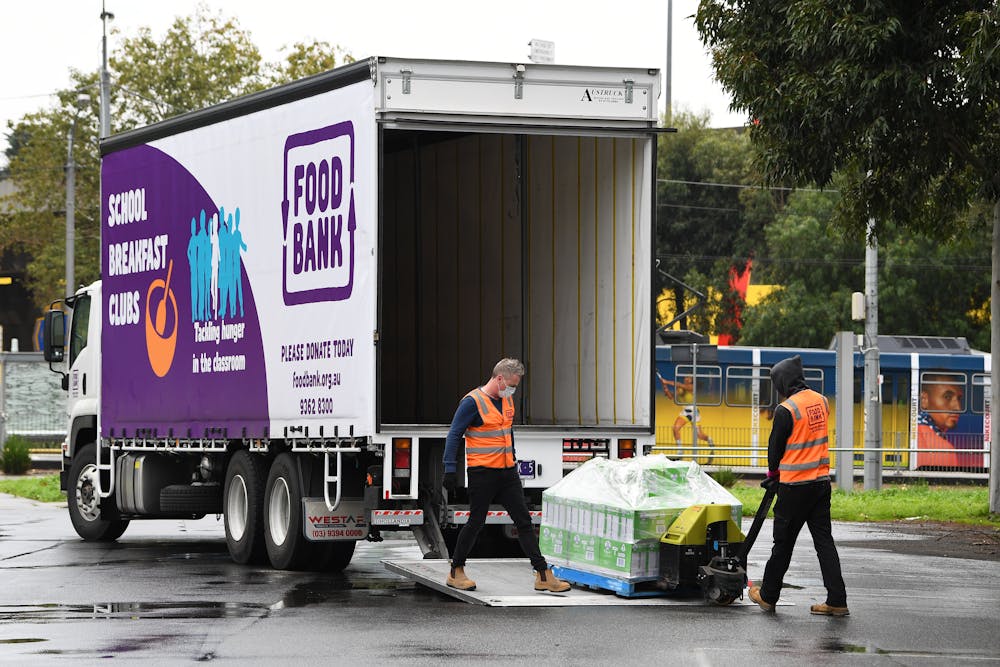 Food charities saw many more people asking for help during COVID.
James Ross/AAP Image
Food charities saw many more people asking for help during COVID.
James Ross/AAP Image
Read more: 'God, I miss fruit!' 40% of students at Australian universities may be going without food
COVID exposed vulnerabilities
The increase in need for food charity, stresses on food supply chains in Australia and globally, and the impact of panic buying, meant some charities had food shortages.
An increase in demand
We saw queues of people lining up at Centrelink in the first weeks of the pandemic. However, many people were protected from the worst of the economic impacts, and protected from poverty and food insecurity. This was thanks to the temporary increase in social welfare through the introduction of the JobKeeper wage subsidy and doubling of the JobSeeker employment-seeking benefit in 2020.
However, according to treasury figures, within four weeks of JobKeeper ending in March 2021, about 56,000 people lost their jobs.
The impact of panic buying
Australia produces enough food to feed itself. However, during COVID-19, many Australians saw bare supermarket shelves.
Panic buying, which reflected the uncertainty many people felt, meant those who could afford to, hoarded more food than they needed. This put pressure on supermarkets and left those on lower incomes reliant on whatever food was left available, often at an increased price, or on charity.
Fewer volunteers
Several food charities also reported a drop in volunteers. Without volunteers to collect and distribute food, food charities struggled to meet the increased demand.
Here’s how we could do this better
To ensure we can assist all in need during the next inevitable crisis, we need to make sure charities are better funded, and can quickly respond to increased need.
Many charities apply for short-term funding often tied to helping a specific group of people. But governments need to provide long-term funding, and more of it, so charities can feed anyone who is in need. This is important if we are to cater for people, as we’ve seen during the pandemic, who have never had to worry about food before and are turning to food charity for the first time.
Most food charities are non-profit and rely heavily on volunteers. And finding volunteers will continue to be a challenge. We have seen the Army pick up some of the slack, but this is not a long-term solution. So finding creative ways to increase the numbers of volunteers will be essential.
Food assistance is also usually just one part of a complex web of people’s needs. Food charities also provide a range of other services, including referring clients to accommodation, family support/domestic violence, medical and mental health care, and financial services. So we need a network that allows people to be referred to other services when they need them.
This story is part of a series The Conversation is running on the nexus between disaster, disadvantage and resilience. It is supported by a philanthropic grant from the Paul Ramsay foundation. You can read the rest of the stories here.
Authors: Fiona McKay, Senior Lecturer in Public Health, Deakin University


















