

What are the Sinopharm and Sinovac vaccines? And how effective are they? Two experts explain
- Written by: John Hart, Clinical researcher, Murdoch Children's Research Institute
Last weekend, China reached a milestone of having administered more than one billion doses of its homegrown COVID-19 vaccines, the majority of which were developed by local companies Sinovac and Sinopharm.
What’s more, hundreds of millions of doses of these vaccines have been shipped to more than 80 countries worldwide.
Sinopharm was given emergency approval by the World Health Organization (WHO) in May this year, and Sinovac in June.
But what do we know about these vaccines? How do they work, are they safe, and how effective are they in the real world?
What type of vaccine are they?
Both are inactivated virus vaccines. This means they’re made from viral particles produced in a lab, which are then inactivated so they can’t infect you with COVID-19. Many other vaccines use similar platforms, including injectable polio, Hepatitis A and flu vaccines.
Both companies use similar technology, and the vaccines are mixed with an adjuvant, which is a substance added to vaccines to stimulate a stronger immune response.
The vaccines contain many proteins the immune system can respond to, stimulating the production of antibodies to fight COVID-19.
Read more: Which COVID vaccine is best? Here's why that's really hard to answer
Are they safe?
Side-effects common after most other COVID-19 vaccines, such as fever and fatigue, were found to be uncommon after Sinovac or Sinopharm.
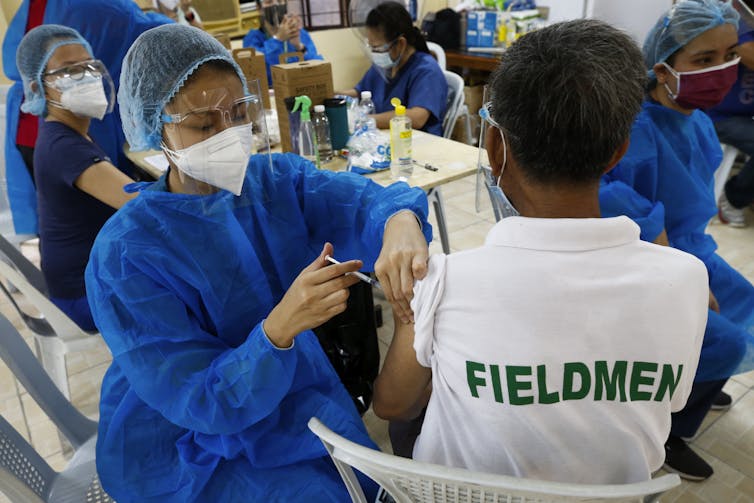 The Sinovac and Sinopharm vaccines are being rolled out in more than 80 countries worldwide.
Rolex Dela Pena/EPA/AAP
The Sinovac and Sinopharm vaccines are being rolled out in more than 80 countries worldwide.
Rolex Dela Pena/EPA/AAP
Once vaccines are approved and being used in large populations, they’re continuously monitored for very rare side effects. No significant safety concerns have been identified amid Sinovac’s rollout in China, Brazil, Indonesia and Chile.
In saying that, there were very low numbers of adverse events identified overall, which would suggest substantial under-reporting.
For example, there were only 49 serious adverse events reported following 35.8 million Sinovac doses administered in China.
In a population of that size, we’d expect to see a larger number of illnesses and deaths recorded in the few weeks after vaccination just by coincidence alone, even if not causally related to the vaccine.
Only 79 people reported mostly mild adverse events following 1.1 million doses of Sinopharm in China, much lower than usual rates of adverse event reporting following immunisation.
A potential side effect of particular concern is what’s called “vaccine-associated enhanced disease”. This is a very rare side effect of some other vaccines which use a similar “inactivated” technology to the Sinopharm and Sinovac vaccines.
It occurs when a vaccinated person is exposed to the virus and develops a serious inflammatory condition, and results in them getting more severe symptoms than they would have without the vaccination.
This hasn’t been reported for these vaccines to date, although WHO recommends ongoing safety monitoring to identify any cases that occur.
What was their efficacy in clinical trials?
Sinovac’s efficacy at preventing symptomatic infection was 51% in Brazil, 67% in Chile, 65% in Indonesia, and 84% in Turkey. The differences in results may be due to different variants circulating in each country at the time and differences in the populations included in the studies.
Sinopharm’s efficacy in preventing symptomatic infection was 78% in UAE, Bahrain, Egypt and Jordan combined.
As with all the COVID-19 vaccines for which data are available, efficacy against the more severe outcomes is greater. Efficacy against hospitalisation for Sinovac in Chile, Brazil and Turkey was 85%, 100% and 100%, respectively.
However, few elderly people with underlying health issues were enrolled into these studies.
For Sinopharm, efficacy against hospitalisation was 79%, although few women were enrolled in these studies.
How effective are they in the real world?
Data published in April from a large real world study in Chile suggests Sinovac is 67% effective in preventing symptomatic COVID-19 infection. It’s effectiveness against hospitalisation was 85%, ICU admission 89%, and death 80%.
Sinopharm’s effectiveness against symptomatic infection in Bahrain was 90%.
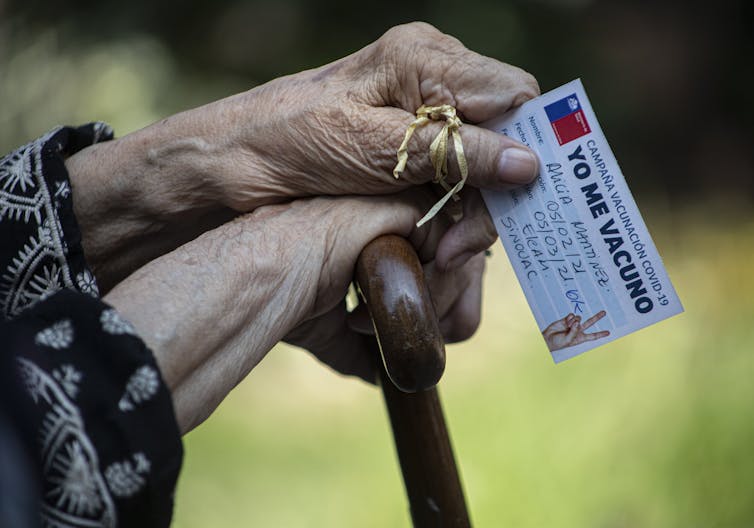 Data from Chile’s rollout suggests Sinovac is 67% effective in preventing symptomatic COVID-19 infection.
Esteban Felix/AP/AAP
Data from Chile’s rollout suggests Sinovac is 67% effective in preventing symptomatic COVID-19 infection.
Esteban Felix/AP/AAP
However, it’s concerning there have been increases in infections in some countries where these vaccines have been extensively used, but detailed reports are not available.
For example, Seychelles has fully vaccinated 68% of its population, mostly with Sinopharm and the remainder with AstraZeneca.
Seychelles has recently experienced a surge in cases, which suggests the herd immunity threshold may not have been reached. The exact threshold for this is unknown but is influenced by variants in circulation, the number of people vaccinated, and the effectiveness of the vaccines.
Detailed epidemiological studies are required to investigate this but news reports suggest 20% of those hospitalised and 37% of new active cases are fully vaccinated.
Read more: COVID is surging in the world's most vaccinated country. Why?
Bahrain and the United Arab Emirates have also achieved high vaccination coverage, predominantly with Sinopharm. They also experienced recent COVID-19 surges, and are offering a booster dose of Pfizer six months after two Sinopharm doses, because of concerns two doses of Sinopharm may not provide sufficient protection.
However, there’s no data publicly available to determine whether this mix and match schedule is safe and produces a protective immune response.
In Mongolia, the rapid vaccine rollout of four different vaccines, including Sinopharm, suggests initial good effectiveness but a recent increase in cases suggests short-term protection only, and perhaps little effect on transmission.
There’s increasing concern about surging cases in Indonesia. Almost all health workers have been vaccinated with the Sinovac vaccine but some are now developing severe disease.
Chile has also achieved high vaccine coverage, mostly with Sinovac. Around 75% of the adult population has received one dose, and 58% two doses.
Despite this, a current surge in infections and consistent high numbers of deaths has prompted a blanket lockdown across the capital, Santiago. The spread may be related to the more transmissible Gamma variant, which first emerged in Brazil.
However, in a small town of 45,000 in Brazil, very high vaccination coverage with Sinovac of 95% of adults, reportedly decreased symptomatic infections by 80% and deaths by 95%.
There’s currently no data on how effective Sinopharm is against any variant of concern despite its use in more than 50 countries.
For Sinovac, effectiveness against symptomatic infection with the Alpha and Gamma variants in Chile was 67%.
In Brazil, with circulation of the Gamma variant, one pre-print study suggested effectiveness against symptomatic infection was 42%.
Read more: Coronavirus variants have new names: we can finally stop stigmatising countries
Both vaccines are effective against severe COVID-19.
However, it is critical that researchers and health authorities determine vaccine effectiveness against variants and their effect on transmission, and their safety profiles. For countries that have community transmission this includes “vaccine-associated enhanced disease”.
As for any vaccine, we also need to understand how effective these vaccines are in older people, adolescents, pregnant women and immunocompromised groups, and how long protection lasts.
We need as many vaccines as possible to tackle the pandemic. But now these vaccines are in widespread use and will be further distributed by COVAX, a global alliance which provides vaccine doses to low-and middle-income nations, it’s essential the safety and effectiveness of all vaccines continues to be closely monitored.
Authors: John Hart, Clinical researcher, Murdoch Children's Research Institute


















