

COVID-19 revealed flaws in Australia's food supply. It also gives us a chance to fix them
- Written by: Penny Farrell, Research Fellow and Lecturer, University of Sydney
Since COVID hit, many Australians have seen first-hand what shocks to the food system can do.
Uncertainty around panic-buing, food supply and pricing have thrown our national food system into the spotlight. And it was already under extreme pressure from climate change and prolonged drought.
The pandemic has revealed vulnerabilities in the Australian food system, but it also presents an opportunity to make it more resilient.
Global ructions, local effects
Australia produces enough fresh food to feed the nation. In fact, more than 90% of the fresh food sold in supermarkets is produced here.
However, the pandemic and its effects on global economies has made it hard, at times, to maintain the supply of food we are used to due to workforce and logistics issues.
In particular, agricultural workforce shortages resulting from international border closures continue to threaten supply of fruit and vegetables, and may also affect price stability.
Food insecurity
Before the pandemic, more than 20% of Australians were estimated to be experiencing food insecurity. Since COVID, food insecurity has increased in Australia.
In Victoria, household budget pressures during the first lockdown forced one in four families to live without healthy food.
Food insecurity can worsen diet quality and increase the risk of various health conditions, including excess weight, obesity and diabetes. These conditions also put people at increased risk of getting very sick or dying from COVID-19.
Unhealthy diets are a leading cause of poor health and death worldwide, so the rising number of people without sufficient access to healthy diets should ring alarm bells for anyone interested in the health of Australians.
But along with these newly exposed vulnerabilities, there are many examples of agility and resilience across the Australian food system.
The agriculture sector has successfully shifted many businesses online. Charities in Victoria moved quickly to provide culturally appropriate food to communities in lockdown.
And the federal government has provided significant support to older people isolating at home, including roughly A$50 million for the “Meals on Wheels” program. There’s also been extra targeted support to farmers.
An opportunity for a coordinated approach
The COVID pandemic has forced many of us to appreciate the complexity and scale of the food production and distribution system in Australia.
Yet Australia currently lacks a national food policy, leaving us vulnerable to future shocks and limiting our capacity to protect vulnerable groups.
Integrated policy with buy-in of government sectors and portfolios beyond health (such as business, trade, agriculture, economics, and education), can maximise the economic, social, nutritional and environmental outcomes of our food system.
We need to encourage innovation and coordination between national, state, and local government levels to support food supply systems that deliver healthy food across the population.
We have already seen it’s possible to make significant policy changes to strengthen food systems in time of crisis. For example, the Australian Competition and Consumer Commission temporarily relaxed anti-collusion rules for big supermarkets during the pandemic, so they could coordinate to “ensure essential supplies get through to vulnerable and isolated people”, as one media report put it.
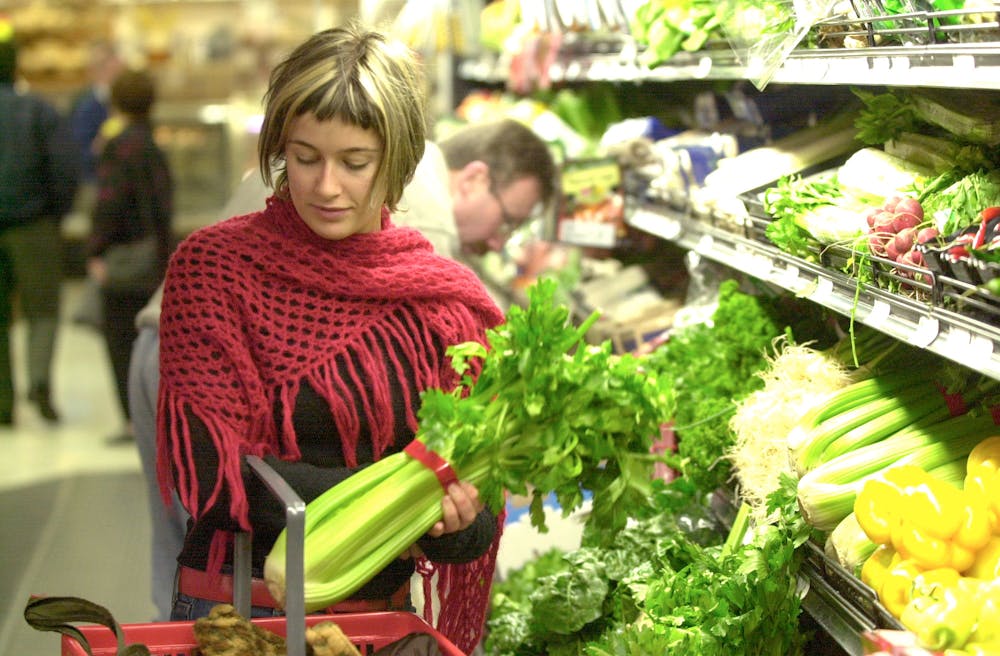 We can work to ensure nutrition is promoted the pandemic response.
AAP Image/ JULIAN SMITH
We can work to ensure nutrition is promoted the pandemic response.
AAP Image/ JULIAN SMITH
A more resilient food system
In Australia, an integrated policy could help make our food system more resilient in the face of future shocks.
Perhaps the pandemic provides an opportunity for us to stop and take stock of what worked well, what didn’t, and where the biggest impact could be made.
For example, we could consider introducing food distribution warehouses in remote Australia so these communities can get healthy, minimally processed foods at affordable prices, even in times of crisis.
Lawmakers should place food security and access to nutritious food at the heart of agriculture, fisheries and trade policies.
We need to ensure nutrition is prioritised in any pandemic response efforts. One approach, advocated by researchers in a recent Nature comment piece, argued:
Cash provision could be coupled with incentives for recipients to participate in well-targeted, culturally sensitive food literacy programmes based on an understanding of barriers to consumption of nutritious foods.
In addition, public distribution programmes, state-managed stores, public restaurants, and other forms of subsidy programmes could focus on providing diverse nutritious foods and meals and minimizing less-healthy foods.
We note that the NSW government’s “Dine and Discover” program has been critiqued for including the fast food giants.
We must incentivise healthy food policies for businesses. For example, “naming and shaming” companies’ commitments to nutrition has resulted in policy and practice changes in Australia. There is recent evidence from that healthy merchandising in food stores can meet both commercial and public health goals in Australia.
The pandemic has highlighted how easily our food supply can be disrupted by crisis. Now, it’s up to us to lean into that disruption and find ways to build resilience into the food system.
Read more: The coronavirus pandemic requires us to understand food's murky supply chains
This story is part of a series The Conversation is running on the nexus between disaster, disadvantage and resilience. It is supported by a philanthropic grant from the Paul Ramsay foundation. You can read the rest of the stories here.
Authors: Penny Farrell, Research Fellow and Lecturer, University of Sydney


















