

Ever wondered who'd win in a fight between a scorpion and tarantula? A venom scientist explains
- Written by: Samantha Nixon, Research officer, The University of Queensland
This article is part of the “Who would win?” series, where wildlife experts dream up hypothetical battles between animals (all in the name of science).
Scorpions and tarantulas are two ancient arachnids that have been walking the Earth for hundreds of millions of years — even before the time of the dinosaurs.
And the question of which would win in a fight has been the subject of numerous YouTube videos, online forums and even research papers.
Well, with more than 900 species of tarantulas and 2,500 species of scorpions found worldwide, the winner depends on who’s facing off in the ring. The question comes down to three things: size, speed, and venom.
Choose your fighter
In the wild, scorpions and tarantulas rarely cross paths, but they will battle to protect their territory or themselves as sometimes they try to eat each other.
At first glance, the fight seems evenly matched. Scorpions and tarantulas are typically ambush predators that “sit and wait” for their prey. Both are highly armed.
Read more: Who would win in a fight between an octopus and a seabird? Two marine biologists place their bets

On Team Scorpion, we have tough armour in the form of a hardened exoskeleton made of overlapping layers of chitin, a protein that’s similar to the keratin in our nails.
Scorpions also have grasping pincers to catch and tear prey, which they could use to grab onto the tarantula. One of the world’s largest scorpions, the giant forest scorpion (Heterometrus swammerdami), can grow up to 22 centimetres long, and could use its powerful pincers to crush a tarantula.
Luckily, in a pinch, a tarantula could drop its leg to get away, and regrow the leg as it continues moulting.

Spiders on Team Tarantula also have the advantage of size. The goliath birdeater (Theraphosa blondi) in South America, for example, has an impressive body length of 12 centimetres, with legs spanning nearly 30 centimetres (the size of an A4 page).
What spiders lack in pincers, they make up for with metal-tipped fangs, enabling them to easily punch through chitin and inflict painful puncture wounds.
Many tarantula species have another special defence called urticating hairs, which are barbed bristles flung from the abdomen against potential attackers. These hairs can severely irritate soft mammalian skin and eyes; however, they would be ineffective against the scorpion’s tough exoskeleton.
Superweapon: venoms
Scorpions and tarantulas have a superweapon in their arsenal: venom. Scorpions inject venom via the stinger in their tail, while tarantulas inject via their fangs.
Both spider and scorpion venoms are complex cocktails of thousands of different molecules that mainly target the nervous system. They’ve been fine-tuned by hundreds of millions of years of evolution to be fast-acting, potent and selective, allowing them to catch their prey (usually insects) and defend themselves from predators (such as mice and birds).
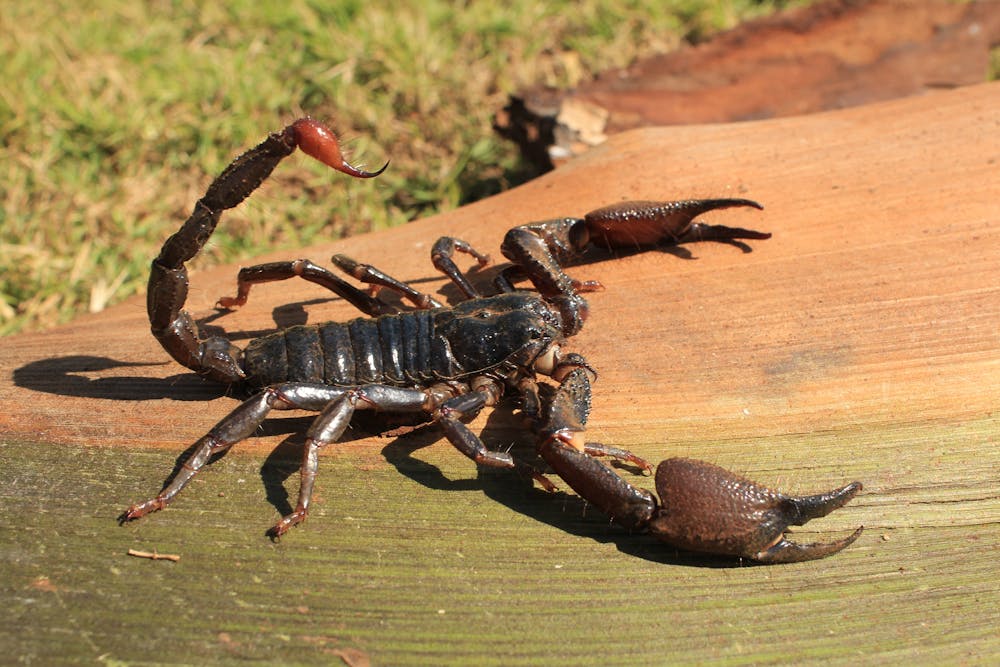 The giant forest scorpion is one of the world’s largest, and can grow up to 22cm long.
Shutterstock
The giant forest scorpion is one of the world’s largest, and can grow up to 22cm long.
Shutterstock
Although spiders have the more fearsome reputation, it’s actually scorpion venoms you should be worried about. There are estimated to be over one million scorpion envenomations each year, resulting in more than 3,000 fatalties worldwide.
As a general rule of thumb, the smaller the scorpion pincers, the more potent the venom. For example, deathstalker scorpions (genus: Leiurus) have slender pincers, but their potent venom is filled with neurotoxins that overexcite the nervous system, leading to myocardial injury, pulmonary oedema, and cardiogenic shock. In other words, your heart cannot pump enough blood to key organs like the brain and kidneys.
Read more: Australian stinging trees inject scorpion-like venom. The pain lasts for days
Meanwhile, tarantula venoms are generally not considered dangerous to humans, with no recorded fatalities to date.
One group of tarantulas you should watch out for are the ornamental tarantulas (genus: Poecilotheria), found in Southeast Asia. These tree-dwelling tarantulas are brilliantly coloured, move with lightning speed, and inject large volumes of very potent venom, causing extreme pain and muscle cramps that can last for weeks.
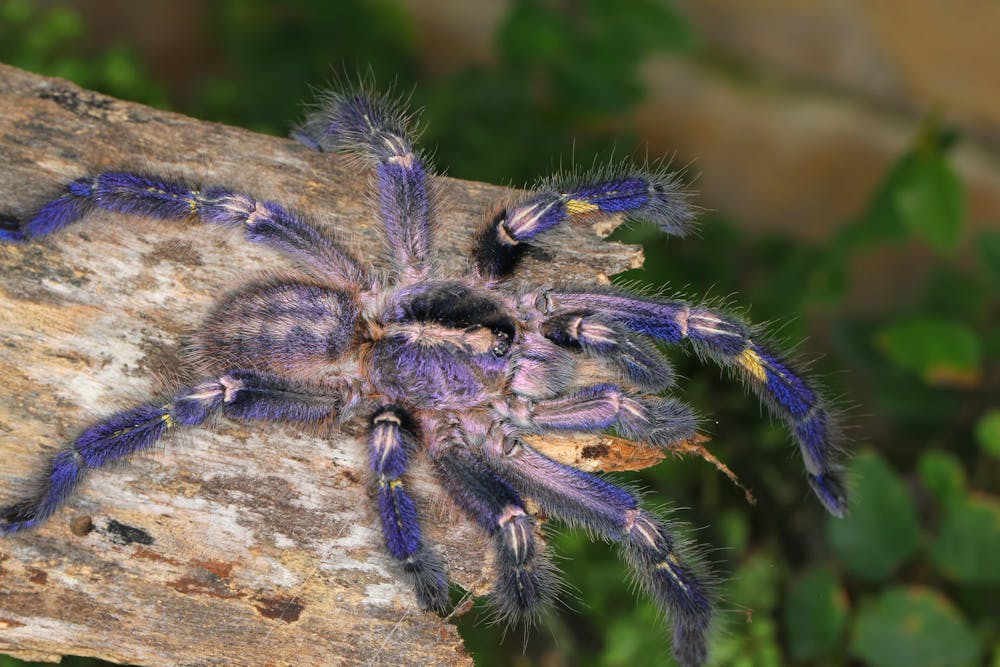 Brilliantly coloured ornamental tarantulas have extremely painful bites.
Shutterstock
Brilliantly coloured ornamental tarantulas have extremely painful bites.
Shutterstock
Size and speed
Venoms are typically fast-acting, so whoever is fast enough to get the first strike in the battle has a big advantage.
Using high speed video, scientists found a species of deathstalker scorpion (Leiurus quinquestriatus) can whip its tail at 128 centimetres per second in a defensive strike.
Another study found Texas brown tarantulas (Aphonopelma hentzi) can sprint at similar speeds.
 The deathstalker scorpion can whip its tail at lightning-fast speeds.
Shutterstock
The deathstalker scorpion can whip its tail at lightning-fast speeds.
Shutterstock
While venoms have evolved as powerful chemical defences to help level the playing field for these arachnids, there’s no doubt size plays an important role in this battle, too. The bigger the animal, the larger the dose of venom required to affect it.
Several studies have recorded scorpions hunting smaller spiders. In Western Australia, the spiral burrow scorpion (Isometroides vescus) specialises in hunting burrow-dwelling spiders, such as trapdoor spiders and wolf spiders.
When the spiders get bigger, however, the tables turn. Some tarantulas are known predators of scorpions.
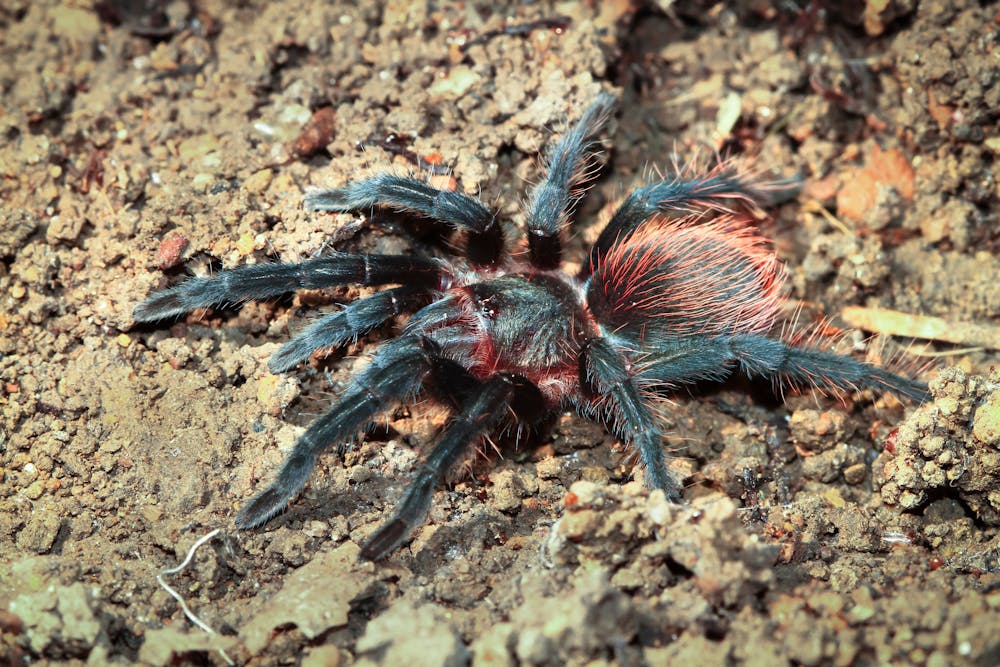 The Mexican red rump tarantula.
Shutterstock
The Mexican red rump tarantula.
Shutterstock
One study noted that in Yucatán Peninsula villages with high densities of tarantulas, scorpions were conspicuously absent. When the researchers brought the local Mexican red rump tarantula (Tliltocatl vagans) and bark scorpions (Centruroides species) into the laboratory, they found the tarantula successfully predated the scorpion every time, regardless of who attacked first.
Similarly in the US, researchers have recorded Arizona blonde tarantulas (Aphonopelma chalcodes) hunting and eating scorpions. However, lab studies with these species showed if the scorpion got the first sting in, the tarantula would retreat.
Overcoming scorpion venom
Both Arizona blonde and Mexican red rump tarantulas are considered harmless to humans, but bark scorpions have a potent, potentially lethal venom.
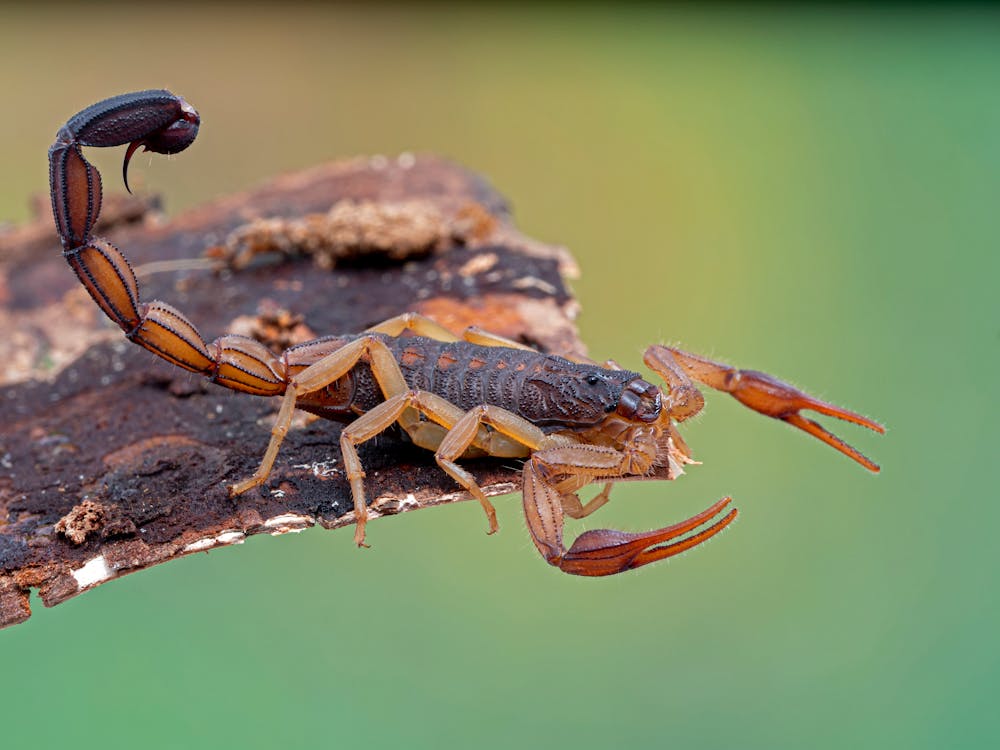 Watch out for bark scorpions, their sting can be lethal to humans — but not to tarantulas.
Shutterstock
Watch out for bark scorpions, their sting can be lethal to humans — but not to tarantulas.
Shutterstock
So how do these tarantulas overcome the lethal bark scorpions’ sting?
Predators and prey are always in an evolutionary arms race, trying to develop strategies to overcome each other’s weapons to survive. For example, one bark scorpion predator, the grasshopper mouse, has evolved very slight mutations in its nervous system that make the scorpion toxins much less effective, thereby protecting the mouse.
Another study showed some scorpion venom toxins were active on tarantula nerves, but less so than on insect and mammalian nerves. This means that tarantulas may also have evolved mutations to help protect them from scorpion venom, perhaps even natural means of detoxifying the scorpion venom in some tarantula species’ haemolymph (the spider equivalent of blood).
Overall, the battle of the arachnids depends on the size, speed and venom of the contenders — but my money is on the tarantula.
If you found this article fascinating, watch this video explaining who would win in a fight between an emu and a cassowary.Authors: Samantha Nixon, Research officer, The University of Queensland


















